Thursday, February 26, 2009

Quomodo sedet sola civitas (How doth the city sit solitary)

"My theme is memory, that winged host ..."

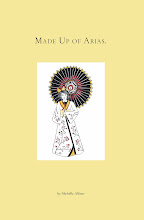
Brideshead Revisited by Evelyn Waugh (published by Chapman and Hall, 1945 - republished by Penguin Classics, 2000) 331 pp.

I had only a fuzzily romantic notion of what this book was about ... an idyllic look at the British upper classes between the two wars? A cozy look at a friendship between two men - one a reluctant Catholic, the other an indifferent Protestant? Neither perception is accurate it appears. The book does stoke my not so hidden interest in the British upper classes of the 1920s and 1930s.

The book begins with Charles Ryder, an officer with the English army during WWII. The army has commandeered the estate of Brideshead for military purposes. This was the site of the beginning of a life changing relationship for him with the Flyte family.

In 1923, Charles, an aspiring painter, meets Sebastian Flyte, an aspiring alcoholic, from a rigid Catholic family at Oxford University. Charles' first glimpse of Sebastian is Sebastian staggering into Charles' room and throwing up after a bout of freshman drinking. Immediately, there is an intense homoerotic vibe here. Sebastian is beautiful, irresponsible, seemingly carefree and carries a teddy bear named Aloysius (I still can't make sense of that unless it signifies that he remains a perpetual child).

And what to make of Anthony Blanche who flutters and flits into their Oxford student life and beyond in three key scenes ... obviously gay, flamboyant, decadent. Is he a symbol of the undercurrent of sexuality that never really rears its head overtly between Charles and Sebastian despite talk of "romantic English relationships" between the two men? Does he serve as a sort of Greek chorus commenting on the choices that Charles makes or fails to make?

Charles is more serious and seems so enamored of Sebastian that he lies for his friend, gives him money for booze, protects him from his overbearing mother Lady Teresa Marchmain, stuffed shirt older brother Bridey and the assorted meddlers in the family trying to save him.

Charles falls in love it seems, not only with Sebastian but with the entire Flyte family and the palatial Brideshead estate itself: the formidable Lady Marchmain; the beautiful and elusive Julia, Sebastian's sister who is engaged to the slightly louche Canadian Rex Mottram (I love it - a sinister Canadian!); younger sister Cordelia. Particularly Julia, who seems oblivious of his interest. There is a lovely scene where Charles realizes that he is not a romantic contender for Julia's affections by the way she shares a cigarette with him.

And here I will foolishly I impose a 21st c. perspective on an early 20th c. scenario: I am puzzled and alarmed by the way Charles "enables" Sebastian to drink and virtually destroy himself as he tries to "protect" him from the Flyte family's interference. Drinking appears to be their bond but Sebastian is much more adversely affected ... drinking at Oxford as undergrads, tasting vintage wines at Brideshead, accompanying Sebastian to Venice to visit the banished Lord Marchmain who lives with his Italian mistress Cara, away from the Lord's despised English countryside.

Secondly, I am mildly surprised (perhaps naively so) by the virulence of the anti-Catholic sentiment in British society depicted here. The book is much harsher and more cynical than I imagined.

Yet the language is rich and evocative and lovely. Charles beautifully compares memories to the pigeons of San Marco: " ... they were everywhere ... in little honey-voiced congregations ... perching sometimes, if I stood still, on my shoulder, until suddenly ... with a flutter and a sweep of wings, the pavement was bare."

Evelyn Waugh has said that he wrote the book in an era of privations and austerity (1944) and perhaps over emphasized the opulence of the time he wrote of - this struck him as distasteful afterwards upon re-reading the work. I'm not sure I agree, perhaps for some it is over the top, but I found myself immersed in it, craving more not less.

Charles is banished from Paradise (Brideshead) like an errant angel by Lady Marchmain for colluding in Sebastian's alcoholism by giving Sebastian money to escape the traditional family hunt to go to the local pub. But Charles is summoned again some months later by Julia when Lady Marchmain is dying. She wants him to find Sebastian who has been living (or hiding) in Morocco, having used up all his goodwill and money in England despite the family's best efforts to keep him from drinking.

Sebastian, when he is found by Charles, is quite ill, hospitalized and living in bohemian squalor with a none too swift ex-Foreign Legion soldier named Kurt who has shot himself in the foot to escape service. He is too ill to travel to see his mother.

Lady Marchmain dies. Brideshead is to be torn down and replaced by a series of flats. Lord Marchmain, long separated from the formidable Lady Marchmain, is in debt and only the sale of the estate will cover his debts it appears. Bridey, Sebastian's brother, asks Charles to paint a series of portraits of Brideshead as a sort of commemoration. Lady Marchmain is gone. Julia is married to the dreadfully mercenary Canadian Rex Mottram. Cordelia's fate is uncertain (mother dead, father seemingly indifferent). The fate of Brideshead appears doomed perhaps like the very rich who inhabit it.

Is Brideshead then like Sebastian - an extravagant, beautiful thing that must die, that cannot survive in the modern world?

Significantly, the portraits that Charles paints mark the beginning of a long and successful career in architectural painting. He thrives because many manors are being threatened with decay and extinction. "My arrival [as a painter] seemed often to be only a few paces ahead of the auctioneer's, a presage of doom."

Fast forward ten years to 1933 ... Charles is married to Celia Mulcaster, an old school chum's sister. He is a successful painter and re-encounters Julia Flyte on a voyage across the Atlantic from America. They are irresistibly drawn together. Wife Celia is efficient and aggressive in her pursuit of Charles' commercial success in a way that he is not (as well as being unfaithful). Charles seems supremely uninterested in both wife and family. In the two years that he has been away painting in a foreign climate a child has been born and he seems not only uninterested but has seemingly forgotten that it has occurred. I find the English upper classes extremely queer - is this a form of British humour or Charles' real emotion?

Julia and Charles agree to divorce their spouses and marry. Sebastian is living in a monastery in Tunis and leading a more or less devout life. Bridey wants to marry a slightly avaricious widow and eject his sister Julia from the estate. Cordelia is now a nurse and, to Charles' eyes, has grown disappointingly "plain".


Unexpectedly Lord Marchmain returns to Brideshead to die on the eve of WWII and his arrival creates an uproar. Bridey is removed from the will as the inheritor of Brideshead. A religious crisis which I won't disclose forces Julia's hand and compels her to choose between Charles and her faith. As a Catholic (lapsed) I can't quite fathom her dilemma. The pull of religion is too strong, she cannot forsake it. In any event, the two are separated forever.

The last few pages of the novel show Charles returning to Brideshead during the war in the same setting as the book's opening. Describing himself as "homeless, childless, middle-aged, loveless", he too has made a momentous change by the book's end.

I found the book immensely appealing ... sure, I am fool for this sort of British upper class twittery in a way I can't explain and have explored elsewhere. The book has tremendous power and beauty. I'm glad I finally took the plunge and read it.

Sunday, February 22, 2009

The 2009 Oscars

Nothing turns me off more than two eminent film critics like David Denby and A.O. Scott turning up their noses at this year's Oscar crop on a recent Charlie Rose show. Their whole demeanor exuded boredom and mystification at the popularity of certain films (The Reader, Benjamin Button just to mention two). But you can get to a place where because you prefer caviar you just won't like hot dogs anymore. Sometimes I think this is what really refined film criticism does ... along with a sneering attitude towards the Oscars.

I know they are sometimes (often) silly and tacky and self-serving but come on - how can you love films and not love watching the Oscars?

True, the red carpet preview of the big stars fails to impress with its sycophancy and silliness. Where do they find these people who stalk the stars? You can almost see the stars cringing as they ask their inane questions ...

Fashion Winners: Anne Hathaway, looking too thin but chic in a silvery strapless Armani Privé gown; Amy Adams in a gorgeous red gown by Caroline Herrera, Penelope Cruz's champagne coloured vintage dress by Pierre Balmain; Frank Langella, cool and elegant in black tie with his daughter; Sarah Jessica Parker in silvery fairy tale Dior with flowing, dark tresses; Nicole Kidman in champagne gold, looking a bit wispy and Marilyn Monroe-ish; Diane Lane in black Dolce e Gabbana; Zac Efron looking very mature and handsome in D&G; Natalie Portman in a bubble gum pink gown by Rodarte; Taraji P. Henson in a gorgeous white tiered Roberto Cavalli gown.

Puzzling choices: goddess-like Angelina Jolie's green gem earrings by Lorraine Schwartz; Mickey Rourke's Jean-Paul Gaultier white suit and shiny black shoes; Miley Cyrus' multi-layered cake of a sparkly blue and white dress by Zuhair Murad; Jessica Biel looking beautiful but encased in a ivory satin sac-like dress by Prada as if she is trying to hide her shape; Entertainment Tonight's Mary Hart in a green and pink flowing mess that looked like her mother's expensive curtains torn from the walls; Philip Seymour Hoffman with that prickish look on his face and silly black toque ...

Ack - Hugh Jackman in that opening dance sequence.What an ordeal! He was trying so hard to entertain with a "impromptu" low rent dance sequence of all the best nominated films (citing - ha ha - budget cuts) and dragging a "reluctant" Anne Hathaway on stage to play Nixon to his Frost in one segment (the only funny part). Painful to watch from such an attractive and entertaining performer ... it was met, bewilderingly for me, by wild applause - perhaps for the enormous effort expended by Hugh who was literally panting by the end of it?

The format for Best Supporting Actress was very different with five previous winners in this category standing on stage (Whoopi Goldberg, Goldie Hawn, Eva Marie Saint, Tilda Swinton and Angelica Huston) introducing and announcing the winner: Penelope Cruz (threatening to faint) in a very gracious speech for her performance in Vicky Cristina Barcelona.

Later they will use the same technique in the Best Supporting Actor category with past winners Joel Grey, Alan Arkin, Cuba Gooding Jr., Kevin Kline and Christopher Walken to announce the winner (inevitably Heath Ledger) which was accepted by his family and greeted warmly by very teary, sympathetic audience.

Tina Fey and Steve Martin had a great intro for the Best Original Screenplay (Dustin Lance Black for Milk) and Best Adapted Screenplay (Slumdog Millionaire) - they seem to have beefed up the writing this year and tried to do things in a different way. For instance, the text from each screenplay was superimposed on images of each film projected. Effective and interesting ... also cute was Martin's snippy remark to Fey that she "shouldn't fall in love with hm" as she gazed adoringly at him at the podium. And who would have thought you could string the words, cute Mormon and gay in one sentence to describe Dustin Lance Black?

In Best Animated Feature (Wall-E), there was a segment where Wall-E slips in a video tape and watches a collage of all the animated films released in 2008, smartly done. Jennifer Aniston and Jack Black had a nice chemistry during the presentation; however, did we need the camera to cut to Angelina Jolie during this? What were they expecting a scowl or sneer to be caught on camera? Not cool ...

I like the way the show doubled up (or tripled up) the awards; for instance, the stylish duo of Daniel Craig and Sarah Jessica Parker announced Best Art Direction (Benajmin Buttons) and Costume Design (The Duchess) and Best Makeup (Benajmin Button). It was a very smart decision and certainly hurried the awards along in a respectful way.

Ben Stiller was hilarious in a Joaquin Phoenix-like guise of nappy beard, disheveled hair and dark sunglasses (ala his last infamous appearance on David Letterman) presenting Best Cinematography (Slumdog Millionaire) with Natalie Portman. Ignoring the audience, ignoring Natalie, mono-syllabic.

Seth Rogen and James Franco were great in a skit introducing a collage of comedy films in 2008 ... two stoners on a couch laughing horribly during the serious films (The Reader or Doubt) and straight-faced during the comedies. At one stage they drag in the award winning cinematographer Janusz Kaminski (he won two Oscars for Schindler's List) who joins them on the couch literally with his Oscars, laughing inanely. They announced Best Live Action Short (Toyland).

In an interview prior to the show, Hugh Jackman said he wanted to add some more "show" to the biz; hence, a looonnng dance sequence with Beyonce singing old songs from old musicals: Chicago, Grease, Moulin Rouge, Hairspray, West Side Story, Highschool Musical 3 and melding musically with a duo by Vanessa Hudgens and Zac Efron from Highschool Musical 1, 2 and 3 as well as Domenic Cooper and Amanda Seyfried from Mamma Mia! Top hatted, long legged dancers filled the massive stage. Schmaltzy, tacky but certainly a lively ending with a half hopeful, half jubilant cry of "The musical is back!" by Jackman. [Post-script: As my s-i-l said in an e-mail Monday morning, this ain't helping with the gay rumours much Hugh.]

Bill Maher announced Best Documentary (Man on Wire) and Best Documentary Short (Smile Pinki) in his usual acerbic way as well as shamelessly plugging his own so-so documentary Religulous which I saw at TIFF last September.

The "Action Film" collage entertained with great footage of so -so films and very good, very loud music: "Tick Tick Boom" by the Hives. This was followed by Will Smith announcing Best Visual Effects (Benjamin Button), Sound Editing (Dark Knight), Sound Mixing (Slumdog Millionaire) and Film Editing (Slumdog Millionaire).

The Jean Hersholt Humanitarian Award went to Jerry Lewis and was presented by that other Nutty Professor Eddie Murphy. I can't abide Lewis but hey, the man has done some good work over the years ... and his speech was surprisingly short and gracious.

It's almost 11.00pm and we are starting to fade ... even the offspring is up with us watching. Zac Efron and Alicia Keyes (what no Vanessa Hudgens? they were sooo cute on the red carpet) announced Best Original Score (Slumdog Millionaire). Just in time, they also play the nominated best songs: "O Saya", "Down to Earth" from Wall-E and "Jai Ho". We are sorely in need of that Bollywood energy right about now before they announce Best Song ("Jai Ho" from Slumdog Millionaire). A burst of colour and dancing from beautiful women in colourful saris, yeah, that'll do it, that'll wake us up.

Liam Neeson and beautiful Slumdog Millionaire star Freida Pinto presented Best Foreign Film (the film Departures from Japan - yay Asians!). A nice surprise but none of us in the family Oscar pool guessed this ... so far my s-i-l J and b-in-law T are leading ... arrggh.

Queen Latifah sang "I'll be seeing you" during the annual memoriam section of departed Academy members, or, as it is known at our house: "Hey I didn't know he died!"

Losing strength ... must go on ... must continue ... somehow ...

Best Director: Danny Boyle, Slumdog Millionaire. No surprise but welcome. Liked his little Tigger dance he did in honour of his children (now grown).

Best actress winners Nicole Kidman, Halle Berry, Sophia Loren, Shirley MacLaine and Marion Cotillard announced Best Actress. I must the say the bios of the nominated actresses was quite moving and very personal, seeming not rehearsed and often moving the nominated actresses listening to tears. The winner was Kate Winslet (The Reader) who seemed overwhelmed and joyous - sooo happy for her, she's phenomenal. It's long overdue.

The Best Actor award was presented by Robert De Niro, Ben Kingsley, Anthony Hopkins, Michael Douglas and Adrien Brody to Sean Penn who thanked all his "Commie homo loving" supporters and acknowledged that he made it difficult for people to like him. Looks like Seanie is growing a sense of humour. He also graciously acknowledged his "brother" Mickey Rourke during his acceptance speech.

Best film was presented by Steven Spielberg to Slumdog Millionaire (anti-climatic but satisfying too).

It's 11.55pm ... The offspring made it to midnight but is exhausted; the husband, slight bored, has also survived. Must tally the ballots now for family and work friends Oscar pools ... Goodnight.

Wednesday, February 18, 2009

Love the players ...

King Leary by Paul Quarrington (Random House, 1987), 223 pages

Why, why does a self-professed hater (disliker?) of hockey want to read a book based on a fictitious hockey hero named King Leary? Oddly, I find hockey players very appealing. Is it because the husband is a goalie and a fanatical devotee of the Leafs? Perhaps. I find them … sexy. I like the image of the punch drunk, boozing, scrappy Canuck. Why I could not tell you. Especially the old school hockey players who looked so much older than the pups in the NHL today.

Percival “King” Leary is such a being. Now confined to a nursery home in South Grouse, Ontario, with a roommate who is his former nemesis of sorts, “Blue” Hermann, an alcoholic newspaper man who covered King through his glory days after WWI through to the 1940s.

King has been tapped by a ginger ale company to hawk its wares in a television commercial with Duane Killebrew. Based on the superlative accolades in the novel, the time this was written in the late 80s, and Killebrew’s numerous commercial endorsements, I would say that this character is a stand-in for Wayne Gretzy.

King leaves for Toronto with Blue and Ian, a sympathetic caregiver from the nursing home, to make this commercial. Things do not go as planned. Blue is a confirmed alcoholic. King has bouts of dementia. Ian has his own issues regarding various substances. The King gets both sentimental and ornery when he finds out that it is not his beloved Canada Dry that he has signed up to promote but the far more inferior Acadia Dry.

Oh, did I mention King’s frequent hallucinations? Throughout the trip King sees and hears the voices of the dearly departed: Clay Clinton, the owner of the Maple Leaves; his ex-wife Janie; Manny Oz, a friend and fellow hockey player; his dead son who he has always blamed for ruining his career by leaving a toy on the ground which messed up his knee.

King escapes the ordeal of the TV shoot with its overbearing director, snotty make up artist and the generally disinterested crew by persuading Duane to drive him to the Canadian Sports Hall of Fame where he longs to relive his brief moments of glory. He does not play nice at the Hall before registering a final protest against the indignities of age, of the passing of one’s glory.

Some images will stay with me for along time: the four monks who taught King and Manny to play at the home for delinquent boys; King fighting in WWI; King and company wreaking havoc at the bar across the street from the Gardens …

It is a loving tribute to that golden age of hockey. Ya gotta love the players, even if you don’t love the game.

Sunday, February 15, 2009

Milk

Milk directed by Gus Van Sant (U.S., 2008) 128 minutes

This is the last of the big Oscar nominated films I wanted to see and I'm glad I didn't miss it. This is a piece of history that every politically conscious person should be exposed to. I had forgotten, or never fully understood, the importance of San Franciscan politician Harvey Milk (pictured here above) in terms of forwarding a human rights agenda for his city and the state of California. He was the first openly gay politician to be elected to the office of Supervisor in San Francisco and fought relentlessly for gay rights.

Milk is portrayed sympathetically and effectively by Sean Penn. Say what you will husband (who abhors Penn), he is a brave actor who often makes intriguing choices. Milk went from a laid back hippie in 1970 to one of the highest offices in San Francisco as Supervisor with enormous political clout. The self-named Mayor of Castro Street, the hub of gay life in the city, he rose after a succession of failed elections, year after year, to this position only to be killed the following year by Dan White, a fellow Supervisor, openly homophobic and probably closeted the movie implies. White had quit his position, was persuaded by certain right of centre elements to try and take back his job but was refused by the Mayor. White felt that Milk was behind this refusal.

Penn is surrounded by wonderful performances in supporting roles: Josh Brolin as the assassin Dan White; James Franco as Milk's lover/campaign manager Scott; Emile Hirsch as a charismatic rent boy Cleve Jones turned political activist; and, Victor Garber as Mayor George Moscone who was also shot that fateful day in 1978.

In a few short years, Milk transformed himself from laid back hippie to businessman to politico able to galvanize thousands into political action. It's hard to fathom, but in my lifetime, cops were clubbing gay men in the streets for fictitious transgressions. Conservatives like the orange juice hawking Anita Bryant were actively campaigning against equal rights for gays and other prominent people were advocating the firing of gay teachers in public schools. In my lifetime, it's hard to believe.

Dustin Lance Black, the screenwriter of Milk and on-going writer for the polygamous Mormon family drama Big Love HBO series, said he wanted to remember, and to remind others, that the rights that many take for granted now were fought for tooth and nail and in bloody clashes on the streets of America. Unfortunately, these are reminders that we often require.

Tuesday, February 10, 2009

Tropic Thunder

Tropic Thunder (U.S., 2008) directed by Ben Stiller, 107 min.

Family and friends enjoyed this film enormously so I had high expectations for it.

But the presence of Robert Downey Jr. in a movie always sets off a heated debate in our house. My husband R really believes that he is one of the best actors working today. I ... well ... hate is a strong word as I often admonish my child, but, okay, I really dislike him as an actor. And he got an Oscar nomination for this!

To me, he always plays a variation of what appears to be his "true" character: smart ass, slightly sarcastic, immature, irresponsible. I don't see the "acting" in his performances at all. Unless he is is acting the public face of the person known as Robert Downey. Here he is a pretentious Australian actor Kirk Lazarus (ahem - Russell Crowe immediately comes to mind) who undergoes an elaborate skin "colouring" operation in order that he may play a black man in the war film Tropic Thunder they are shooting much to the consternation of a fellow black actor.

I have to admit the funniest line in the film is when a black man calls Downey the "n word". Downey clasps him close and whispers tearfully into his ear, "For 400 hundred years that word has kept us down." You can imagine the reaction.

Ben Stiller is Tugg Speedman here, an on the down slide action hero looking for a huge hit with a war movie. I usually enjoy Stiller despite some of the dreck he has appeared in. The third principal actor in this film is Jack Black as the loud-mouthed untalented star Jeff Portnoy of blockbusting "The Fatties" franchise (don't ask). Black always raises my BP several points whenever I see him on screen. Hey film-going world, being fat and obnoxious is not necessarily funny. Not always, not most of the time either.

So, you caustic little creature ... why did you see the film you ask? Peer pressure, pure peer pressure. I am weak, I am susceptible to my husband's desires ... The three aforementioned actors as well as relative unknown Brandon T. Jackson are working on a war film in Vietnam. Think Platoon. Things do not go as planned. The director (Steve Coogan) gets blown up by the overzealous special effects man. They are over budget, the four actors get lost in the jungle, some are confused as to what is part of the movie and what isn't. One of them is captured buy a gang of drug lords in the Vietnamese jungle convinced that the Americans are DEA agents and the others attempt to save him ... extreme silliness ensues. Also, not a particular high point for Asian-American actors.

Conflicts are resolved, male friendships strengthened despite rancour and vicious backbiting, valour is restored to this group of delusional, pampered, overfed Hollywood stars. They prove themselves. Someone comes "out" finally. Oh yay ... my cinematic dreams have come true.

My dislike of Downey has proven too much, I cannot see past it. I claim defeat ... I did not enjoy this film at all. Even the sight of Tom Cruise as a malicious, little toad of a Hollywood agent in a fat suit and with a balding head could not save the film for me (although I did enjoy his little dance during the credit sequence at the end!).

Sunday, February 8, 2009

The Wrestler

The Wrestler by Darren Aronofsky (U.S., 2008) 109 Minutes

This is a disturbing film and not just for its subject matter but because we get to see up close what Mickey Rourke has done to himself over the years. I don't know if it is his ill-fated and short-lived boxing career, plastic surgery, the steroids he was rumored to have taken for the film, or botox (or a combination of all) but it has wreaked havoc on the man's face.

I still remember his charming, quirky beauty in Diner (1982). Sadly, that seems a world away now.

Rourke and the movie are getting wonderful reviews, deservedly so. His turn as the beaten up, used up professional wrestler "Randy the Ram" struggling with his dysfunctional, half broken relationships including prospective girlfriend the stripper Cassidy (Marisa Tomei) or Stephanie, his unhappy, neglected daughter (Evan Rachel Wood), is heartbreakingly rendered.

He is utterly convincing in the ring "fighting" his opponents, stepping into a tanning bed to keep his wrestlers' tan, getting his hair bleached for a gig, showing up at poorly attended appearances with other washed up wrestlers, kibbitzing with the other men (who appear to be real wrestlers). All of the scenes seem painfully real.

I was wondering if other filmgoers were having a difficult time separating the fate of Randy from the fate of Rourke? I was immensely uncomfortable watching Rourke as Randy suffering a multitude of sorrows: returning to his depressing, low rent trailer and being locked out because he is behind in his rent, begging for extra work from a snide little pit bull of a grocery manager, working despondently at a deli counter and flirting listlessly with the unimpressed middle aged customers, being turned away at the door by his daughter Stephanie, showing up at a wrestling appearance to sign only a handful of autographs, leaving bouts bleeding (some of which he himself inflicted to please the crowd), cut up, very ill, suffering a heart attack.

Who could watch these scenes and not think of Rourke as the semi-washed up actor? The smart mouth who claimed that acting was for "sissies" and then turned to boxing only to be pummeled into an early retirement as he was too old to continue in the sport? The man who was so isolated from the rest of humanity and demoralized that at an awards ceremony he once thanked his dogs for standing by him through hard times?

I'm rooting for him and hope he (and the film) will do well at the Oscars.

Thursday, February 5, 2009

The Reader

The Reader by Stephen Daldry (U.S.-German , 2008) 124 min.

The self-imposed march towards seeing all of the Oscar nominated films is on! I am glad that I knew little of this film - I was pleasantly surprised at how good Winslet was in it. Much better than Revolutionary Road I think. The film is based on a book by German writer Bernhard Schlink (see an interesting interview with Charlie Rose here).

Winslet is Hanna Schmitz, a lonely, 30 something, none too friendly ticket taker on a tram living in West Germany in the late 50s when she encounters, and aids, the fragile Michael (charming newcomer David Kross) a 15 year old boy who has taken ill in the street. It turns out that he has scarlet fever and becomes house bound for months. Remembering Hanna's kindness some months later he returns to her apartment with flowers.

A volatile, sexual relationship quickly develops between the two with Hannah curiously encouraging the boy to read to her before sex as a sort of foreplay (The Odyssey, Huckleberry Finn, Lady Chatterley's Lover, Chekov's "The Lady and the Little Dog" to mention a few - the gal has good taste!).

Eventually they part (this is never explained why, Hanna merely flees her apartment with her belongings) and we flash forward to Michael as a law student in Heidelberg in the late 60s observing a trial of former Nazi guards, one of whom is Hanna. Michael is justifiably horrified on two levels, firstly and most obviously, because Hanna is being accused of a terrible atrocity in which 300 Jews burned to death inside a locked church. Secondly, he has crucial information as to why Hanna cannot be the ring leader as her co-accuseds have alleged and for which she accepts full responsibility rather than reveal to the court. Her reticence to reveal the truth is the key to the whole movie, to an understanding of who Hanna is.

Hanna's reaction to the allegations of her complicity in Nazi atrocities seems frightening honest and, I believe, reflects the view of many Germans who were complicit. They felt they had no choice and that you (the viewer, the interrogator) would have done the same in their shoes.

Michael's role as student of law allows the film to debate the culpability of the Germans for the Holocaust. As one fellow law student caustically remarks, "Everyone knew." and few did anything about it.

To say more would ruin the plot. Ralph Fiennes has a somewhat limited and very subtly played role in the film as Michael as an older man. Still troubled by this relationship with Hanna, emotionally stunted and cold, he cannot shake the memory of her and eventually re-establishes contact with her in prison. He assists her in the only way he can and affects a sort of change in her despite his repulsion for her actions.

Slowly, Hanna evolves ... the old defiance withers and dies but in its place is perhaps repentance and a desire to learn. Perhaps too late. But Michael changes too and it is worth the wait for him as a character and for us as the filmgoers.

Sunday, February 1, 2009

Frost/Nixon

Frost/Nixon directed by Ron Howard (U.S./U.K., 2008) 122 min.

This is a fascinating background look into the events that lead up to the famous David Frost/Richard Nixon interviews in 1977, some years after Nixon's impeachment.

Frank Langella is near perfect, even though he does not resemble Nixon in the least. He seems to inhabit the physical shell of Richard Nixon's body with his hunched shoulders, furrowed brows, melancholic cast and throaty loquaciousness.

The British actor Michael Sheen doesn't disappoint either as the charming huckster that David Frost appeared to be at the time. I still recall with pleasure his brilliant turn as Tony Blair in The Queen (2006).

Neither historical character comes off particularly well - which is to say both repulsively and immensely human, warts and all. Nixon is seen as he has often been portrayed: slippery, conniving, self-absorbed, cold, a little on the diabolical side and calculating but Peter Morgan, the scriptwriter, and Langella, have tried hard to infuse this performance with humanity, showing the loneliness and self loathing of the man, the desire to achieve greatness and the catastrophic fall from grace with his impeachment.

Sheen is equally good: portraying Frost as frivolous, charming, striving against all odds and suffering from his own sense of inferiority and self-doubt as a working class Australian lad who succeeds in class-conscious Britain and then in the much coveted American television landscape.

The performance is capped by a fictitious telephone call that a drunken Nixon makes to the bewildered Frost the night before the last interview which proves to be Nixon's downfall even as he had hoped that he could redeem himself before the American public. Although completely fabricated it serves to demonstrate the "true" essence of both man, as least as I conceive them.

I thought the film would be very dry and "talky" but it holds you every moment of its two hours. And in the way of all great films which have been talked about extensively and which you feel you know already, even though you know the end you are on the edge of your seat to see how it resolves itself.

Saturday, January 31, 2009

Doubt

Doubt (U.S., 2008) written and directed by John Patrick Shanley, 104 min.

A potentially abusive priest? A cold, vindictive nun? Catholic schools in the 1960s? Meryl Streep? Philip Seymour Hoffman? Oy ... did I want to go down this well traveled road? Have we not had enough stories of priests and violated boys? My friend B convinced me see the film. Despite my reservations, I'm glad I did though.

I must say that I was impressed with the performances even though I am not a huge fan of the two aforementioned actors. This is potentially a treasonous opinion, I imagine, from a self-professed movie lover.

The ambiguity of the situation saves the film for me ... did Father Brendan Flynn (Philip Seymour Hoffman) abuse Donald Miller, the lone, often lonely, black student in the school? Was the relationship inappropriate despite the priest's apparent sincerely felt feelings for the boy? Was the boy a "willing" participant, if so? How complicit was his mother, Mrs. Miller (the Oscar nominated Viola Davis), who has a few very powerful scenes with the formidable Sister Aloysius Beauvier (Meryl Streep)?

Here, for me, Streep is free of those nervous acting tics which annoy me ... please don't ask me to number them. It's like that 1964 Supreme Court definition of pornography: "I know it when I see it." At times she seems the only actress of her age who seems to be employed. Sigh.

But she is formidable here and seems eerily familiar to this former Catholic school girl. The icy precision with which she tracks down every errant boy or girl in the school or in church. Her cold and unforgiving nature. The fact that she never smiles, never warmly greets a child, never shows tenderness or love put me in mind of our very own principal in grade school, Sister M, a severe nun in traditional habit, feared and hated by all (including the teachers). That's how terrifying she was, even the kids realized that the teachers hated her.

Sister Aloysius is frighteningly self-assured in her crusade to destroy the charming Father Flynn and almost persuades the tentative but spunky Sister James (Amy Adams) of her certainty. Sister James has doubts of her own but cannot side against the warm, charismatic Flynn who has a genuine love for the children and is trying to introduce a level of progress into the stultifying atmosphere of the school in 1964. Adams is graced with a beautiful face which can still convey, in these cynical times, innocence and grace. She is perfectly cast. Her star turn in Enchanted (2007) as the fairy tale princess come to life brought her well deserved acclaim and attention.

But if Flynn is innocent - and not even Donald Miller's mother is sure of this - why does the camera linger on a certain boy who recoils from any physical contact with the priest and revels in his potential demise when he learns of it? Is it just childish malice or a secret knowledge of the true situation?

The film is so good that I forgive Shanley my long standing grudge against him for the atrocious Moonstruck (1987).

Friday, January 23, 2009

Gran Torino

Gran Torino (U.S., 2008) directed by Clint Eastwood, 2 hrs.

Clint Eastwood's halo is barely obscured by the racist, xenophobic ex-Korean War veteran that he plays in this film. Walter Kowalski is recently widowed, a former vet, who is alienated from his two kind-hearted, if slightly dim-witted, sons and his obnoxious grandchildren who seem eager to paw over his possessions (specifically his Gran Torino car) once he too expires.

He refuses to leave the old Detroit neighborhood now dominated by a growing Asian community of Hmong (pronounced "mung", an ethnic group found in Southeast Asia, including northern Vietnam, Laos, Thailand, and Myanmar-Burma). He inadvertently and reluctantly becomes involved with the family next door when Thao Vang Lor (Bee Vang), an introverted, socially awkward boy, is coerced into trying to steal Walt's car on a dare by a Hmong gang trying to recruit him.

They are thwarted of course by Walter and his sizable stash of weaponry and ammunition. Walt, the octogenarian, is able to fend off a gang member who wants to punish Thao for failing to steal the car. The Lor family and their kin try to thank Walt by bringing food and flowers to his home which he angrily refuses initially despite his lonely and underfed existence.

Soon he is captivated by Sue Lor (Ahney Her), the smart mouthed older teenage sister of Thao, who seeks to mediate between the mystified Walt who merely wants to be left alone and the equally mystified Lor family that only wants to give thanks for his assistance, trying to "repay" him for his protection and atone for Thao's transgressions.

Walt is compelled by Sue to accept the services of the sullen Thao in a series of tasks around his house and the neighborhood. Eventually both embrace these new roles - the teacher and the pupil. Walt finds Thao a job in construction. He tries to "man up" the shy boy in a stereotypically sexist fashion by teaching him to talk about cars, joke in a racist manner with the local barber, and be a bit more crude about girls and male body parts, etc ... it's not offensive really as it is so out there but it is also not particularly funny either.

Racist Walt is thrust into the life of the family and, because this is a Hollywood film, Walt soon grows to care for them and serves as a sort of protector in this troubled neighborhood. Because Thao's family and Walt foil the gang's intentions to embroil Thao in the gang's criminal activities, the gang begins a long and protracted war against both - physically harassing them, destroying their property - compelling Walt to retaliate in the expected and violent manner.

The story reaches a denouement when they target Sue and both Walt and Thao must decide how they will react to this extreme violence.

Since the film Unforgiven (1992), Eastwood seems to have consciously striven to present a path of non-violent reaction to violent situations as if to atone for the outlaw/cowboy/dirty detective savagery of his Josie Wales/The Good, the Bad and the Ugly/Dirty Harry oeuvre. The film follows in this vein.

But Eastwood's cinematic persona is so big, so all encompassing, that it is difficult to believe in this misanthropic, curmudgeonly persona in the early portion of the film. One simply does not believe it. Perhaps as a former war hero with thirteen kills under his belt, Walt's actions may seem credible and one could believe the extent that Walt is willing to sacrifice himself for the Lors. But the conclusion seems too pat, too heroic, to be truly satisfying.

The Asian cast is weak and I can guess why. There is so little work for Asian actors to cut their teeth on. They are usually forced into the old cliched roles: the tight-lipped scientist, the brainy nerd, the vicious gang member.

But this film does reveal to the filmgoer an Asian community that many of us are not aware of and few of us have exposure to. In our home, we are so pleased to see any Asians in the cinema or TV that we are now reduced to yelling "Asians on TV! Asians on TV!" when we see any.

True dat.

Wednesday, January 21, 2009

The Curious Case of Benjamin Button

The Curious Case of Benjamin Button (U.S., 2008) directed by David Fincher, 2 hrs., 40 minutes

Two things motivated me here to see the film. Perhaps name them lust and its better bred cousin literature: Brad Pitt as the character of Benjamin Button and the writer F. Scott Fitzgerald who wrote the original story that the film was based on. I must say that the effects are phenomenal but my first warning that I would have reservations about it was that the script was written by Eric Roth, the same screenwriter who wrote Forrest Gump.

I remember I shocked family and friends by declaring that I disliked Gump – it was truly one of the worst films I had seen in many years. Tom Hanks, whom I think is talented, gave such a stunted, annoying, actorly delivery of his lines which I presume was considered to be endearing that it totally put me off. I had the same reaction to Brad Pitt in the film as he plays the character in the beginning of the film. The purpose of this style of delivery is inexplicable to me. Is he meant to be some sort of idiot savant at that stage of his life because clearly, later, he is seen to be intelligent and thoughtful? Is this what the actor envisages as the aspect of an old and infirm person?

It is surprising to me that this film comes from David Fincher (think of the excellent films Seven, Fight Club, Zodiac) who, in the past has directed very intense, very violent films. This film is so … yearnful, nostalgic, gentle, perhaps too much so, although I loved the original premise.
The story of Benjamin's life is told through his diary which is read aloud to Daisy (Cate Blanchett), his life long love, now dying in a hospital in New Orleans, Louisana during Hurricane Katrina, by her daughter Caroline (Julia Ormond).

As every filmgoer likely now knows, Benjamin is born old: a small, wizened, ugly, arthritic creature whom, it is predicted, will not live long. His horrified father (Jason Flemyng), an affluent Louisiana button maker, gives the boy away after the mother dies in childbirth, leaving him on the doorstep of a nursing home run by a soft hearted woman named Queenie (the now Oscar nominated Taraji P. Henson) who cannot bear to give the child away despite how frightening he appears physically. It is thought that she will never bear children.
Benjamin grows to the size of small but feeble man but he is old, very old, confined to a wheelchair as the film begins, and although he has the mentality of a child, he suffers all the indignities of old age physically. Here in the nursing home, at least, he finds some comfort and companionship primarily with a very young, red haired, blue eyed girl named Daisy whose grandmother also resides in the nursing home. His relationship with Daisy is discouraged even though, mentally, they are very close in age. He falls in love.

Then the “curious” thing happens, Benjamin appears to be growing younger to the astonishment of all. Although appearing old (and curiously, magically, very small on screen compared to Pitt’s true height) he is fleet enough to work on a ship swabbing decks and begins his world travels on a boat named the Chelsea.

In his travels, he falls in love with Elizabeth Abbott (Tilda Swinton), a slightly brittle, neurotic woman who is the wife of an English spy living in Russia. He takes an active part in WWII while on his ship and watches his friends die in the war. He becomes an adult away from Queenie's loving but somewhat smothering embrace. When he returns to the nursing home to live with his mother Queenie after the war, he again encounters Daisy, an aspiring ballet dancer, tall and beautiful and very pretentious. Here is Blanchett at her most annoying: "Acting" with a capital “A”. Perhaps even more annoying than her attempts to portray the dying, very old Daisy at the start of the film.

For some unknown reason, Benjamin cannot be with Daisy. Again, this is inexplicable to me - she is no longer a child but an adult woman, what are his reservations now? Is there a part of the back story that we are not privy to here? They part – she in a great huff to New York to dance in the ballet and he to other adventures. Eventually he follows her to New York (a jazzy, very exciting Beat-like atmosphere prevails here) and he is then rebuffed by Daisy – again the reasoning is unclear to me (c'mon Daisy it's Brad Pitt, and he looks like Brad Pitt now) unless it is to delay the moment when these two can meet and procreate when they are at their hottest on film. When they do meet he is exquisite – “perfect” as Daisy says. One disgruntled friend commented to me, "Yeah, but we had to wait until two thirds of the film to see him look like Brad Pitt."

Still the couple is plagued by the inevitable quandary: when they finally come together, she will age, he will grow younger. When will their relationship end? How will it end? Daisy gives birth to their child and Benjamin cannot face the future with his new daughter whom he will never see grow to adulthood. He leaves with regret and decides to tour the world; Daisy runs a small dance studio and raises their daughter who has no memory of her biological father. When Benjamin returns he is a teenager (how they did this effect is really remarkable – it is Pitt in aspect but much younger, looking perhaps twenty).

And they meet again when he is much, much younger but to say more would spoil the ending which I found truly beautiful. The end, when it comes, is heartrending. But I cannot forgive Pitt that accent and his wooden delivery during the scenes when he is "old". I can forgive him much - but not that!

Monday, January 19, 2009

Slumdog Millionaire

Slumdog Millionaire (U.K.) 2008 directed by Danny Boyle, 2 hrs.

I resisted this film for a long time ... I'm not sure what put me off. Director Danny Boyle? The perceived sadness of the topic? The poverty of India? It did incredibly well at TIFF. People were raving about this film and I felt I had to see it. It did not disappoint.

In Mumbai, three orphaned children Jamal (Dev Patel), his older brother Salim (Madhur Mittal) and their friend Latika (Freida Pinto) navigate a difficult childhood filled with scheming opportunists and sadists who try and exploit the children. They almost succeed in destroying all three.

The children are subjected to the worst imaginable horrors: poverty, destitution, preyed upon by the mercenary, hunger, exposed to the elements, absolutely horrific circumstances, portrayed in extremely realistic detail. But India, even amongst this degradation, somehow appears beautiful, vibrant, astonishing. I finally understand how people come to utterly love this country despite all its troubles.

Through a series of incidents, they are separated and divided and grow into unhappy adulthood.

Salim, the tougher of the two, eventually becomes a gangster's minion after stealing Latika away from his brother Jamal. Latika becomes the submissive moll of a vicious, sadistic gangster. Jamal, a self described slum dog, working as a "lowly" tea server to tech support workers in a large multi-national in Mumbai, decides to enter an Indian version of the game show "Who wants to be a Millionaire?" and to his surprise wins millions of rupees. His objective is to attract the attention and love of Latika, convinced that all of Mumbai is watching this show. They are.

He does win her - but he also raises the ire of the host, a previous contestant winner convinced that Jamal is a cheat and he sics the police on him, who torture him to try and get him to confess to no avail.

I will not spoil the ending but I will say that the entire package is mesmerizing: the acting of these three relative unknowns, the music, the cinematography, the rapid, artful editing, the colours of Mumbai, the beauty of the young actors played by three different sets of actors for each of the three main characters.

Utterly amazing and satisfying. It deserves all the accolades it has been receiving.