Friday, August 31, 2012

August Cultural Roundup

Jean-Paul Belmondo & Jean Seberg
This month left me ... breathless!

When R and I were on our honeymoon, we bought this great poster for A Bout de Souffle that we had laminated and have kept ever since (it's enormous!).

Books:
Wolf Hall by Hilary Mantel (review here)
Stations of the Heart by Darlene Madott (review here)
Half-Blood Blues by Esi Edugyan (review here)
Out of the Blue by Jan Wong (review here)
First Love by Ivan Turgenev

Films:
The Queen of Versailles (U.S., 2012) directed by Lauren Greenfield (review here)
Se7en (U.S., 1995) directed by David Fincher
Breathless (France, 1960) directed by Jean-Luc Godard
2 Days in New York (U.S., 2012) directed by Julie Delpy
Ruby Sparkes (U.S., 2012) directed by Jonathan Dayton and Valerie Faris

Tuesday, August 28, 2012

Killing the Chicken to Scare the Monkeys

Kill the chicken to scare the monkeys.
殺雞儆猴
Chinese proverb

Out of the Blue: A Memoir of Workplace Depression, Recovery, Redemption and, Yes, Happiness by Jan Wong (2012)

I wasn't sure how to critically approach this book about the depression Ms. Wong experienced after she wrote a controversial article in 2006 that was construed to be critical of Quebecois and their treatment of non-Francophone Quebecois in the aftermath of a mass shooting at Dawson College.

The newspaper article on the mass shooting was only one of many probing articles written over the years by Ms. Wong during an award winning twenty year career at the Globe and Mail. Wong had the temerity to suggest that there might be a connection between how immigrants were treated in Quebec and the fact that three out of three mass murderers involved in recent shootings in Quebec were of non-Francophone backgrounds or not "pure laine", “pure” Francophones. Were these immigrants so alienated in Quebec society that it perhaps drove them to such extreme and violent retribution?

Never one to shy away from truth or controversy, questioning the Quebecois penchant for “pure laine” outraged many and that manifested itself in a very ugly response. 

It excited a great deal of animosity and just plain irrational behavior culminating in racist cartoons in the Quebec press, pejorative editorials, hate mail including an envelope of feces or possibly blood delivered to the Globe, death threats, being denounced in Parliament, and, her own newspaper renouncing her views even though the article had already been vetted and approved.

But it wasn't only the overwhelming hostility that the the article garnered. It was her ensuing battle with the Globe and Manulife Financial, the Globe's insurer, that initially refused to pay her medical leave that rankled and worsened an already difficult situation for Wong. She will tell the story much better than I could and you may read about that fight in abbreviated detail here.

The newspaper's hostility mystified her friends and colleagues - why attempt to so thoroughly destroy a proven money earner with an extensive readership for the newspaper in such perilous financial times? Did they want to set an example so other reporters would not follow suit in similar situations? It reminded Wong, she recounts, of the Chinese proverb cited at the beginning of this post: "Kill the chicken to scare the monkeys."

I have a friend who has a close colleague in a senior position at the Globe and Mail who feels the book is not an accurate representation of the manner in which Jan Wong was treated by that newspaper when she struggled with accusations of racism and lack of professionalism.

Stylistically, I found the book to be well written and extremely moving. But why was it self-published? Doubleday Canada cancelled her contract at the last minute. Why so? Someone implied to me that she might have refused to have the book fact checked. Yet another friend said that Doubleday was threatened with legal action by the Globe. 

But I really don't want to argue about the veracity of her claims because I can't determine the accuracy of her claims - whether the book is truthful or accurate which I sense (without conclusive proof one way or the other) is as close to the truth as Wong is able to present as a person who suffered a terrible ordeal at that time. I do want to talk about depression and how debilitating it is and the stigma surrounding it. I want to talk about how someone close to me dealt with this issue.

I started to do that in this post. In great detail. I wanted to talk about my own struggles. But I don't have the courage to do that. Then I thought I'd talk about the struggles of those close to me but that seemed cowardly - why their story and not mine? I began to recap this one individual's history but what right did I have to do that? It was not my story to tell.

I see that the stigma lingers ... even in myself as I struggle to protect people that I care about, hoping to shield them from the world around them and from others finding out how they are, or were, suffering. Was there a selfish sense of self-preservation in that effort? Yes. Did I fear the judgment that would ensue? Yes. Did I feel that I would be judged as well? Yes.

I remain humbled and silenced by that fear.

So I applaud Ms. Wong's honesty, her eloquence, her guts. The way she depicts the events that happened may or may not have been 100% accurate (personally, I am siding with Wong on this) but I do know that it takes an enormous amount of courage for a person as tough-minded and strong as Wong to come forward and admit that she had these issues, that she felt incapacitated, diminished, not in control of her feelings. The crying, the sleeplessness, the irrational fears, the day to day anxiety, the exhaustion, the inability to act constructively, the inability to rise from one's bed and perform the simplest acts ... 

I know it, I remember it. I feared I would never escape it. But I did. She did. And so can you.

Jan Wong

Tuesday, August 21, 2012

Some Hope

Some Hope by Edward St. Aubyn in the omnibus edition of  
The Patrick Melrose Novels by Edward St. Aubyn (Picador, 2012)

The titles of St. Aubyn's semi-autobiographical fiction in this quintet are stubbornly simple. Never Mind, the first novel, we can assume is about little Patrick Melrose's abuse at his father's hands and how he tries to cope with it - by casting it out of his mind, stiff upper lip and all that British nonsense. The second book, Bad News, involved the death of his father and how that leaves Patrick in the throes of a nasty addiction to heroin in NYC where he has gone to retrieve the body of his father. Some Hope offers just that for recovering addict Patrick and a sort of reconciliation of the abuse he suffered at his father's hands as a child. (Please see reviews of both books here and here).

Some Hope feels like an interim sort of novel. Patrick is on his way to a fancy soiree with his friend Johnny, also a former addict, who seems to be faring a little better than Patrick. Patrick and his crowd are often in transit, it seems, which may serve as a metaphor for Patrick himself - his journey from abuse, to addiction, to eventual salvation (one hopes). Patrick finally reveals to Johnny the abuse he suffered. It's one of the few moments of compassionate humanity that our protagonist experiences.

As much as I like St. Aubyn's writing (his elegance, his wit) I find, perhaps based on his rightfully felt anger, that he deals with acerbically rendered stereotypes: the aristocratic are shallow and calculating (Patrick's own class); the royals (represented by Princess Margaret here) are rude, bullying and impossibly stupid; the French (as personified by the ambassador and his wife) are pompous, social climbing buffoons.

The upper classes, the ultra rich sort who consort with royals, are jockeying into position to have access to Princess Margaret at this soiree. The hostess, Bridget, wife of the very wealthy Sonny, will even go so far as ask her own mother Virginia to have dinner elsewhere so that she is not embarrassed by her commonness. Bridget hires a nanny who terrifies her (and her child) because she thinks it's the proper thing to do despite her misgivings about the woman. Sonny spends time with the child, not particularly because he cares for her but with an eye to how she will treat him in the future as his sole heir.

They, Patrick's fellow aristocrats, pair, and separate, on seeming whims (boredom, lust) or more calculating ones (they want a male heir for their estate).

At this party held by Sonny and Bridget will be the inestimable Princess Margaret that sets the time period probably at some point in the 90s before her death in 2002. And doesn't the princess come off sublimely? She's rude, bullying and impossibly stupid. She forces the French ambassador to clean spots off her dress with his own hands, kneeling before her. In fact, we know that Johnny is a "good'un" in the author's eyes as he is the only one who flouts royal etiquette by refusing to address the Princess as "Ma'am" and has the gall to shake her hand before she extends her hand first. Quelle horreur ... The idiotic rituals surrounding these personages are rightfully skewered.

The French Ambassador (he who is forced to kneel before Princess Margaret) is a ridiculous fop, disdained by all, muttering canned platitudes that impress no one.

But there is a greater sense of resolution in this novel that was lacking in the first two I feel. Patrick appears to be on the mend psychologically by the party's end. Patrick has also somewhat reconciled his feelings for his mother who did little to protect him. Bridget leaves the philandering Sonny and acknowledges how badly she has treated her mother. Johnny seems to have chosen the correct path in attending Narcotics Anonymous.

Patrick seems to be healing ... but that remains to be seen in Mother's Milk, the fourth book in the quintet. Don't change that dial ...

Tuesday, August 14, 2012

"This dynasty, this miserable rainy island"

Wolf Hall by Hilary Mantel (Picador, 2009) 604 pages

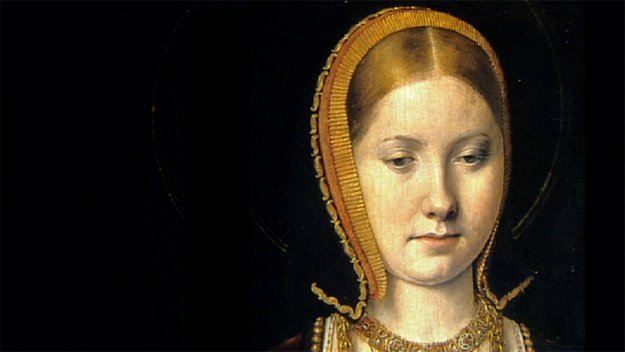
I greatly admire Mantel's fictional approach to a revolutionary historical event in English history - King Henry VIII's epic feud with the Catholic church to rid himself of his wife Katherine of Aragon, a Spanish princess and aunt of the then current pope, so that he might wed Anne Boleyn - cataclysmic events seen largely from the perspective of Thomas Cromwell, chief minister to King Henry VIII from 1532 to 1540. How wonderfully she illuminates this time period in "This dynasty, this miserable rainy island at the edge of the world ..."

Mantel's brilliance, and it is brilliance, is to render historical events that may appear dry and unappealing to the modern day reader in a manner that is entirely believable and emotionally involving. It's a style that I aspire to in my own historical fiction. She does so by creating an utterly human Cromwell using simple but elegant language: a man who was beaten and abused by his father as a boy, who witnesses the public burning of a heretic, who marries happily, has and loses children to fatal illnesses, one whose head is turned by a pretty face or ankle even one belonging to a noblewoman such as Anne Boleyn's sister Mary. A man who is by turns mercenary, loyal, lustful, dutiful towards his family and dependents, pensive, melancholy, in short, immensely human. Cromwell is seen as a bit of a roughneck but shrewd, an operator of the highest order. 

Katherine of Aragon, aunt of Pope Clement, 
hence the stickiness of the business of a divorce
Cromwell was under the patronage of Cardinal Thomas Wolesly, Archbishop of York, until Wolesly fell into disfavour with the King. Although loyal to Wolesly, Cromwell was not above playing both sides of the issue by currying favour with Anne Boleyn, her family (largely presented here as schemers and pimps to the royals) and those who supported the removal of Katherine who was to be plucked from the monarchy like an overripe piece of fruit. This despite the fact that she has borne Henry several children and had been married to him more than 20 years. She is unable to bear him a son - a son who would live beyond the first few months. Henry sought a male heir and was convinced that Anne would provide him with one.

With Wolesly's death, Cromwell was elevated into Henry's inner circle of advisers. He courts Anne, has his eye on Mary Boleyn, Henry's discarded mistress, who makes advances towards him, and on Jane Seymour, a lady in waiting to Anne and (unbeknownst to all) Henry's soon to be third wife after Anne meets her unfortunate fate. After all, what are Anne's sins - tearing Queen Katherine from her throne, facilitating the lie that Henry and Katherine's was never a true marriage and therefore should be annulled, stealing her sister's lover? Hmmm, no wonder she ended up losing her head in the ensuing kerfuffle.


Anne Boleyn, the second wife

Henry VIII is vain, vaguely stupid and impossibly spoiled. It may or may not be historically accurate, I am unsure, but it certainly makes for a captivating read. It feeds two parallel desires in the reader: the voracious thirst for gossip about the royals and their bloody doings as well as a certain smug satisfaction that they are as morally worthless as human beings as we think they might be. Yet Mantel has a light touch and even in the subtlest description one knows exactly what she is implying such as in this description of Henry at archery:
Then he holds out his arm for someone to unstrap and restrap the royal arm guard; for someone to change his bow, and bring him a choice. A cringing slave hands a napkin, to mop his forehead, and picks it up from where the king has dropped it; and then. exasperated, one shot or two falling wide, the King of England snaps his fingers, for God to change the wind.
Anne Boleyn, who is seen by Cromwell (and a good many historians it seems) as plotting to dethrone Queen Katherine of Aragon and take her place, is described as having eyes like the black beads of an abacus, which go click, click, click, tabulating what the person before her can do for her cause to be the next Queen of England.

Anne is shrewd, calculating (and much disliked) but in Mantel's hands, her ambition to be Queen, to be recognized takes on an almost noble, feminist turn at times. When she learns that she is finally pregnant, mother to the future Queen Elizabeth I, she muses: I was always desired but now I am valued. And that is a different thing, I find. 


"Lucky" number 3, Jane Seymour 
who supplants Boleyn
But the historical events are not seen merely through the eyes of the upper strata of society; they are also seen through the eyes of the servants, the tradesmen, the young ... history is filtered through gossip and innuendo about the King and the people around him. 

Mantel understands desire, how it is not rational, how it overcomes you. Here, Cromwell tells a protege of how King Henry speaks of Anne:

... how he shakes with desire when he thinks of Anne, how he has tried other women, tried them as an expedient to take the edge off lust, that he can think and talk and act as a reasoning man, but how he has failed with them ... A strange admission but he thinks it justifies him, he thinks it verifies the rightness of his pursuit ... 

The challenges to reading this novel: there is a plethora of royals, noblemen, clerics, politicians, not to mention Thomases (Cromwell, Boleyn, Cranmore, Wriothesley, Audley, Wolesly, Avery, as well as many Marys, to cite a few) in the book but a list of the cast of characters helps orient the reader. 

It would help to read up a bit on English history, just to prepare yourself as to the context. Usually, whenever Mantel refers to "he" in a scene, it is  a reference to Cromwell and his point of view which lends a bit of confusion to the reading. I heard Mantel say in a radio interview that that is why she appeared to overuse the phrase "said Cromwell" in the second book Bring Up the Bodies, to avoid that confusion. 

But these are minor impediments. I look forward to Bring Up the Bodies and then the third book in the trilogy that charts Cromwell's demise. I imagine it will be sufficiently gory based on this first book.


Cromwell, not pretty 
but very captivating ...

Tuesday, August 7, 2012

Can you smell the hubris brewing?

The Queen of Versailles (U.S., 2012) directed by Lauren Greenfield, 1 hour, 41 minutes

"Let Them Eat Crow" was a headline the New York Times review used about this documentary. That's a little harsh. Jackie and David Siegel are, or were, uber-rich, extravagant and oblivious to the repercussions of limitless spending. That soon changed with disastrous results for them.

But I wish I felt the same compassion towards the subjects of this film that the filmmaker Greenfield appears to have towards Jackie Siegel (said "Queen" in the title) and her husband David Siegel, the so-called time share mogul based in Orlando, FL. His company was, pre-recession, the biggest private time-share developer in the country. I have to say that much of the time I felt disgust and disappointment with them even as they endured their most strenuous woes watching their wealth disappear when the 2008 recession hit.

Siegel built a series of time share resorts under the name Westgate Resorts in Florida and became a billionaire. Jackie was a fairly ordinary girl from a humble background in New York state, pretty enough to be a model in New York and thirty years David’s junior. The years are catching up with her though which adds to the poignancy of her situation. Her fresh, girl next door looks are now enhanced by botox, leopard prints and silicone implants assisted by the bravest push up bras on the planet.

When the doc starts they are at the height of their prosperity and in the midst of building the biggest home in the U.S. modeled on Versailles, the former residence of Marie Antoinette. You can smell the hubris brewing can’t you?

The recession devastates the subprime mortgage industry and Siegel’s business starts to tank. The building of the house ceases and the couple must make drastic changes to their lifetyle: reducing household staff in their Orlando mansion from nineteen to four beleaguered nannies who care for eight children under sixteen (seven are Jackie's and David’s with the eighth being Jackie’s niece). The kids are taken out of private school; the personal jet is gone and they must fly commercial; Jackie starts Christmas shopping at Walmart and buying meals at McDonalds (arriving by limo no less). Both intimate that the kids may have to do something drastic, like get a college education, if things don’t work out.

It’s hard to like this family (with the exception of Jackie) at times. They behave like hillbillies. Dog poop everywhere goes unnoticed and unattended to by family except for the nannies; there are so many pets (two of which die during the course of the film due to neglect) that the atmosphere is circus like; there is such an excess of clothing, toys, gadgets, that it sickens to watch the accumulation of excessive material crap. Obscene is also a word that has been employed here in describing their lifestyle. Sadly, the most sensible of the Siegel family appears to be Jackie's 16 year old niece Jonquil who was rescued from a dirt poor background to come and live with the Siegels and who often comments on the surreal nature of their life.

Jackie is sweet enough and truly goodhearted (helping both family and friends with money in times of financial need) but she seems naive and bewildered about how things have come to this stage. Yet she cannot stop her compulsive shopping. I struggle to imagine how a grown woman thinks a rented car from Hertz comes with a driver or why buying absurdly overpriced purses (Jackie was a personal client of Donatella Versace) is a good investment as one can sell them on eBay afterwards. Although Jackie is a loving mother, a great deal of the mothering falls to the four Filipino nannies who have their own disappointments and tragedies to deal with.

David comes off very badly - an ill-tempered troll who literally gets physically uglier and more nasty-tongued as the film goes on although the filmmaker does nothing to try and portray him as such. He is exhausted by his efforts to keep the business together and seems to take it out on Jackie who tries to cajole him out of his work den for a birthday dinner or offer endearments that he repulses with joking threats that when she turns sixty he will trade her in for three twenty years olds. As Jackie is David’s third wife this may not be an idle threat.

The final shot is telling … as fireworks from Disneyland explode in the background we see the half finished Versailles house in the foreground in the semi-shambles of partial construction. The American dream, beautiful, exciting, overwhelming, over-shadowing the 21st c. reality: economic depression and the disillusioning impossibility of that dream in the current climate.

And true to the nature of her subjects, the filmmaker Lauren Greenfield has recently said that David is suing her for the portrayal of him and the business. And Jackie just keeps showing up at premieres of the film with a big smile on her face … just happy to be there.

The couple in happier, more prosperous times (pre-2008) ...

Tuesday, July 31, 2012

July Cultural Roundup

Statue of Nike at Frank Lloyd Wright's 
Martin House, Buffalo, NY
Films:
Take This Waltz (Can., 2012) directed by Sarah Polley
Moonrise Kingdom (U.S., 2012) directed by Wes Anderson
To Rome with Love (U.S., 2012) directed by Woody Allen

Books
I Was Told There'd Be Cake by Sloane Crosley (review here)
The Great Gatsby by F. Scott Fitzgerald
Cassandra at the Wedding by Dorothy Baker (review here)
The Sun Also Rises by Ernest Hemingway

Exhibits
Toronto Outdoor Art Exhibition, July 9, 2012
Albright-Knox Art Gallery, Buffalo, NY, July 29, 2012
Martin House, Buffalo, NY, July 30, 2012

Friday, July 27, 2012

Bad News

Bad News (1992) 164 pages in the omnibus edition of The Patrick Melrose Novels by Edward St. Aubyn (Picador, 2012) 

In the second book of the quintet, Bad News (Please see the review of the first book Never Mind), Patrick is now 22 years old and has gone to retrieve his father's recently deceased body from New York. As you can imagine, Patrick is a very unhappy, alienated young man. Here, he presages, a little bit, that other Patrick, an American, not a Brit, from American Psycho, not in the violent sadism of his actions but in the casual cruelty, alienation and the obsession with high end brands and looking good.

Patrick is hooked on Quaaludes, heroine, cocaine, alcohol. It's a very tough read. He is immensely unlikeable. And his wild thoughts while high are neither pleasant nor entertaining. I think if St. Aubyn is trying to give us a sense of Patrick's psychological state while high, he fails somewhat. Not so much that it is not effective but Patrick is so caustic, so misanthropic, that the reader is repelled by Patrick. Perhaps that is his goal?

Trolling for drugs from dealers in rough neighborhoods in New York, picking up women that he openly loathes in bars, merely tolerating the company of his father's friends while awaiting a flight back to England, surreptitiously coveting his girlfriend Debbie's friend Marianne ... all leave the reader wanting a quick shower after reading these passages. Patrick's self-loathing and, implicitly, the author's, are hard to take.

 Someone should advise the author that it is no longer acceptable to refer to someone as a "Chinaman" or a "negress", not the main character, but the author. Even twenty years ago that language was unacceptable. Then again, if he is racist (Patrick), he is also absolutely caustic and misanthropic towards everyone else - his girlfriend, her desirable friend, his father's sympathetic friends, and any poor soul he encounters in New York as he makes his way.

Unfortunately, the ending of both books fail to satisfy somewhat, perhaps because St. Aubyn saw this as part of a longer narrative in the quintet where the denouement may be down the road (we shall see); these endings, however, lack dramatic impact or resolution. But, I do admit, Patrick forgetting his father's ashes in the hotel until the last minute before he goes to the airport does give the reader a tiny scintilla of satisfaction. How rightful it would have been to have the old bastard's ashes thrown into the waste of New York.  

Soon to come: Some Hope the third book in the series.  

Edward St. Aubyn

Friday, July 20, 2012

The Wedding Betch


Cassandra at the Wedding by Dorothy Baker (Originally published by Contemporary Fiction - Victor Gollancz, 1964; republished by NYRB Classics, 2004) 226 pages

Who here has not had their wedding plans, if not spoiled at least, soured by a wedding betch? Who here has not been a wedding betch? Ahem ... I recall two or three who did their best to make me feel guilty about every detail, from the cost of the dress, the choice of items on the menu, the invitation list, the overall preparations and their complete lack of interest in the flower arrangements (the unmitigated gall of such indifference!) or, even worse, saying they'd come and then not showing up, without explanation? That last bit still rankles quite a bit ...

I get it ... weddings are boring for most; brides are especially boring. I am certain that I was a boring bride to be. But a little forbearance from my loved ones would not have gone amiss during a difficult time. R's father had just passed away five months before we married and no one on his side of the family was vaguely interested in the wedding. I had challenges on my side too. The timing did not appear to be good and people did not behave nicely.

On the other hand, and this is why karma sucks my good people, I remember being an unenthusiastic participant in the wedding of a person close to me and being rather prickly about it as it seemed to dredge up a certain amount of unpleasant female rivalry and emotion between us. I could not have named my anxiety then and I'm betting neither could our young protagonist Cassandra Edwards. Her name hearkens back to Greek mythology and another Cassandra who had prophetic powers ... and it didn't end that well for that chickie either I'm afraid.

But this really isn't about a wedding, it's about women and the constrictions that they felt they were under in a specific time period about their life choices.

At least Cassandra has some sort of excuse for being so vile to her twin sister Judith as Judith prepares to marry. It's 1962 ... a period of pre-Second Wave feminism where for a young woman not to aspire to marriage was seen as sort of strange mental malady. Cassandra is definitely feeling the constrictions of being an upper middle class girl, well educated at Berkley and working on her Ph.D., who feels that she has few options and that her sister is deserting her and the life that their hermetically sealed family has always pursued.

Cassandra alludes to the special relationship between the women as sisters, as twins, referring to "our stars". They are " ... Castor and Pollux, inseparable. They stay together all year round but they go to China or someplace in the summer. Together, of course. And come back home in the fall." This is what Cassandra hopes for - that they will never be separated, that their life together should not change. She even offers to drive to the airport and tell the groom John exactly that ...

Perturbed by her twin Judith's wedding plans, Cassandra consciously, or subconsciously, tries to ruin the wedding when she arrives back at the family home from Berkley University where she is completing her Ph.D. She doesn't respond to Judith's phone calls; she refuses to talk about the wedding or the groom; she purposely misnames him; she lies to Judith about their father and grandmother's impressions of John; she purchases (uncannily) the exact same dress her sister purchases for her wedding and then refuses to exchange it but offers to cut it up into little pieces. She insults Judith's taste in the dress saying that she expected something more conventional. She refers to the dress (hers or Judith's?) as "the white snare. The pure silk booby trap that caught me out."

Cassandra is in revolt against her (and Judith's) fate and she doesn't even understand why. She vehemently objects to Judith's marriage and to her perception that Judith will become a conventional, suburban housewife. She's a quirky, angry person who reminds me in a way of Holden Caulfield, the 17-year-old protagonist of The Catcher in the Rye - misanthropic, unhappy in a very unspecific way and unable to assimilate into mainstream society because of some dearly held moral principles that they believe are superior to others'.

The anticipated separation and emotional dissonance between the sisters is so great that it pushes Cassandra into trying to harm herself when she learns that Judith has left to pick up her fiancee at the airport.

The mythological influences abound ... the sense that we are in the midst of a Greek tragedy. When Judith says that she feels as if she has just swum the Hellespont the reader recalls that the Hellespont features in the legend of Hero and Leander where Leander swam the Hellespont to tryst with the priestess Hero, his beloved. Presumably the horrific night with Cassandra represents the Hellespont.

Baker cites Hemingway as an influence and I see it clearly. The clipped sentences, the simple sentence structure and plot line. But it is much more psychological in nature. Baker is very effective in demonstrating Cassandra's torment. We may not fully understand it but we feel for her intensely.

There is an unspoken sense that Cassandra is possibly gay (Baker has tackled this theme before to great controversy in her other works) but it is never explicitly mentioned. One can imagine the shock waves that a more graphic revelation would have made in that Mad Men age. But the psychological conflict and anxiety in Cassandra is explicit - the continuous drinking, the pill taking, the analysis, the aversion to marriage ... the coy manner in which Cassandra asks her grandmother if she really believes that her "prince" will come one day as Judith's has come. If my gaydar was a bell, I, and it, would be ringing ... Here is Cassandra reasoning to herself after her attempted suicide:
You've blundered into high grade stuff here. You can't get away with it. Nobody's going to like it - not even God. It's not his plan, as everyone knows. His plan is for somebody from California [Judith] to run into somebody from Connecticut {John}, opposite sex and altogether fitting. And the, Lord, can the receiving line receive and the hosannas bounce off the back wall.
Fortunately, a wedding ring no longer means a sort of enslavement as it did for some women at that time. But it did for some. And Baker was infinitely brave to suggest that all that glitters (like a diamond engagement ring) does not represent gold for all women.

Friday, July 13, 2012

The Humorless Feminist

I Was Told There'd Be Cake by Sloane Crosley (Penguin Group, 2008) 228 pages

Hello, my Name is A Lit Chick and I ... am ... a ... humorless feminist but, hey, I come by it honestly. I have been a humorless feminist since the age of eleven. Yes, I do recall the exact date of my epiphany (a long story that I will share another time). Since that age, I have struggled to find humor in the written works of contemporary comedic writers.

David Sedaris leaves me cold. Woody Allen ... meh. Fran Liebowitz ... sister please. The two Daves: respectively, Barry and Eggers. Bleh. Sarah Vowell, okay she makes me laugh. She's odd, quirky and smart. I love to laugh as much as the next gal, possibly more. I love funny people, they are my favorite kind of people but humor in the printed word is so elusive for me. So what is my problem besides the fact that I am a humorless feminist? 

I picked up this book in New York at the Strand Bookstore last month because I loved the title. And I like reading thoughtful essays. So why does Ms. Crosley's brand of humor irk me so much? Because it is about nothing ... not the funny "It's about nothing" Seinfeld kind of humor, it's just about nothing. 

She has a trash mouth, which does appeal to me, but she wastes it on the trivial. She is charmingly insecure about her looks and hair. But what gal isn't? Look at her face ... sniping at her would be like yelling at a kitten. However, one must screw your courage to the sticking-place in reviewing ...

A sample of the personal essays, albeit, I'll admit she has a talent for snappy titles ...
  • My collection of toy ponies ("My Pony Problem").
  • I got locked out of my apartment not once, but twice, the day I moved apartments. I'm such a flake! ("Fuck you, Columbus")
  • I'm a vegetarian and it pisses off my friends and family ("Lay like Broccoli").
  • At summer camp, they made all the kids (even the non-Christians) participate in Christmas celebrations ("Christmas in July") and even though I'm Jewish I liked it!
  • I pissed off my friend's boyfriend one night and I think he left me an ugly surprise in my bathroom ("Smell This").
Say something meaningful I want to scream, stop being so glib and frothy.

The closest we get to any honest emotion is in the essay "You on a Stick" about being the maid of honor for a high maintenance friend from high school whom Crosley has not seen since high school. A lot of the expected humor is at the expense of the bridezilla who mercifully has had her name changed in this piece. But Crosley hits a nerve about female relationships and the married state. Not everyone gives a damn about weddings or bachelorettes or the size of the ring he bought you. There is an ugly, largely unspoken of tension here ... implicitly, for some, a woman's value and self-esteem is tied to the size of the wedding celebration and the cost of the Vera Wang dress. It's one of the few places where we see a glimpse of honest anger and  truth. The page practically crackles with heat and rage.

The wedding industrial complex is obnoxious; it does do something to women who get sucked into it. Otherwise rational, intelligent women start bullying and terrorizing everyone around them to achieve that most ephemeral of things - the perfect wedding.

The essay on Crosley's first boss being an unbearable harpy ("The Ursula Cookie"), despite her initial positive impression of the woman, was poignant but lacking in something. Crosley resigns the day after 911 after being treated horrendously by her seemingly sociopathic boss - not specifically because of 911 but it just happened to work out that way. There were so many ways she could have handled this episode: perhaps an examination of a thwarted expectation that maybe Ursula would change her ways in a post-911 "we're all in this together" New York sort of way; the realization that she likely wouldn't change; exploding the myth that publishing work in NYC, even entry level work, is glamorous. Instead we have the depiction of a very immature person just disintegrating in front of her vicious employer (very understandable but interesting? I'm not sure). Who has not dissolved before an intimidating boss who thought you were a complete fool?

Or take for example the essay "Sign Language for Infidels". Crosley, or a reasonable facsimile of her fictional self, volunteers at the American Museum of Natural History in the Butterfly Room. It reveals a bit about volunteerism and self-delusion. We want to "appear" to be good people by volunteering but often don't have the wherewithal to follow through and often dislike what we have to do and whom we have to do it with as volunteers.

Maybe I just have an odd sense of humor. I think the following personal anecdote that I have written about in this blog is funny: a (presumably) homeless person sniping at me while I am serving food at the local soup kitchen during my stint as a volunteer in the winter during a particularly trying night because a) it explodes the little liberal fantasy I have that the homeless are sweet, beleaguered people who are grateful for my volunteer work. b) I can freely admit that he looks like a jerk for being rude to me and I'm a jerk for expecting that a potentially mentally ill person of limited means is not going to feel stressed and angry when he can't get his meal in what he perceives to be a timely fashion. Now, for me, that's funny because it says something about him (he is human, very much so) and me (a deluded liberal stripped of her expectations) and society (we think passing out some meatloaf to an impoverished person with possible mental health issues will make things better in our city). 

Ms. Crosley
So I wanted Crosley to say something about her 20 something life in New York. Something about the experience of being young in one of the greatest cities in the world. There is virtually nothing about 911 or life after it. Nothing about the diversity or class differences or proximity to some of the richest people in the world in that city.

So ... do you want to sound like a smart-assed, trash talking Westchester bred brat from a privileged background? Or do you want to say something meaningful? Okay, we're waiting Sloane. You can do it ... "My name is Sloane Crosley and I want to write comic pieces ..."

Saturday, July 7, 2012

Never Mind

Never Mind (1992) in the omnibus edition of The Patrick Melrose Novels by Edward St. Aubyn (Picador, 2012) 

Edward St. Aubyn has a vitriolic but eloquent disdain for the British upper class that he is eager to impart to his readers. His contempt is not confined to the aristocracy, that he captures so brilliantly, but also the wannabes and hangers-on that populate his novels.

His contempt seems well founded. They are (variously, as they are portrayed here) vain, snobbish, obsequious towards their "superiors" and contemptuous towards their "inferiors". They are alcoholic, promiscuous, mooching, impossibly self-obsessed. Virtually, only the five year old Patrick Melrose, the main character who is loosely based on St. Aubyn himself, remains pure, tainted only by this father's horrendous abuse and his mother's maternal incompetence.

When David Melrose, Patrick's father, meets his prospective bride Eleanor we immediately understand the parameters of their relationship when he requests that she eat the Moroccan chicken he has lovingly prepared as if she were a dog ... no cutlery, no hands, on all fours, on the floor. The pattern of dominance/submission is set. It's an absolutely chilling scene.

This is a nasty trick he repeats when he compels Eleanor to consume all the fallen figs from a tree on their property that she has mildly complained are being wasted. Thus, we meet Patrick Melrose's parents.

But David's cruelty is not restricted to Eleanor. Even more explicit horrors await little Patrick. David approaches Patrick as if he is a subject in a scientific experiment, exhibiting sadistic, and horrifically immoral, behavior to see how much the little boy can take before he breaks. 
Edward St. Aubyn
Eleanor, completely subjugated, alcoholic, addicted to pain-killers, watches helplessly from the sidelines, unaware, or unable, to act.

The circle of "friends" who surround the Melroses (Victor Eisen and Anne Moore, Nicholas Pratt and Bridget Watson-Scott) who have gathered for an informal dinner at the Melrose home appear to not so secretly despise the Melroses, their own partners and even themselves. And who can blame them? They cheat on each other, suck up to the monstrous David to enjoy the luxuries of his home, gossip about Eleanor's alcoholism and subjugation even while they enjoy the fruits of her inherited wealth.

One other person comes off fairly well in the novel, his mother Eleanor's friend Anne Moore who tries to console the wretched boy after he tumbles down the stairs and cuts himself. He remains marooned on the stairwell outside the party waiting for his mother to appear (she does not). A sympathetic Anne resurfaces in the next book to console Patrick about his father's death. 

If the author sounds wounded and bitter it's likely because he is. Much of the material regarding Patrick's early experiences is said to be autobiographical.

The language is beautiful and St. Aubyn displays wit and sharp insight into his class but the story feels abbreviated and open-ended. Perhaps St. Aubyn already envisioned the four novels that were to follow?

On to the next book in the quintet called Bad News ... look for the review shortly.