Thursday, January 24, 2013

Bring Up the Bodies

Bring Up The Bodies by Hilary Mantel (HarperCollins, 2012) 411 pages

We well know King Henry VIII's second wife Anne Boleyn's fate (it involves her body being separated from her head for those who don't know) ... yet it's intriguing to see how Henry managed to get rid of his second wife and finagle marrying his third, Jane Seymour, Anne's lady-in-waiting, through the eyes of King Henry's Chief Minister Thomas Cromwell. 

Mantel is amazingly descriptive in detailing King Henry's and Queen Anne's machinations here in the second book of the proposed trilogy. Please see the review of the first book (detailing the fall of the first wife Katherine of Aragon and the ascension of the second wife Anne Boleyn). The series will conclude with the third book in the series, the yet to be published The Mirror and the Light.

The trilogy chronicles the rise and eventual fall of Cromwell, who had a front row seat to these historic events in England: the dismantling of Catholicism in England; the succession of wives procured to produce a "legitimate" son and heir (Henry had a "bastard" son Henry Fitzroy who was prohibited from ascending to the throne); the gradual elimination of the successive wives ... until poor old Henry petered out himself, likely exhausted from all the bloodshed and sorrow he had caused. I don't want to spoil the ending but Cromwell only lived to see the first three wives appropriated, used and discarded.
Holbein's portrait

As intimidating and frightening as Cromwell appears to those around him (and to us at times as the reader), Mantel movingly conveys the insecurities that sometimes plague him, as a powerful man who comes from humble origins. True, he is harsh, Machiavellian and mercenary but at no time do we side against him as a reader - despite his duplicity and manipulation of both the King and those who surround him. Cromwell is by turns, nostalgic, tender, romantically inclined, progressive in his treatment of the poor, and by all accounts here a good husband and a better father. 

As the novel starts, Anne has been Queen for three years and has been unable to bear Henry a son although she did give birth to the future Queen Elizabeth I. And the king is getting twitchy for a male heir ... and amorous.

Anne and the Boleyns are clearly the villains here, pictured to be manipulating Henry - slandering Katherine of Aragon, the first queen; keeping Henry's daughter Lady Mary (once Princess Mary when her mother was Queen) a hostage with no access to her mother as she won't recognize Anne as Queen; hoping for Katherine's death and threatening Cromwell if he displeases the new Queen. 

And Henry, vain, petulant, over-stuffed and knuckle headed, must have what he must have whether that be a new mistress, a submissive wife, and a male heir.  

And all the while Anne (and Cromwell, our everyman hero) have their beady eyes on plain, submissive Jane Seymour whom they suspect, rightly, that the King has set his sights on as his next conquest. 
Katherine
We see the chink in Cromwell's armour ... Cromwell, sometimes ruthless but seemingly uneasy in his role, at times fears that he looks like a murderer in his formal portrait by Hans Holbein (pictured above), to which his son replies innocently, "Did you not know?" He suffers the pangs and anxieties of a common man thrust into the apex of an enormous power struggle - between the King and the Catholic Church that wishes to see him dethroned for divorcing Katherine. The Pope is her nephew and has sworn to rally all of Europe against Henry. Upon Henry's orders, Cromwell bids Katherine, in her banishment from the court, to put aside her claims to the throne; sickly, bitter, she refuses and Cromwell returns to face Anne's displeasure:
She orders her women out: a vehement gesture, a child scaring crows ... the ladies gather their trains, flap languidly away ... Lady Rochford is the last to take wing, trailing her feathers, reluctant to yield ground.
The image of crows is significant and apt, a bad omen, foretelling disaster for Anne and her kin - the Boleyns and the Howards. 

When Katherine finally dies, unrepentant and still desirous of a union with Henry, Anne seeks a rapprochement with Lady Mary, the King's daughter, but only if she will recognize Anne as Queen. She does not and Anne vows to destroy her.


Katherine of Aragon, in her banishment, dreams of "the the gardens of Alhambra, where she grew up: the marble pavements, the bubbling of crystal water into basins, the drag of the white peacock's tale and the scent of lemons". Later, when speaking of Katherine's near death Cromwell tells the French ambassador who is advocating for mercy for the first queen, "Death is your Prince, you are not his patron ..." Cromwell eloquently admonishes: all must bend their knees before this Prince. 

At this time, soon after Katherine's death, a strange incident takes place, during a jousting tournament at Greenwich Palace on 24 January 1536, the corpulent Henry, falls, in full armour, from his horse and is presumed dead for some two hours - this is based on a true historical event. Cromwell, upon hearing the news, packs a dagger on his person in the full
Anne Boleyn
expectation that he will be attacked or killed or imprisoned by his enemies if the King is truly dead. The King revives and the court tries to suppress the incident to protect him from his enemies, who are numerous.  

Yet after the king's accident, Cromwell still feels that he is on the "wrong side" of a number of potential enemies: the Boleyns, the King's daughter Lady Mary, the Queen's uncle the Duke of Norfolk, the Queen's cousin the Duke of Suffolk, the King of France who supported Katherine and the Pope, among others. He observes: "The contest - every contest - is sharper now."

With the loss of a second son through a miscarriage, the King suspects that evil forces are working against him - that he was been bewitched and cursed and that his two key advisers, Thomas Cromwell and  Thomas Cranmer, might have had something to do with it, plotting to have him marry Anne against his better reason. In a menacing nightmare, Cromwell dreams that he hosts a sumptuous banquet for all his enemies who insult his hospitality, his background, his person. In the banquet hall he sees:
Up there are carved and painted faces of the dead: More, Fisher, the cardinal [all executed on the King's orders], Katherine the queen [banished from court, her marriage annulled]. Below them, the flower of living England. Let us hope the roof doesn't fall in.
Jane Seymour
The Seymours, too, are not above pimping out their daughters when they see Henry's interest in Jane. Real, or feigned, Jane Seymour does not seem to understand a simple question about her virginity or her role in enticing Henry - not that the family cares if she's not, they just need to know in order to fabricate it for the King. Tom Seymour advocates for his sister to become, at the very least, the King's mistress: "Why would one prefer a tough old hen [Anne] to a plump little chick [Jane]?" "Soup." is Cromwell's muttered reply. 

Mantel writes of Cromwell: His past lies about him like a burnt house. How should Cromwell proceed? Continue to support Anne and the Boleyns or Henry's newest interest Jane? Which is most politic? 

When Cromwell and others see Henry turning away from Anne, Cromwell sees to it that he gathers enough evidence to rid them all of Anne who has made no friends at court. He fishes for malicious gossip amongst her ladies in waiting - sowing and gathering seeds of dissent and ugly gossip - and then cements the evidence by torturing an effeminate and mild-tempered musician, Mark Smeaton, who is said to have had relations with Anne. Smeaton unleashes a torrent of names.

In many ways, the book shocks. Anne is rumoured to  have coupled with Henry in unorthodox ways (i.e. not in the missionary position). This baffles and plagues the King - where would she have learned to do that, from whom, from what source? Did she thus "waste" his seed when she should have been trying to procreate with him and provide him with an heir? I have no idea if this rumour about Anne is historically accurate but that it surfaces boggles the mind. The brutality it conveys towards women is like a punch to the solar plexus.

How quickly the Boleyns and the Howards collect to disown Anne and retain their privileges.
Princess Mary
Anne is taken to the Tower by a barge and imprisoned, accompanied by Cromwell and a host of nobleman who, it appears, are only too happy to dispose of her. Her crimes - real or fabricated - are said to be adulterous relations with a number of men, incest with her brother George Boleyn and treason against the King in wishing him dead so that she might be with one of her other lovers. And Henry weeps crocodile tears before Cromwell for being ensnared into two "illicit" marriages, railing against the perfidy of women and their scheming. 


Cromwell's interrogation of the half dozen men accused to have slept with Anne is one of the few instances where I dislike Cromwell, actively. You seen that he is wavering internally, when he weighs the logic of what is true and what is not in the men's testimony - none will confess but point the finger, subtly, at the others. But he pursues their (and Anne's) destruction regardless. 
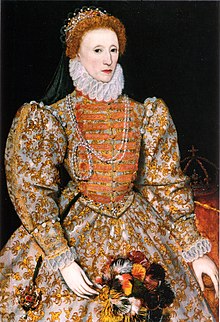
Elizabeth I
Mantel's tongue is swift, sure and wicked - moving swiftly from elegant prose and descriptions to ribald dialogue that cuts to the quick and feels thoroughly authentic whether it is conjecture at court about Anne being unfaithful to the king or speculation on how Cromwell should prove, physically, demonstrably, that he is not a Jew. It's not pretty, nor should it be. The English do not yet possess an image of refinement and sophistication in the world court. By Cromwell's own admission, they are seen to be throughout Europe as "brawlers and looters and rapists and thieves".


If you are a monarchist, you perhaps will be enraptured and intrigued by the King's machinations. If you are not, then you might be secretly thrilled with the idea of noblemen being picked off like flies by each other ... one by one by one.

Thursday, January 17, 2013

Una Regina Senza Re

Povera me,
Sono Regina senza Re

Poor me,
I am a Queen without a King 
~ Italian saying, origin unknown ~

One day, when my mother was recovering from her hip surgery, as she was perambulating about the condo on her walker, she gently started to murmur this phrase: Povera me, sono Regina senza Re ..." and I said, "What Ma, what did you say?" 

I asked her to repeat it. Even though I had heard her say it before I had forgotten it. It was so poetic and so apt ... as our mother, as a widow, has enormous influence over all of us. Alone, her suffering intensifies the guilt we feel when she suffers or when she is thwarted and doesn't get what she wants. Of course, if she is la Regina, we are her subjects and therefore subject to her will. 

I have not lived with my mother since before I left for university - decades ago. Having spent several days with her, alternating with my sibs, while she convalesces from hip surgery, I wrote a blog entry about our time together. I didn't like the tone of it so I wanted to rethink what was at the base of these feelings.

My mother, a septuagenarian, had her hip replaced, a surgery she feared and sorely needed after suffering for months with intense pain and lack of mobility. Mama lives alone, in a condo near my brother, and at the youthful age of 77 appears to be the designated driver for posse of old ladies in her circle, many of whom live in her building. She is active, lucid, social and ... sharp tongued. Hopefully, I might be described the same way. 

When we're together fireworks often ensue. 

She says I am too sensitive and wayward. I think she's insensitive and demanding but no more so than any of my female relations on my mother's or father's side - young or old. 

My interaction with Ma usually ranges from passive-aggressive ("People say I am coming to resemble you Ma." "Really, you mean since you've gained weight?") to the aggressive-aggressive ("Oh, so finally I see my daughter because I'm sick!" she says as I come for a two day stay.) But I am not asking for your sympathy because anyone who knows me, knows I give as good as I get.

But in quiet moments, she can be very thoughtful, very tender. 

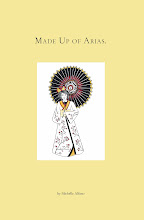
She said to me recently, "What will I leave behind? Nothing ..." "Us, you leave behind us ..." I insisted, feeling really heartbroken that she felt this way. "Oh yes," she said with just a hint of resignation, "My children." "Yes, and my book ... I could not have written my book without you Ma!" [My main character, the fiery and tempestuous Seraphina in Made Up of Arias is largely based on my mother and myself I might add.]

Another time as I was tucking her into bed she said sweetly(?) in Italian, "Oh, I have such good kids ... all this time I thought I had bad kids!" 

So when la Regina comes home from the hospital over the holidays, the heavy emotional artillery comes out. On both sides. My sister and I have used all of our two weeks holiday over Christmas to take turns caring for her. My brother has done an extraordinary amount of chaperoning to appointments and legwork getting the condo ready for her return from the hospital and is staying overnight as well. Everyone has played their part.

However ... how to handle the division of labour now that she is at home?

The nurse assigned to care for her at home every two days (changing bandages, etc ...) asked if we had a caregiver for when we, her children, had to return to work. Of course we had not. Because this is how Italians roll ... we can't have a stranger help around the house because we take care of our own. Even though I live an hour away, work full time and have a child I am expected to accommodate this as is my sister - who works full time, is a union steward and a committed friend to a number of her circle with health issues. Hiring a caregiver would be seen as a dereliction of duty to my mother. 

As would, apparently, hiring a cleaning lady. As my mother said, 'Why should I have a cleaning lady when I have children (ahem, here read daughters)?"

I know exactly what the thinking is behind this. If my sister and I did not take care of this cleaning her friends and family would think we didn't care about her, that we have deserted her. It would personally embarrass her.

However dear reader I am tired ... tired. The idea of making a trip to another city to clean someone else's toilet exhausts me.

It was at the tender age of ten I realized that domestic servitude equals love in our household. After some petty argument with my mother (the issue now long forgotten), I decided that I would sweep the kitchen floor after dinner. That was my assigned daily duty and I hated it. It was simple, could be done quickly and was an easy task for a ten year old but even then I resented the expectation that it was my job. I knew why it was my job, because I was the eldest female child and I felt that for my whole earlier life I was being prepared for a life of domestic responsibility that I did not want to assume as a female.

When I picked up that broom my mother quickly embraced me and cried out, "You do love me!" I was absolutely flummoxed ... my sweeping the floor meant ... I love you? That's how I show my love? Even at ten I was shocked at the absurdity of this thought.

Another conversation ... many years later while she is still in good health and not in need of our assistance. An argument with my mother that it is the daughters' role to care for her aging parents. I took the position that the siblings should share it regardless of sex. This shook my mother, she was actually distraught and on the verge of tears. "A son can't do that ... a son can't take care of his mother." Likely she was thinking of more intimate care and didn't like the idea. But I remember her shock and disapproval that I did not agree - a sense of almost being betrayed.

And here I am decades later ... I am faced with a similar dilemma: should I pick up the broom (or toilet brush) to prove my love? Well, should I?

Monday, December 31, 2012

December Cultural Roundup

Exhibits:
Once more into the breach ... Frida & Diego: Passion, Politics and Painting at the AGO

Films:
Anna Karenina (U.K., 2012) directed by Joe Wright (please see review here)
Silver Linings Playbook (U.S., 2012) directed by David O. Russell (please see review here)

Books:
The Cellist of Sarajevo by Steven Galloway
The White Album by Joan Didion
Katherine Mansfield: A Darker View by Jeffrey Meyers

Monday, December 17, 2012

The Film Club

The Film Club: A True Story of a Father and Son by David Gilmour (Thomas Allen Publishers, 2007) 244 pages

When this memoir begins, Jesse is a sixteen year old with few ambitions, a dislike for formal schooling and a very anxious father. David Gilmour, a film critic and former broadcast journalist, is apprehensive to find an alternative to formal education for his son. He permits Jesse to drop out of school and doesn't demand that he get a job if the boy agrees to watch at least three films a week with his dad and let him "home school" Jesse on cinema. Dad's only stipulation: no drugs.

As a parent, this proposition raises the hair on the back of my neck (and pretty much everywhere else). How can this plan succeed? You can see Gilmour wavering when he glimpses the serious gaps in Jesse's knowledge base: Where is Florida? Is South America a country? Is the U.S. across from Lake Ontario? Is it merely a poor sense of geography or something more serious happening here? Oy ... you can feel the rising panic in Gilmour's writing. Am I doing the right thing here? he wonders.

I don't think I need to go over the films discussed here ... there are the classics (The Godfather, Chinatown, The French Connection, Hannah and her Sisters), the obscure films (Onibaba, Un Flic, Stick), the trashy, illicit ones (Showgirls) all accompanied by fairly banal commentary but that's not the point. The point is the adventure, the experiment. Will it work? Will it waken Jesse from his teenage lethargy?

Gilmour obviously loves his son deeply. Parental love is not that much different in its intensity than romantic love I find. Gilmour is an unabashed sensualist and obsessive in his interests. Read any of his other novels and you will see what I mean. A Perfect Night to go to China is a wonderful book about the loss of a son through a father's negligence. The anguish in that book is palpable; it stayed with me for weeks.

Gilmour's diligence and interest towards his new role in Jesse's life is demonstrative of this intensity. He is meticulous in his choices for Jesse and watches him compulsively for signs that the experiment is failing, that he is failing as a father.

It's easy to be in love with one's child and to be a little in awe of their physical beauty. After a particularly distressful breakup Jess has with a manipulative girlfriend, when David manages to make Jesse smile, it's "like wind blowing ashes off a beautiful table." In one scene, Jesse, a strapping lad of 6' 4'' in his late teens is rattled by the fear of his father's displeasure and honestly tells him so. To his credit, David confesses to his son how much effect the boy has on him. How true, how poignant, how little they know the power they have over us emotionally.

Through David's eyes we see Jess struggling with romantic relationships, undesirable jobs, Vanilla Ice rapper aspirations, and the possibility of a very bleak future when one has not even acquired a highschool education. It's a frightening scenario for a parent. But interestingly, David's future is not that much brighter at that point. While highly educated, intelligent and often holding high profile jobs in the media, he is underemployed and as he nears fifty, he fears that he is unemployable in a regular capacity. In a fit of desperation he even asks a bike courier who is roughly his age if he can put in a good word with his boss about a possible job. The revelation is painfully honest, excruciatingly so.

Despite Gilmour's sometimes overly effusive or trite observations on the films they viewed (which he helpfully cites in the index), we learn something about manhood or Gilmour's ideas about what manhood should be. When, on a holiday, he follows Jesse as he ventures away from their hotel in Cuba, beguiled by a couple of suspect Cubans into a bar and they narrowly escape what we suspect will be a beating and/or a robbery. He (and we as the readers) are strangely elated by his macho posturing. Gilmour's primary reaction is, "I did something for my kid. He still needs me." And believe me, that's a rare feeling as teens approach young adulthood.

This engaging story is sometimes marred by Gilmour's quirks and prejudices - despite his own obvious personal failures (which he does not fail to talk about here) he is an insufferable snob at times. Here he surveys the group his son works with telephone soliciting funds for a "fireman's magazine" in a grubby back room: " ... a dead end white kid, a Pakistani, an overweight woman with a tub of coke in front of her ..." So ... a kid you deem worthless, a "foreigner", a woman with weight issues ... and your son, the grade 10 drop out with obnoxious table manners is the gem in this grouping?

He keeps imagining his son driving a lonely cab at night. A legitimate worry but also very ... what is the word I'm looking for? Elitist. Why is a a grade 10 drop out too good to drive a cab or spend time with the people he mentions? How do you think we end up in these positions? Do any of us aspire to take low paying jobs? No, we are forced into them due to lack of education, poor language skills, bad luck, poor decision making, fate. Remember, you tempted the gods when you bid him leave school at that age.

Jesse does redeem himself, I won't reveal how, but he does. And that kid that I wanted to grab by the scruff of his neck and haul off the couch actually turns out to be a sensitive, sweet kid with promise. Bravo papa.


The Gilmour boys ...

Monday, December 10, 2012

How did you get this number

How did you get this number by Sloane Crosley (Riverhead Books, 2010) 271 pages

I was mean to Sloane Crosley when I reviewed her previous book (like, mean-to-a-kitten mean) in a manner that I generally don't like to do in reviewing the work of another writer. Please see here for that review. She seems a thoroughly likable person; however, privileged people living in NYC who get publishing contracts at youthful ages are definitely in my cross hairs. Especially if you write about fluffy topics. So I was somewhat pleasantly surprised when I picked up this book at one of the University of Toronto's used book sales this fall and read the first essay.

It is a comic/melancholic essay entitled "Show me on the Doll" about a (possibly) ill advised trip to Lisbon on the cusp of turning thirty, which Crosley claims was so not a big deal. But, apparently, tooling around in a foreign city where you speak not a whit of the language in the dead of winter is ... not fun. But what I like about it is what it does not say rather more than what it does say. Being alone on a journey is not fun; reaching a landmark birthday is dispiriting at times. No matter how glamorous the locale and the idea of this trip, there is a sort of sadness attached to it when you don't have someone to share these memories with. She adapted to the lack of language skills, the awful semi-pornographic TV, weird men following her around, her sense of displacement, the loneliness, and was saved by ... a trio of clowns in a cafe.

Crosley is eminently more engaging when she writes about her travels. I enjoy the fish out of water, self-effacing feel of these pieces about trips to Lisbon ("Show Me on the Doll"), Alaska ("Light Pollution") and Paris ("Le Paris!").

In Alaska, as the member of a bridal party, she witnesses the accidental death of a small cub struck on the highway by a vehicle that she's riding in - it's thoroughly upsetting and eye-opening. In Paris, she attempts to (somewhat traumatically) engage in confessing to a priest in the Cathedral of Notre Dame to a priest who speaks very little English (did I mention that Crosley is Jewish?). It's a bizarre and surprisingly touching essay. 

As is "Take a Stab at It" about finding suitable living accommodations in NYC and almost finding accommodation in a former bordello. Her growing attachment to the idea of being in close proximity to the ghosts of the prostitutes of the bordello is touching (and strange).

For me, this is much more engaging than recounting past injustices suffered at the hands of a mean girl in essays such as "If You Sprinkle" about a most unfortunate slumber party during middle school and encountering said mean girl many years later or "An Abbreviated Catalogue of Tongues", an essay on one's childhood pets categorized by animal. This cutesy approach to essay writing makes me groan. Invariably these pieces are solipsistic and boring.

By the final essay, "Off the Back of a Truck", she has lured me back ... the story alternates between her somewhat covert relationship with "Daryl", a warehouse worker who is likely selling her stolen luxury goods at highly reduced prices, and her relationship with "Ben" - a too good to be true prospective lover who may, or may not, have recently ended an eight year common law relationship to date Crosley. It makes for a clever analogy: Crosley is stealing from this upscale retailer and, unknowingly, possibly another woman's partner. Or, perhaps ... Ben is "stealing" Crosley's love away in the same way she is "stealing" through Daryl. It is the most mournful essay in the collection, unusually so, deliciously so.

I detect an underlay of sadness here that was not so evident in the first collection. I think I like Crosley with a broken heart, whose dreams are a bit shattered. The glib smart mouth is subdued and a more soulful quality has emerged. The kitten is growing up. And likely I should stop being mean to it. Very likely.

Monday, December 3, 2012

Her Crowning Glory

Frida Kahlo's Diego on My Mind
A woman's hair is her crowning glory.
1 Corinthians 11:14-15

In October 2012, the Art Gallery of Ontario set up photo booths outside of the gallery to draw in  visitors to its new exhibit Frida & Diego: Passion, Politics and Painting. You could affix a long, black strip across your eyebrows, to approximate Kahlo's famous "unibrow", take a photo, and then receive 50 per cent off admission to the exhibition on October 27th.

I found this a tad disturbing. I know that previous art exhibits elsewhere had tried something of this sort, specifically having to do with Dali’s moustache … apparently this was very successful and mostly non-controversial. Why is this different, I wondered, because it feels very different.

A woman’s hair is laden with meaning in almost all cultures … sexually, politically, culturally. A great deal of hair is indicative of sexiness, fertility, youth (vedi Bardot or, more currently, Rihanna or Lady Gaga). Big or messy hair can also be threatening (political activist Angela Davis or punk rocker Courtney Love) to mainstream culture - signifying defiance of female docility or resistance to societal norms. Yet, generally, a great deal of hair in many contexts is seen as acceptable, inviting, sexy.

But not when it is on a woman's face; a hairless face is sacrosanct, hair on a woman's face is verboten. Too much is what ... masculine, unattractive, butch? A surplus of hair (in this case, Frida’s unabashed moustache and bushy eyebrows) is atypical in Western culture and, therefore, often the subject of mockery or fun. Frida, a beautiful woman, if unconventionally so, is reduced to a series of "ugly", unfeminine physical attributes.

Despite the prevalence of products to remove hair on females, we like to pretend that this is an anomaly, an aberration in women, at least in feminine women. According to Euromonitor International, a leader in strategy research for consumer markets, retail sales of depilatories reached a total of CDN$199 million in Canada in 2011. I know, I know ... I love a good pair of tweezers myself having been blessed with inheriting my father's generous eyebrows.

We know it exists, we know it’s just part of being human, of being female … we just don’t like it very much in females. 

But ultimately, this small, light-hearted promotion at the AGO is disrespectful. Not only is it disrespectful to her as a woman, but, as importantly, disrespectful to her as an artist. When you take a major female artist who belongs to an ethnicity that seems to have a more relaxed attitude towards facial hair and make that the focus of our interest as viewers of art, it takes on a certain meaning – of derision, amusement, condescension. 


I know the intention was to be playful, to lure into the gallery patrons who might not ordinarily come to an art gallery but it’s very demeaning – the equivalent of having people don fat suits in imitation of Diego Rivera, who, obviously, was a man of expansive girth. Why not do that? We don't do that because it's rude and disrespectful of his talent.

Women come in all shapes and sizes and colours and, yes, even hairiness … when you reduce Kahlo to one aspect of her physicality you are demeaning all the fine work that she has accomplished. Is she just the slightly eccentric Mexican woman who wore peasant dresses, didn’t remove her facial hair and posed with monkeys? Or is she something more? 

Is she also being derided because she painted about "female" concerns - her inability to become pregnant, her physical ailments due to her accident and illnesses, her obsessive love for Rivera, her focus on self-portraits ... does that perhaps add to the dialogue in terms of making her less worthy of esteem?

If she is something more, more than a series of interesting tics and physical attributes, which I presume that the AGO believes as they are featuring her work in a major exhibit, then show it. Prove it. Treat her with the respect she deserves. 


Friday, November 30, 2012

November Cultural Roundup

Garbo and Freddie Bartholomew in Anna Karenina (1935)
Films:
The Master (U.S., 2012) directed by P.T. Anderson (review here)
Anna Karenina (U.S., 1935) directed by Clarence Brown

Books:
How did you get this number by Sloane Crosley (review here)
Play it as it Lays by Joan Didion 
The Film Club: A True Story of a Father and Son by David Gilmour (review here)
Jacob's Room by Virginia Woolf 

Readings:
Reading at Word Stage, QSpace, November 14, 2012
Now Hear This CD Launch party, Revival, November 22, 2012
(Not So) Nice Italian Girls & Friends celebrate the New Releases of 2012, Q Space, November 29, 2012

 Exhibits:
Frida & Diego: Passion, Politics and Painting exhibit at the AGO, November 25, 2012
Twelve Trees of Christmas at Gardiner Museum, November 29, 2012

Friday, November 23, 2012

Netherland

Netherland by Joseph O'Neill (Random House Inc., 2008) 256 pages

Joseph O'Neill , a writer of Irish descent, raised in the Netherlands, is a devoted cricketer and proselytizer for the sport and does his best to introduce his beloved sport into this novel. My heart sank a bit. A novel about ... cricket? But no, it's much more than that.  


Hans, an equities analyst in the financial sector, is also of Dutch descent and living in New York, a post-9-11 New York. It starts with the news that Hans' friend, Chuck Ramkissoon, a Trinidadian and fellow cricketer, has been found murdered after being missing for two years. 


"Netherland" comes to have multiple meanings for the reader: the most obvious one is Hans' birthplace: the Netherlands. Secondly, New York and its environs (encompassing New York, New Jersey, Delaware, and Connecticut) was once referred to as "New Netherland". And lastly, "netherland" is also a good description of where Hans has ended up ... cast adrift by his estrangement with his wife on the strange, if fascinating, island of Manhattan.


The novel is a good encapsulation of the fear and paranoia that accompanied that 9-11 period. Symbolically, NYC could also be perceived as brave new terrain for Hans, a world that has driven his wife out of the city and back to her parents' home in the U.K. Hans is now living in the infamous Chelsea Hotel pending some work being done in his Tribeca apartment. It's a curious choice considering the hotel's notorious history and the fact that he works in one of the most famously conservative fields in New York. It is traditionally the habitue of writers, musicians, artists, and actors and the scene of not a few deaths by overdose or murder (Sid Vicious and Nancy Spungeon immediately come to mind). 

So it doesn't seem all that unusual when a Turkish man dressed as a bedraggled, dirty angel (replete with feathery wings) appears at Hans' door searching for his lost cat. They become an oddly matched pair of friends with Hans even going to the trouble of buying new wings for the angel. 

But then again, Hans seems to be magnet for all sorts of interesting people ... he meets the multi-tasking entrepreneur Chuck Ramkissoon in a restaurant frequented by cabbies looking for authentic South Asian home cooking; he has a one night encounter with a sultry Jamaican who claims she knew him very slightly in London, engages the bewildered Hans in some light bondage and then disappears from his life; the perfectly coiffed and costumed Avalon at a cricket dinner whom we immediately suspect (perhaps wrongly?) is a transvestite; the attendees of the "dog party" in the lobby of the Chelsea Hotel ... it is indeed a brave new world for Hans.


His take on New York is that of a fascinated, captivated alien trying to decipher the magnificent strangeness of the most exciting city in the world. There is a weird symmetry in the Dutch born Hans surveying what has become of the land his forbears founded in the early 16th c.


I am always wary of writers' own particular passions and the way they integrate them into works of fiction - in this case I begin to suspect that O'Neill created this subplot revolving Ramkissoon, the cricketing entrepreneur, specifically so that he might talk endlessly about the sport ... and the bats, and the quality of the cricket grounds, and the rules, and the fanaticism of the fans ... it's tedious even just listing these items much less reading about the sport.


One thing that this book captures very well is the disintegration of a marriage - death by a thousand small, emotional cuts. Here is a small portion of a long sentence covering almost two pages in O'Neill's rambling, Jamesian, eloquent, multi-claused sentences that is used to good effect:

... our fading marriage, the two New York years in which she withheld from me all kisses on the mouth, withheld these quietly and steadily and without complaint, averting even her eyes whenever mine south them out in emotion, all the while cultivating a dutiful domesticity and maternal ethic that armored her in blamelessness, leaving me with no way to reproach her, no way to find fault or feelings, waiting for me to lose heart, to put away my most human wants and expectations ... far better to get on with the chores, with the baby, with the work, far better to leave me to my own devices, as they say, to leave me to resign myself to certain motifs, to leave me to disappear guiltily into a hole of my own digging.
O'Neill is a wonderful writer but he has a bit of distracting flaw in his writing, he loves the sound of his own poetic voice much like Julian Barnes or Christopher Hitchens or sometimes Ian McEwan or my personal favourite Martin Amis (all of whom I enjoy). 

Who happened to Chuck Ramkisson? If you have the stamina to wade through the cricket lore and these elegantly constructed sentences, you might just find out.
The author Mr. O'Neill devoted cricketeer