Thursday, February 18, 2010

You love the cat more than me! And Other Tales of Motherhood


One day I will write a book about motherhood and I will call it (yes, that's right): You love the cat more than me! And Other Tales of Motherhood. More than three years ago when we got Sugar, who is part Siamese, part Tabby, I would enrage my daughter J if I showed him the slightest gesture of affection (even a scintilla!) after I had just reprimanded her about something.

I can't help it, at least Sugar never yells back. The poor little guy has the tiniest meow I ever heard, just a scratchy little voice that he rarely uses (his nickname is also Scratchy).

When we went to our local vet to choose a cat they had three breeds of kittens for sale. Sugar was the runt of the litter and had been separated from his sibs because, as the smallest, he was not getting enough milk from his mother and was smaller than the rest. He had blue eyes and white fur which is now striped with coffee brown and black stripes (that's how we learned of Sugar's probable paternity - we assumed from his colouring as a six week old kitten that he was a pure blooded Siamese, somebody made a bundle on that error).

When the cage door opened he leapt into my arms and I never looked back. There were two other cats (less expensive and, perhaps not so oddly, much less cute). I joke that R wanted to get the other calico cat because it was cheaper but it would never have been as loving as Sugar. He usually agrees with me.

Sugar is an eccentric little fellow. He walks around with a stuffed mouse as a companion whom we call "Mrs. Mouse" and I playfully refer to as Sugar's wife as in "Oh no, Mrs. Mouse is under the dining room table, I think Sugar was having his way with her ..." Teenage daughter's response: "Ewww, mommy!" Mysteriously, we have never seen him carry Mrs. Mouse. But we do find Mrs. Mouse in the oddest places. Unless ... Mrs. Mouse assumes magical powers while we sleep and transports herself around the house.

One day I asked R to take a photo of Sugar with Mrs. Mouse in his little blue bed. He refused. He said that I was this close to slapping some clothes on Sugar and he wasn't going to participate in that ... He seemed to feel that my request was definitely in cat lady territory and he wasn't having any part of that. I see his point.

When Sugar wakes up he straggles into the kitchen for breakfast like a lazy teen ... half an hour after everyone else.

After breakfast Sugar follows me upstairs and sits on the bed near the bedroom window which faces the street as I get ready. As I put on my mascara and lipstick, he stares out the window. We call it his TV and J says he is "watching his stories" which inevitably involve plots with squirrels, birds, passing cars, snowflakes and changing weather patterns.

At dinner time, he sits by my chair patiently and stares into my eyes ... willing me to give him a little slice of meat or fish. Go over to R's side and stare at him, I say. R never buckles. I always do if the food is appropriate. And Sugar never moves until dinner is over. 

At night, he crawls in beside and R and me and tries to squeeze in between us. If there is no space he sits on my back or tummy with the patience of Job until I move ... he gets as close as he can get to R and then lies down and begins to suck on his paw. I always imagine that he was separated from his mother too early and that this comforts him. But I am a sucker for babies (baby anything is cute to me) and this is probably a total fiction.

This brings me to the last thing about Sugar and why R really discouraged me from writing about him. He is completely infatuated with R and all things silver (R has silver hair). He is also an unrepentant thief (Sugar that is). When he steals stuffies from J's bed, he always steals something that looks a bit like him: grey or white in colour and small. A paternal impulse? You tell me ...

Seven things Sugar likes:
  • attempting to use my Lady Schick razor or at least dragging it under the dining room table where we can cut our bare feet..
  • eating through foil to get to the chocolate bunnies on Easter..
  • biting the exterior skin of bananas and kiwis which are lying on the kitchen island ripening and leaving them on the kitchen floor.
  • lazily lying on people's clothes left on the bed.
  • sitting beside my computer and staring at the screen blankly like me (perhaps he has writing ambitions?)
  • stealing silver coloured stuffies from J's bed and closet (lambie - white; Mrs. Mouse - grey; Sugar stuffie - small silver & white cat).
  • tall Asian men with silvery hair - he has exquisite taste apparently.

Sunday, February 14, 2010

Valentines Day Reading at Sweet Tooth


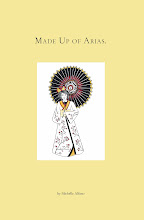
Frank Giorno, poet and friend, hosted a reading on Valentines Day at Sweet Tooth on the Danforth. Of course, I showed up with my Valentine R to read a chapter from
Made Up Of Arias.


Coffee and sweetness on the Danforth ...


Gianna Patriarca, poet, prepares for the reading. 


Gianna in appropriately Valentine-themed attire. 


ALC reads from Made Up of Arias.


Frank Giorno, our host ...


Gianna with be reading with the (Not So) Nice Italian Girls & Friends on April 15th, 2010 at the Spadina branch of the Toronto Public Library. Frank will be joining us, hopefully in Montreal in March 2010 or in Toronto in May 2010.

Thursday, February 11, 2010

The (Not So) Nice Italian Girls & Friends Reading

Top Girls: the writers Susan Swan and Deirdre Kelly

The poet Sandra DiZio

 Matthew Tierney, poet, and his partner Charmaine Lau, actress

 
Chris Edwards, writer, and his partner Anne Wormsbecker

  
The writer Cathy Marostica, being totally adorable ...


The effervescent Katie Franklin, Descant Co-Editor, who read with Chris


Michelle, framed by alcohol and books ... as usual.

Tina Francisco, writer & editor, and Katie

Friends Susana Diaz and Thomas Tran

 
Poet Gianna Patriarca and writer Darlene Madott 
who have read at previous NSNIG&F events

Friends Rona and Wendy Campbell

Poet Jason Paradiso and Kara Bristow
 
Filmmakers Ferdinando Dell'Omo and Lily Topouzova

 
 The lovely Tina

Friends of the (Not So) Nice Italian Girls

The (Not So) Nice Italian Girls & Friends Talk About Love and Desire

Monday, February 8, 2010

The Girl Who Played with Fire

The Girl Who Played with Fire by Steig Larrson (Penguin Group, 2009) 503 pages

As the second novel of the Millennium trilogy opens, we meet Lisbeth Salander again. Here she is a 13 year old held captive by an unidentified man and then we begin to see but a small portion of what she refers to as "All the Evil" which began in her youth and which plagues Lisbeth for all her life and contaminates her relationship with men.

Christopher Hitchens described Lisbeth in a recent Vanity Fair article: 
Miss Salander is so well accoutred with special features that she’s almost over-equipped. She is awarded a photographic memory, a chess mind to rival Bobby Fischer’s, a mathematical capacity that toys with Fermat’s last theorem as a cat bats a mouse, and the ability to “hack” ... into the deep intestinal computers of all banks and police departments.

Truly a formidable female. Lisbeth has the appearance of a 90 pound waif but has the morality of a vigilante which is why, I think, she is so appealing to readers. Her previous guardian mused:
Palmgren was sure that Salander was a genuinely moral person. The problem was that her notion of morality did not always coincide with that of the justice system.
Flash forward approximately dozen years: Lisbeth has walked out on the journalist Mikael Blomkvist, her older lover, with whom she has brought down and destroyed Wennerström, a particularly venal and corrupt industrialist as well as Martin Vanger, a serial rapist and murderer. Our girl had a very busy year. But at the conclusion of these adventures she suspects that Blomkwist has taken up with an old lover and so she disappears in a fit of pique.

She leaves Stockholm for more than a year on money she embezzles from the Wennerström empire (some 3 billion kronor - today's value CDN$435,362,691). Would Lisbeth do this? Steal from a criminal and go on a shopping spree? She travels to Grenada and various other countries including Italy where she, inexplicably, gets breast implants. This seems out of character to me somehow.

But in Grenada we witness the full velocity of Lisbeth's moral code when she suspects that a man in the next hotel room is assaulting his wife. He soon becomes the object of Lisbeth's wrath in a frighteningly violent scene set during a hurricane. Okay, Lisbeth is a badass and is not to be toyed with. This sets the stage for some later violence and horror.

Back in Sweden, Blomkvist and Erica Berger, the Millennium publisher, agree to publish an account of an investigation into the illegal sex trade involving East European prostitutes put together by a journalist and a criminologist who are a couple. A sinister figure named Alexander Zala slithers through their notes regarding the investigation but his identity is unknown to them or the publishers.

As Lisbeth prepares to return to Sweden, re-enter Lisbeth's new guardian Nils Bjurman, known to readers from the first book. He is plotting revenge on Lisbeth. After he had sadistically raped Lisbeth, she orchestrated her vengeance by hogtieing him, tattooing him on the belly with a nasty message, videotaping the results and blackmailing him. He now plots to have Lisbeth kidnapped and killed by some thugs.

One day, while Mikael is skulking around Lisbeth's apartment (she still refuses to respond to his calls or letters) he witnesses her being attacked, presumably by someone hired by Bjurman. She survives the attack without Mikael's intercession.

The journalist and the criminologist are murdered - the gun used in the murder is linked back to Bjurman and has Lisbeth's fingerprints on them. At the same time Bjurman is also murdered and the police think Salander is involved in a triple homicide. She becomes a fugitive and then real and imagined salacious information about Lisbeth is leaked to the press by her enemies.

Knowing that Lisbeth regularly hacks into his computer Mikael leaves a series of messages for her asking if she knows who killed the three people. She types back one word: Zala. This frightening figure holds a central role in the novel.


To say more would ruin the plot which is complex and at times convoluted. I have to say that Larrson never fails to surprise me as I did not see certain key plot resolutions coming. At one point we have Blomkwist explain the murders to a colleague at the end of the novel and this is welcome as there are so many characters (all referred to by their surnames, even the women) that the reader struggles to keep them straight in her head (hint - the explanation starts on page 467).


But my main concern is that Larsson (now deceased - he died in 2004 of a heart attack although other paranoid theories have since surfaced about how he died) played a dubious game here as a writer and respected member of the Swedish left. On the one hand he openly deplores the injustices against women. There is no question that we, as the readers, are meant to deplore the atrocities inflicted on women. His first book, The Girl with the Dragon Tattoo, was called Men That Hate Women in Swedish.

Yet he provides an abundance of salacious detail and situations: incest, serial murders, s&m, lesbianisn and bisexuality, fetishes, prostitution, rape, murder. And then he has the sexy, avenging angel Salander (complete with tattoos, piercings, waif-like appearance and now with her new breasts) cleaning up the riff raff. I think this is called having your cake and eating it too ...

Thanks to Bronwyn Kienapple of Penguin Group (Canada) for the review copy!

Thursday, February 4, 2010

Madame Butterfly's Servant

"Deep into some of Madame's secrets I had entered ..."
Villette, Charlotte Bronte

A Gate at the Stairs by Lorrie Moore (Bond Street Books, 2009) 321 pages
~ MAJOR SPOILER ALERT~
I often start a review with the thought that if I had known the topic I might not have picked up this book so it is fortunate (sometimes) that the book club makes choices for me and I am glad that I was compelled to read some of the books. But this book irked me in inumerable ways and hit so many emotional buttons - and not in particularly good ways. Moore has a wonderful reputation and is a skilled and intelligent writer (best known for her short story collection Birds of America) but this story is an odd and improbable tale. There are traces of the operatic tale of Madame Butterfly losing her child, told from the servant Suzuki's acerbic perspective but it never holds together for me.

Tassie Keltjin, a gourmet potato farmer's daughter, is a first year college student living in the fictional town of Troy, Wisconsin who needs job. She gets one as a nanny for a bi-racial child named Emmie adopted by the odd, and oddly paired, Sarah and Edward Brink (first symbolism alert! Brink, as in what Brinks truck - more money than sense? or brink of madness?). They come across as self-absorbed yuppies who don't seem to know how to parent. She owns a high end restaurant called Le Petit Moulin and he is a scientist with a roving eye, always seeking out the most inappropriate object of desire in the nearest vicinity.

Sarah appears to be a kookier, older version of Tassie - two halves of the same coin with an intelligent if odd sense of humour and a hyper-aware, neurotic parenting style. Sarah's objections to Tassie singing "I been working on the railroad" to Emmie because of its "bad" grammar and "possible use of slave labour" in the song leaves Tassie speechless. Alternatively, she leaves no food in the house for the child and informs Tassie that she will have risotto fedexed to her from the restaurant. Probably due to liberal guilt, she blithely states that poor people are entitled to do things others are not, because they are poor and, I guess, so disadvantaged that this is their privilege.

Tassie becomes a confidante and sounding board observing the strange rituals of the Brinks and the odd nature of their relationship. Edward seems completely uninterested in Emmie and Sarah overly obsessed with the idea of being the white parent of a bi-racial child.

Sensing a racist environment in the town, Sarah forms a support group where the mostly white parents of the mostly brown adopted children gather at Sarah and Edward's home and kvetch about the overt and covert racism that they and their children experience. Their complaints and observations range from the obvious to the absurd. But being somewhat familiar with the adoption process I did recognize the truth of some of those complaints. People tend to laud your choice to adopt in terms of doing a brave or wonderful thing for an adopted child almost as if you have taken on some horribly unpleasant task that they could never take on themselves (sometimes they even say explicitly that they could never do so).

And Moore captures the, among other things, weirdness of having perfectly rational people touch your curly or "exotic" hair as they do to Emmie which is certainly something I can relate to. It's as if a black or bi-racial child with white parents is an odd and weird thing that they can scarcely comprehend.

People still seem discomfited by bi-racial families today. As the mother of a half-Asian child I still remember with some humour, mixed with chagrin, being asked by a member of my mothers' group if people thought I was my daughter J's nanny. Really? Here in Toronto, in politically correct, multi-cultural Riverdale - having two parents of different races is still seen as unusual?

I must say that Ms. Moore certainly has a flare for language, expressed in quirky and intriguing ways. She describes a bridesmaid's dress as "fit for a pornographic milk maid" or "what Scarlett O'Hara might have done with a shower curtain, if she were trying to snag a plumber". Strawberries grow "the wise and cheery beards of Santa Claus". Moore is erudite and cultured and clever (she quotes Charlotte Bronte and knows the plots of operas) but the word play grates on you after a hundred pages or so.

A terrible secret is revealed many pages into the book regarding Sarah and Edward's first child Gabriel (refered to as an, ahem, angel) and how he died. The story of Gabriel's demise is unbelievable. I am incredulous that it could have transpired in such a ridiculous manner, even in this fictional setting. I am reluctant to use the word never but in my estimation I cannot imagine two parents behaving in such a reprehensible and improbable manner.

Emmie, their adopted child, is taken away once the secret is revealed. Tassie is let go and returns to her parents in Dellacrosse (oh the symbolism - so many crosses to bear!), the restaurant closes, and, a sad chapter in Tassie's young life ends.

Tassie displays a wonderful, charming manner with Emmie which demonstrates to me that Moore understands and likes children and has some experience with them. But the disturbing backstory about Gabriel suggests that she has no idea how parents view their children and what they would or would not do in a crisis situation. If you have already lost a child in such horrific circumstances, how could you be so cavalier with a second one?

There are enough explicit references to the opera Madame Butterfly that we are meant to see both Sarah (the adopted mother) and Bonnie (the hapless biological mother we meet early in the novel) as Butterfly whose child is taken away from her and Tassie as Suzuki, the faithful servant who witnesses it all but can take no action. Tassie even drives a Suzuki. It's that clever plot maneuvering and word play that kills the story for me.

Two sub-plots also confounded me ... both with a vaguely post-911 feel to them. Tassie becomes smitten with an attractive Islamic student posing as a Brazilian international student at her college. There are vague connotations that he is a jihadist. He simply and ruthlessly disappears from her life with virtually no explanation. His role, figuratively and literally, in the novel is a mystery to me.

The other sub-plot involves the death of Tassie's brother Bob who enlists with the military and is soon killed. Early in the novel he sends an e-mail to Tassie half jokingly asking her to talk him out of military service. She files it away for later reading and never gets to it. She only reads the e-mail after his death. I find this inexplicable. To add to the bizarre nature of this Moore writes a scene where Tassie crawls into the coffin with her brother's partially destroyed corpse (he was blown up in some sort of bombing incident) and crawls out when the casket is being carried to the cemetery. This creepy, improbable scene has no explanation.

It is difficult for me to separate the outraged mother from the disinterested reader here. As my mother said to me once when I expressed maternal alarm at some situation: "Finally, she responds like a mother!" I  know this might not be the optimal response when reading literature but it is the one that lingers here.

Tuesday, January 26, 2010

Lina Medaglia's The Demons of Aquilonia


My friend and colleague, Lina Medaglia, recently published a new book entitled The Demons of Aquilonia (Inanna Publications, 2009). Lina read with us at The (Not So) Nice Italian Girls & Friends reading at supermarket on January 19th, 2010. See the pics from the event here. Please view a intriguing video promo for the book here. 
 
Praise for Lina Medaglia's work:

Be prepared to be transported into the world of Southern Italy to the sleepy sun-drenched village of Aquilonia, a place rich in lies, betrayal, secrets, and family tradition. With an engaging voice and a flair for dialogue, Lina Medaglia creates characters and stories, layer after layer that engage and disturb. In the style of Nino Ricci, she paints a vivid portrait of an Italian village and its villagers that you will not forget. A wonderful read by an appealing storyteller.
Maria Coletta McLean, author of My Father Came from Italy

The strong narrative flow and exquisite use of poetic and lyrical language draw the reader into the vibrant folds of this auto/biographical fiction, creating compassionate connections with the characters that often took my breath away, made my heart stop. The novel reminds readers of the complexity of the human condition, of the necessity of challenging the patriarchal and political status quo, and of the complex challenges that originate for women of first- and second-generation immigrant families, and even subsequent ones, from their birth places.
Erika Hasebe-Ludt, co-author of Life Writing and Literary Métissage as an Ethos for Our Times

The life and family of Licia Giganteschi make for a complex and alluring story of love and hate, fate and courage. Family intrigue festers for generations below the surface of an Italian village and seems inescapable even in Toronto; that is, until Licia can finally conquer the demons by finding the truth.
Maria Cioni, author of Spaghetti Western: How My Father Brought Italian Food to the West


Order the book here! You won't be disappointed.

Friday, January 22, 2010

Opera 101: Carmen


Mezzo-soprano Elina Garanca as Carmen with tenor Roberto Alagna as Don Jose 

Carmen by Georges Bizet directed by Richard Eyre, broadcast live from The Metropolitan Opera, New York, January 16, 2010

As a novice in the watching of live opera, I often feel a sense of unease. I'm not an expert in music, I don't have enough knowledge to know if the singers are singing really well or how any given operatic production rates. Those well versed in opera will often compare singers in different roles, current productions to the many they have seen in the past or legendary productions that have passed into operatic history. My experience is limited and based solely on my emotional reactions. I can only say what I like and what I dislike and what appeals to me visually.

Unfortunately, often that's not enough in viewing art. Viewing an art form that you are unfamiliar with is like learning a new language. You can't just say it doesn't make any sense or it has no value because you don't understand what is being said or don't know anything of the culture and history attached to it. I know enough to know that I know very little.

When I was writing and researching my first book Arias, I would go to the library and return with a stack of LPs - yes, that's how long ago it was. I would play them and pour over the libretto for clues as to what I liked and what would work in my book as part of the plot (a working class Italian woman with three kids obsessed with Maria Callas and the fantasy of opera). What I didn't like I discarded and I just went with what appealed to me. Invariably, it was the 19th c. Italian composers Verdi and Puccini with a little bit of Bizet and Leoncavallo thrown in.

When I saw La Traviata for the first time at the COC, when I was twenty or so (I was brought by a friend, long since departed from my life but she gave me this lovely gift), I finally got what made people so passionate about opera. I saw that there was magic here ... how did it work I wondered? Why did it work? Why did it make me emotional and vulnerable? I tried to capture the experience of seeing this in the opening chapter of Arias. 

So as much as I have enjoyed certain operas - I realize that I may seem disappointingly old school and retro in my taste - I can only speak with limited knowledge of what I see. But I am new to the process of speaking about and thinking about opera as an art form and perhaps you are too. If we approach this together perhaps it will not seem as forbidding as it does to the novice, as it often does to me. Consider this blog Opera 101 for the both of us ...

When I had heard that Angela Gheorghiu was dropping out of Carmen to be replaced by the Latvian mezzo-soprano Elina Garanca in the Met production, I was very disappointed because I have a specific image of Carmen in mind as do most people who love Prosper Merimee's original novella. Gheorghiu is a dark haired, fiery Romanian soprano (perfect for the role of the renown gypsy no?) with a wicked tongue and an imperious persona. Just check out what she has been saying about her ex-husband Roberto Alagna, the French tenor, who was to play opposite her as Don Jose in Carmen, a role he has made his own.

Gheorghiu is temperamental and bitchy ... she has been dismissed from roles, gotten into altercations with directors, says disparaging things about her ex. She has a marvelous diva aura and has been physically compared to Callas. My husband fell for her when we saw the Met broadcast of La Bohème with Gheorgiu in the lead role of Mimi. He has a passion for temperamental Europeans, you see.

So, in my mind, Carmen is not a blue-eyed, blonde from Latvia but a fiery Latina or at the very least a Romanian or a Greek diva. But it wasn't just the physical aspect of the role (which can easily be disguised with elaborate wigs and makeup) it's the nature of the singer. Garanca gives off an icy, self-assured princess vibe which irks me a little. My discomfort with Garanca is best expressed here by the anonymous and quite bitchy blogger at intermezzo.typepad.com which I am beginning to enjoy a great deal:
Carmen needs a bit of dirt under her fingernails, and no, an elegant smudge of brown greasepaint is not the same thing. Her agile, honeyed voice is elegance personified; there's little to suggest an earthy gypsy heart beating beneath.
I have only ever seen Garanca in the role of Cinderella in La Cenerentola, again broadcast live from the Met but, I realize, due to lack of experience and knowledge, I have underestimated her talent. Physically, she did manage to embody, somewhat, the fiery, independent gypsy Carmen with a long train of dark curls and an appropriately insolent attitude. Carmen is indomitable, even when she faces certain death she will not back down, preferring to die (as she foresees in the cards) than lie with a man she no longer loves.

In the Intermezzo review, the reviewer disdained Garanca's Carmen in The Royal Opera production in October of last year by saying that she was "dry-humping everything" on set from "the horse trough to the village idiot like a randy Yorkshire Terrier". Ouch. That production was directed by Francesca Zambello, not Eyre, who is somewhat more restrained in this production.

Setting the story during Franco's Spain in the 1930s almost a hundred years after the original story, Eyre, the director, tries to avoid the usual physical acting cliches about Carmen: the hand on hip, strutting about the stage that has become part of the character Carmen's shtick. Carmen is physical and sensual and this is sometimes taken to the extreme with the legs splayed, hip thrusting gestures that are  employed, here too at times. These are cheap tricks meant to convey a woman of easy virtue. It is much harder to convey the tough, indomitable spirit of the gypsy without these tricks.

Having read the Carmen novella and seen Bizet's opera, I don't see Carmen as the promiscuous whore. Read the original Carmen by Prosper Merimee here - the novella is quite short. She's not a prostitute either. She wants what she wants when she wants it and isn't afraid to use her sexuality to get it. This is why she is so mesmerizing, so powerful an image. And this is likely why she ends up dead at the end of Act 4 because she cannot be contained or controlled by anyone.

Carmen is disdainful and proud and refuses to obey any man. When she leaves Jose for the toreador Escamillo she does so without any contrition - she is bored and wants to move on to the next adventure. Garanca's Carmen and Alagna's Jose are physical and violent - wrestling on the ground and clawing each other in the final death scene where he stabs her for having left him and refusing to return to him.

The stage, while beautifully and authentically designed, is also often "overpopulated" by the cast and too busy as the Intermezzo review mentioned in the Royal Opera production. I sometimes wonder if the director feels we will not be engaged enough with the story and so must fill the stage with dozens of beggar children, soldiers, peasants, gypsies, smugglers etc ... in various scenes. In this story we have passionate and unrequited love, murder, smuggling, bullfights, what more do you need?

The opera was conducted by the young French-Canadian conductor Yannick Nézet-Séguin with passion and great enthusiasm and it is thrilling to see the conductor and the musicians performing up close on screen.

This has become a signature role for Alagna and he bestowed the ultimate compliment on Garanca during the intermission interview conducted by Renee Fleming calling her the "most complete Carmen" he has ever sang with - ouch - take that Angela! Still, despite the power of his voice and his considerable acting skills, he leaves me cold. I should be rooting for this French operatic tenor of Sicilian descent but he leaves this MTV generation, visually-oriented spectator unmoved, feeling he lacks the heroic demeanor that I admire in the much older Placido Domingo or Jose Carreras.

This is another challenge that the HD opera-going crowd must face: in certain respects, viewing the performance live in a cinema is a heightened visual experience as you can see the expressions, the gestures, indeed the sweat on their brow on a twenty foot screen in extreme close up. It is a very intimate experience that I don't think can be captured in the same way from the back row of the theatre during a live production.

Conversely, despite a beautiful voice you are very aware of Micaela's (Barbara Frittoli) chinless, middle-aged demeanor and the image of the gentle, naive virgin who loves Jose is soon destroyed. This is sacrilege in opera, of course, because you start to focus on the wrong things: the weight of the soprano, the amount of sweat glistening on the tenor's brow, whether the set looks realistic enough, does the singer physically resemble the character enough. You are moving away from what should be the true focus: the music and the quality of the singing. 

And did I imagine it but was the chemistry between the New Zealander Teddy Tahu Rhodes (who stepped in at the very last minute to play Escamillo due to Mariusz Kwiecien's illness) much more intense than that between Garanca and Alagna? Rhodes was charming and self-effacing in the intermission interview where Frittoli came off as brittle and cold - was it Renee's little bit of extra attention being paid to the handsome Rhodes? We learned that he had been told at 10.00 am that morning that he was to play Escamillo at 1.00 pm matinee. He was amazingly self assured in the role even if it seemed that he might be more comfortable on a surf board rather than in a bullfight.

Some did not like the climax of the opera but I thought it was an intriguing twist. Once Jose has killed Carmen, the turntable stage revolves and turns to reveal the inside of the crowded stadium where Escamillo is standing before the slain bull. "Ah, symbolism." muttered one critic. And yet it is an apt, if heavy handed, metaphor.

Carmen is a force of nature whose life force can only be extinguished by unimaginable, extreme violence.

Post-Script: The Canadian encore presentation will be on March 13, 2010, 1.00 pm

Tuesday, January 19, 2010

The (Not So) Nice Italian Girls & Friends ...

The (Not So) Nice Italian Girls and Friends were formed in the summer of 2009. It was the brainchild of myself and a friend, Giovanna Riccio the poet, who wanted to create a forum for new and established writers in the Italo-Canadian community. We wanted to offer a fresh and challenging perspective - poetry and short fiction that might offer an alternative to the usual images in the media; hence, the tongue and cheek reference to being "not so nice".

We have created a new blog to promote the events: notsoniceitaliangirls.blogspot.com. We will list upcoming readings and, hopefully, pics from each event as well as bios and links to the writers' websites and blogs. And we look forward to seeing you tonight!


Sunday, January 17, 2010

Otto e mezzo, forse dieci

8 1/2 (Otte e mezzo) (Italy, 1962) directed by Federico Fellini, 138 minutes

Marcello Mastroianni? Claudia Cardinale? Anouk Aimee? Who could ask for more in a film?

Fellini had a talent for bringing together the grotesque and the beautiful but never more so than in this film; hence, the creation of the adjective Felliniesque.

Guido Anselmi (Marcello Mastroianni), a famous Italian film director loosely based on Fellini himself, struggles to put together a new film - having no script, no new ideas and a crisis of conscience about his life and the women in it.

He seeks refuge in a fashionable health spa which resembles a sort of Roman ruin. There he is joined by his mistress Carla (the delightful confection Sandra Milo) whom he ferrets away in a nearby shabby pensione in an attempt to conceal their relationship.

The writer involved with the film plagues him and serves as a nagging conscience: "You see, what stands out at a first reading is the lack of a central issue or a philosophical stance. That makes the film a chain of gratuitous episodes which may even be amusing in their ambivalent realism. You wonder, what is the director really trying to do? Make us think? Scare us? That ploy betrays a basic lack of poetic inspiration."

This unnerves Guido as do a host of ghosts and apparitions from his past and imagination: his deceased parents whom he seems to have displeased, cabaret singers, an angry producer, agents, sycophants, journalists, a magician and his elderly female assistant, insecure actresses anxious about their parts, priests and a cardinal whom he seeks approval from, and the sometimes grotesque inhabitants of the spa themselves.

Guido, harassed, looking ill and uncomfortable, has comforting memories of childhood which mingle real life and fantasy. His memories are sweetly strange.

A visit to la Saraghina, a local prostitute who lives in a stone house on the beach near Guido's school, takes centre stage. She is both monstrous and magnificent, with enormous, blackened eyes, dramatic, smeared makeup, wild raven hair and tattered clothes. She dances wildly for money for the schoolboys until they are hauled away by the priests and Guido is disciplined as the ringleader with his shamed mother looking on.

His obsession with women seems to begin here for he covets many: fair, grotesque, thin, voluptuous, cold and withholding, emotional and volatile. These include his adored if exploited wife Luisa (Anouk Aimee); his mistress Carla (Sandra Milo); his sister-in-law Matilde; Madeleine (Madeleine Le Beau), the aging beauty who is to play his mother in the film; his muse the international film star Claudia (Claudia Cardinale); his best friend's young fiancee (Gloria Morin); Rossella (Rossella Falk), Luisa's best friend ... His tastes in women may be said to be catholic.

Luisa, also invited by Guido to the spa, has reached her breaking point with Guido's fantasies and insecurities after she spots Carla at the spa. The women could not be more different: Luisa is beautiful but severe and serious in aspect with dark glasses, sensible clothes and shoes. Carla is feminine and deliciously silly with a veiled pillbox hat, stiletto heels, heaving cleavage and elaborate makeup.

Claudia appears in two guises as a fantasy of a sweet chambermaid in the spa and as the film star offering advice to Guido. She says she wants "to create order", "to cleanse", something Guido desperately seems to need.

The classic archetypes emerge: mother, wife, mistress, muse, fantasy sex object ... none can offer solace. In one disturbing scene he kisses Luisa and she morphs into his mother before his eyes. Luisa does assume that somewhat motherly role in his life: disapproving, stern, unhappy with her lot, unforgiving.

The women come together in a final fantasy sequence where they all live together in relative harmony presided over by Luisa, who in this scenario, controls and admonishes the women to defer to Guido's wishes, the perfect Italian wife, considerate, deferential, tolerant.

The women bathe Guido (as he had been bathed by women as a child), feed him and his enormous ego. Despite the sexist scenario Fellini has obviously created it tongue in cheek. He quickly loses control of the women. A rule of the house is that any female over 26 is banished to the upstairs.

One show girl, complete with feathers and jewels, from his past who is well past her best by date vehemently protests and sets off a storm of anger which Guido attempts to control with a bullwhip, barely unable to restrain the women. One recognizes the conflict between his immense desires and his own recognition of the unreasonableness of those desires.

He tells the cardinal from whom he seeks advice that he is unhappy, the cardinal retorts gently, "Who said you were meant to be happy in this life?"

When Guido decides that only by speaking the truth in his art can he continue to create, his emotional conflict appears resolved. This is symbolized by the physical coming together of all the players in his life in a circus like environment in the finale. Lead by the young Guido clad in white and a number of circus clowns playing instruments, the key players are all dressed in white like angels or apparitions and approach Guido. The women in his life, the people from his past, priests, actors, coveted women, his producer, the writer who plagues him during the course of the film, the spa guests. Even the reluctant Luisa joins them at the end.

At one point the the writer taunts Guido, "Why piece together the tatters of your life - the vague memories, the faces... the people you never knew how to love?

The cast appears on the set for the film that has already been built: a futuristic launching pad which puzzles and alarms everyone involved particularly the exasperated, overtaxed producer. Does it represent the future for Fellini?

This circus like scene had such an impact on me that I remember trying to duplicate this atmosphere in my novella Arias in a sly wink to Fellini where the children perform before the giant billboard in their homemade costumes for the grownups with the character of little Joey Pentangeli dressed as Canio from I Pagliacci.

This film still thrills me with each successive viewing. I felt a lump in my throat as I watched the last scene. Could I ever produce anything so beautiful in my own art?

Wednesday, January 13, 2010

Jersey Redux

Being of Sicilian descent I love an argument so I would like to respond to my impassioned friend Shorty's response to my post on Jersey Shore (see below for Shorty's comments).

I don't have a problem with negative representations of Italians in the media. You could argue that a great deal of the art produced by Italians and Italo-Americans may present Italians in a negative light.

Think of Fellini's philandering, lying womanizers in 8 1/2 or La Dolce Vita. Or Michael Corleone in The Godfather trilogy directed by Francis Ford Coppola. Almost the entire gangster oeuvre of Martin Scorsese. Or David Chase's superb television series The Sopranos. Read Roberto Saviano's brilliant expose on the real-life Napolitano mafia in Gomorrah. All great art to varying degrees in various media.

In my own writing I have often tackled difficult and unpleasant scenarios within the Italo-Canadian community: domestic abuse, the damage done by patriarchal culture, denigration of women, violence, an infatuation with the mafia subculture (I admit it - I am enamored of the gangster subculture too). So I am not for antiseptic, squeaky clean representations of our people. I am for nuance, complicated personalities and sensitivity in creative work.

It's just a reality show and some would argue it shouldn't be taken that seriously. But what does Jersey Shore bring to the table? The opportunity to laugh at some uneducated, vain kids who think this is their ticket to fame and fortune? What value is there is watching Snooki get punched in the face by a man twice her size?

As I said I don't blame them - I'm sure this is more fun than going to college or working in the family business.

What makes the biggest media splash - episodes of Jersey Shore on MTV or the publication of The Origin of Species, a recent award winning book by the Canadian writer Nino Ricci, in which the main character, Alex Fratarcangeli, is a coward and a heel and is vaguely ashamed of his roots?

The show and its content matters because it has so much exposure. It has exposure because it is sensational and draws attention to bad behavior that is rewarded with media attention.

I am not the "media". I'm just a thinking person with a point of view who is free to express it - as is Shorty. Ain't America beautiful?

Tuesday, January 12, 2010

Jersey Girls and Boys

Maybe I should be insulted and angered by MTV's reality show Jersey Shore and its portrayal of Italo-Americans in the full flower of their youth, cavorting and sharing a summer house in Seaside Heights, N.J. Vinnie, Nicole (Snooki), Mike (the "Situation"), Sammi (Sweetheart), Jenni (JWoww), Angelina, Ronnie and DJ Pauly D are billed as eight of the "hottest, tannest, craziest Guidos" ever by MTV. By the way, they say that the descriptor "Guido" is a compliment. I guess we live in quite different 'hoods kids.

But I feel a little like Dolly Parton when asked if she was offended by dumb blonde jokes. She retorted sweetly, "I'm not offended. First of all because I'm not dumb; and, secondly I'm not blonde."

I feel the same way. It's not my lifestyle being ridiculed here nor have I ever been like these kids despite our shared heritage. These are not the people I grew up with although I do definitely recognize the types.

I empathize a bit with the Snookis and the JWowws because I would not have wanted a camera constantly trained on me at that age recording every stupid thing I ever said or did and then have the media and general public say humiliating things about my appearance, clothes and the way I spoke.

Some would argue that these people deserve everything they get as they appear to be unfathomably dumb, shallow, opportunistic, vain, ignorant of Italian culture and unpleasant to be around. I can't even begin to describe what transpires on the show (you can easily look up episodes on youtube or MTV if you like).

But I will say, based on the episode I saw and a perusal of their antics on-line, that there's a lot of tanning, preening and prepping for the club scene, flashing one's crotch on the dance floor (a Snooki specialty), getting your hair cut, picking up girls or guys, physical and verbal fights with other club patrons (including an infamous scene with Snooki being punched in the face by a guy), swearing, bickering amongst the friends and generally making a jackass of oneself.

I'm more inclined to blame the people responsible for putting it on the air such as, oh say, Tony Di Santo, MTV's President of Programming. I'm guessing with his last name that Di Santo is a brother. Or ... check out the preponderance of names ending with vowels in key senior roles on the show in the end credits.

Where is their responsibility in all this, in exploiting less sophisticated, uneducated kids who would otherwise have no place on TV except for the laughs they provide for non-Italians? These kids think they are cool and sharp and beautiful and probably did not suspect that they would be viewed with such derision and contempt. I don't think they could have foreseen the firestorm of criticism they seem to have ignited within the Italian community, especially in the U.S.

I'm going to go out on a limb and say that I don't think that these eight individuals will evolve or change in any substantial way during the course of the series. They will have no arc of evolution in behavior or feelings. I don't think that they will grow to see that there is more to life than clubbing, getting smashed or laid and that it is unacceptable to physically attack other Jersey kids in the streets like a pack of rabid dogs. I don't see that happening.

And someone (I ain't saying who) is making a great deal of money reinforcing these negative stereotypes and encouraging this behavior for the camera.

Tony Di Santo - your mamma must be sooo proud.