Friday, June 27, 2008

The end ... and the beginning

This has been a year of momentous endings (and beginnings).

My daughter J graduated from grade school on Monday June 23rd. She will start middle school in the fall. She stopped going to day care in the early spring and she started walking home by herself from school, a good 20 minute walk. She stays home by herself for short periods. She will go to summer camp for two weeks in July.

Letting go, letting go ... I'm not good at that. I am old school about my kid and likely as protective as my strict Sicilian mother ever was. Hmm, it hurts to remember that sometimes.


One night, not too long ago, I had a veritable tantrum, complete with tears, in front of my husband R and daughter J. Things were going too fast! What was the big rush? Why was everyone in such a hurry for J to grow up? I asked. She is only 11. Why can't we go a little slower?


R started to gently reprimand me, You have to let her grow up, you can't protect her from everything, she needs to do these things ...


Surprisingly, this raised J's hackles. She marched up to me, threw her arms around my shoulders protectively and turned to her father accusingly, practically shaking her finger at him the way little girls do with boys and men: Daddy, you don't understand! It's hard for mommy, she only has one baby! It's harder for her than for other mommies!


Ai yi yi. I thought, naively it appears, she didn't see how I struggled when she wanted more independence. I thought I was being tough on the outside. I'd rather she thought I was strict than sometimes afraid for her.


As we were getting ready for her graduation ceremony Monday afternoon I was getting very misty eyed (I can hear R interjecting right now - "try weeping inconsolably" - but he would be embellishing the incident and this is my story). She rarely wears a dress but agreed to one for graduation with only some persuasion required. It was very simple, black, it fell to her knees in folds matched with these sweet black ballet slippers that her dad helped her pick out. She borrowed a necklace from me, a dark chain with deep blue and purple stones. She wore her hair down to her shoulders which she never does.

She has lovely hair, exactly like my sister F's in colour and thickness - dark, shiny, healthy, long. She looked so grown up - like a teenager almost. Every mother thinks her kid is gorgeous, I'm no exception.


Again with the waterworks! Ugh - this is getting old Mommy I said to myself Keep it together a little.


The ceremony at the school was so affecting - the two grade six teachers took turns presenting diplomas to each graduate. Mr. B. and Ms. H., wonderful grade six teachers, young, enthusiastic, fun, disciplined. They had thoughtfully written a little blurb about each graduate highlighting their accomplishments or talents, hidden or otherwise. The kids seemed pleased, embarrassed, happy, uneasy - everything at once. The grade five classes sang for the graduates. A friend of J's was valedictorian.


J had designed the year book cover (voted on and chosen by her fellow grads) and had won an Artistic Merit Award for her efforts. I made her uncomfortable by telling family about it (too bad kid - that's my prerogative as a mother - ha!). She had a special mention in the program.


The girls looked phenomenal on stage in their pretty summer dresses with their hair done up especially for graduation. A bit of jewellery. Some even sneaked on some lip gloss. The boys ... not so much I'm afraid - some schlepping on stage in shorts, sneakers, somebody's too big jacket or tie. It's hard to dress boys nicely I think at this age without spending a bit of cash.


The class had chosen U2's "Beautiful Day" as their theme song as they exited the gym. U2 has always had a strange effect on me - you guessed - more tears!


Afterwards the kids raced around taking photos and sharing their report cards. Hugging, laughing ...


We had dinner with close friends that night. Their sons were also graduating from the same grade school. One of my best sister-friends A helped me with J's hair after dinner. J was unusually cooperative. She is a tomboy, does not like fussing or dressing up, or anyone fiddling around with her hair. But she was very patient as she got ready.


All four parents walked the kids to the school gymnasium. The dance started at 7.30 and ended at 9.30. We were not permitted to look into the gym. Grade six parents are not allowed to chaperone the grad dance - makes the kids too self conscious I'm sure. When we returned to pick J up we were greeted by a mob of sobbing girls. The girls are all crying in the gym! J exclaimed. At first I was alarmed but then we realized that they were tired, sad, already nostalgic for grade school.


R said Maybe I should take a look and see ...? He edged towards the gym. J jumped in front of him with her arms outstretched. No! she said, only semi-jokingly. She did not want us in that gym. J was strangely nonplussed by all the crying. She said nonchalantly, I tried to cry but I couldn't. That gave us a good laugh on the way back home.


J was ravenous, kept asking for food when we got home. Nervousness? Exhaustion? I don't know. It was a great day. I felt a flush of every emotion coursing through me ... happiness, sadness, nostalgia, anxiety about the future, pride.


J is going to summer camp for the first time starting the first week of July and will be away for two weeks! Some of the other parents in the 'hood are saying yippee - child free for a week (or two). I have more trepidation. She is our one and only.


Another beginning ... seems like everyone is up for it. Time for Mama to get on board.

Wednesday, June 25, 2008

Between O and V

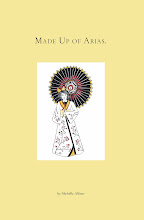
Between O and V by Maria Scala (Friday Circle, 2008)

I want to give a big shout out to my friend, the talented poet Maria Scala, who has published a lovely collection of her poems. I met Maria on-line through Descant magazine while I was blogging for the magazine and she sent me some insightful and supportive comments about the topic I had written about.

Maria was also one of the inspirations for this blog because when I came across Maria's blog, August Avenue, it was so attractively done and interesting yet also personal. Her natural warmth and kindness and artisitic sensibility shone through in her writing. Now she has her own book of poems that you may purchase here. The poems reflect the best of marriage and family and love and loss.

My favourites are A Story For You, At 70, a poem about an elderly relative recounting a robust encounter with their newlywed spouse and the comic consequences.

Nonna speaks of loss and how, we women, particularly women of our own Italian background, cope with the loss of family and pain. We literally work through it with the many endless tasks that make up our lives.

Now I am married is a love poem to a sometime absent spouse and the joys of sharing a bed with the person you love.

It ends with my favourite I Never Meant To - a sad, sweet poem which seems to be a nostalgic elegy for a bygone love.

So auguri Maria! Please keep up all the great work and all the good that you do every day as a talented poet, a devoted mother, an accomplished editor and a wonderful friend!

Please Note: I could not find an image of my friend to post on-line but I did select a lovely photograph called "date night at beppo's" from a new artist I came across at the Riverdale Art Walk named Tanja-Tiziana who has her own website doublecrossed.ca.

Monday, June 23, 2008

The Best of Youth, Part 2


The Best of Youth 2 (Italy, 2003) by Marco Tullio Giordana

This blog resumes with a continuation of the film's second part (as I said in a previous blog it was originally conceived as a six hour mini-series for television). The posters for the film are so odd, usually showing Matteo (Alessio Boni), the eldest brother, laughing (as above). Perhaps the marketing dept. found the film too intense, too sombre, because this is the antithesis of Matteo in the film. He is brooding, unhappy, rigid, unable to trust or to show emotion except perhaps for anger (and quite a bit sexy I might add - oops I've said too much!).

The director Giordana paints on a very big canvas here ... the flood of the Arno in Florence and the destruction of precious artifacts in 1966, the student riots of the 70s, the Red Brigades' terrorist activities, the Mafia's control of Sicily, the changing status of the mentally ill in institutions.

In Part 2, set largely in the 1980s and 1990s, he tackles the slow death of the Red Brigades (symbolized by Giulia's political activities) and the loss of loved ones in a close and loving family.

We have now reached 1982, Nicola (Luigi Lo Cascio) is living alone with daughter Sara (Camilla Filippi) in Torino. Giulia is still active with the Red Brigades in Roma and Matteo has a new role in tracking down terrorists, serving, I think euphemistically, as an "escort guard" for high officials.

Giulia (Sonia Bergamasco), now fully immersed in the terrorist underground, wavers momentarily from her mission asking to see her daughter from a distance. When Sara sees her mother accidentally she fails to recognize her and Giulia withdraws, shaken.

Part 2 appears to focus more on Giulia's inner conflict. When she is ordered to kill a government official (who turns out to be Carlo Tommasi (Fabrizio Gifuni), one of her partner Nicola's best friends and her sister-in-law Francesca's husband) she wavers and warns her sister-in-law to leave Italy.

Matteo cannot maintain a real relationship with his family or even with close friend Luigi, a former comrade in the police, who became disabled as a result of a beating by rioters in Torino.

Matteo does re-connect with Mirella Utano (Maya Sansa), a pretty librarian and aspiring photographer he met in Sicily who, it seems, has never forgotten him. But he is withdrawn and secretive and incredibly lonely. When a hooker he procures gives him a necklace he admires, Mirella finds it by mistake and he says he has purchased it for her.

Intimacy still eludes the rigid Matteo: he lies about his profession, when he will be in town, even his name. Mirella still thinks he is named Nicola, the name he gave her when they first met years before. He fails to contact her when he returns from his "trip" but drives by furtively watching her as she waits for him fruitlessly.

Matteo disappears from their lives (I will let you find out how) and the family is devastated but tries to move on. Ten years later Nicola sees an arresting photographic image that is part of an art exhibit. He traces it back to Mirella, now a professional photographer and living back home in Sicily. When they meet Mirella reveals that she has a son Andrea, Matteo's son. Nicola persuades his mother to visit the boy in Sicily.

Giorgia (Jasmine Trinca), who floats through the film like a symbol of something that has gone horribly wrong in Italian life, refuses to leave the psychiatric hospital where Nicola works. But after Matteo's disappearance, Nicola persuades her to strike out on her own. Presumably all goes well for we never see her again.

Sara is a young woman now, very much like her mother, headstrong and obstinate. Giulia is still in jail and Nicola is continues to be devoted to her, even going so far as asking her to marry him. She refuses, wants no contact with any of them, ridden by guilt.

The second half of the film resolves all issues but gently ... and slowly. Things will be put right. Everyone will find peace, eventually.

The only character who does not have a satisfying conclusion for her drama is Giorgia.

Wednesday, June 18, 2008

"Life; London; this moment in June"

The Mrs. Dalloway Reader edited by Francine Prose (Harcourt, Inc., 2003) 346 pages

This is one of the books I picked up at The Strand bookstore in New York last summer - one of my favorite bookstores ever.

I must say the essays in the reader are disappointing. Few light a fire under me or makes me understand Virginia Woolf better - they are deary, academic, boring, except perhaps for:

E.M. Forester's 1925 essay "The Early Novels of Virginia Woolf"; Michael Cunningham's very brief two page piece on Mrs. Dalloway; and, Daniel Mendelsohn's insightful New York Review of Books piece entitled "Not Afraid of Virginia Woolf" which may be read in full here. I can't believe that this is the best (or most interesting pieces) that Francine Prose could find on Woolf. Everything else could be easily eliminated.

I did enjoy re-reading the short story The Garden Party by the New Zealand writer Katherine Mansfield, included here, because you realize again how inspired by Mansfield Woolf had to have been for her own book: the preparation for the party, the death of a young man, etc ... all are featured in Woolf's book.

It also did allow me to re-read Mrs. Dalloway, one of my favourite novels of all time. Each time I read it I see how the various characters seem to me to be slivers or facets of VW herself:

She is Clarissa Dalloway as an idealized version of Woolf herself, aristocratic, beautiful, slightly snobbish, emotional, infatuated with beauty, "cared too much for rank and society" as Peter Walsh phrases it, but bearing the elegance, poise, the self-assurance with servants that VW herself lacked. But perhaps Clarissa is more like Virginia's mother Julia Stephens whom she idolized, whom Virginia wanted to emulate. "She muddled Armenians and Turks; loved success; hated discomfort; must be liked; talked oceans of nonsense: and to this day, ask her what the Equator was, and she did not know."

She is Septimus Warren Smith, the wounded soldier, haunted and damaged by the first World War, "muttering messages about beauty" who hears the birds speaking in Greek to him. This precisely describes VW's own periods of insanity. Septimus who tried to kill himself and finally succeeds (as does VW).

She is beautiful Sally Seton, with whom Clarissa was once in love. Wild, unconventional Sally, with radical views that disturb some, delight others. With Sapphic tendencies and, in the end, very conventional aspirations ...

She is Richard Dalloway, Clarissa's husband, who "cherished these romantic views about well set-up old women of pedigree"as did VW ...

She is thorny Peter Walsh, Clarissa's one time suitor, a non-conformist, a failure of sorts who cannot navigate society, who sees through all the charades of class and rank...

She is the mundane Hugh Whitbread, enamored of the monarchy, with class, with rank ... with his fatuous fountain pen which never falters "somehow to his credit" Richard Dalloway observes wryly and with which he writes letters to the Times on behalf of Lady Bruton.

She is Elizabeth Dalloway, Clarissa's daughter, young, impressionable, easily moved to embrace causes and people who are lost ... She had "become very serious; like a hyacinth, sheathed in glossy green, with buds just tinted, a hyacinth which has had no sun."

Thursday, June 12, 2008

The root of suffering is desire ...

A Spot of Bother by Mark Haddon (Doubleday Canada, 2006) 354 pages

How to explain the strange, understated allure of this book? The plot, if described, appears so mundane on the surface as to invite yawns. George Hall, our hapless hero, is having a "spot of bother" as he so self-effacingly describes it. It is a study in middle class malaise.

He is retired and experiencing some sort of nervous breakdown. He thinks he has cancer (he has eczema). He thinks he is insane which causes him to stay in bed all day and watch Hollywood blockbusters and perform "surgery" on himself (to say more would spoil it).

His wife Jean is having a crisis of her own, namely an affair with David, a former colleague of George's who wants Jean to leave her husband.

Katie, their daughter, is poised to marry for a second time even though everyone acknowledges (the groom Ray included) that working class Ray, a good if not too sophisticated bloke, is "beneath" her.

Jamie, George and Jean's son, is afraid of commitment, ultimately driving away his lover Tony with his dithering about whether to become more seriously involved.

George's condition, real or imaginary, worsens when he inadvertently catches sight of his wife making love to David in their own bed. Yet he tells no one ... he goes off on a largely fruitless meander and his condition worsens.

Katie's wedding plans falter when she has coffee with her ex-husband and Ray follows her, throws a tantrum and disappears for three days.

Perhaps this is the definition of a good writer: When Mark Haddon writes from the perspective of George I begin to suspect that Haddon is a retirement age, modest, very repressed middle class British man. When he writes about the post-menopausal, late sexual awakening Jean, I believe that he has obviously observed this specimen up close. Likewise with his descriptions of Katie and Jamie. Haddon, I come to believe, is, alternately, a modern day parent with anger management issues, familiar with the travails of dealing with children, or, conversely, a young gay, slightly over sensitive male who has been about a bit.

Haddon captures accurately the neurotic middle class of Britain (at least as I envision it), the minutiae and the drudgery of everyday life, the intensity and the boredom of long term relationships, the sense of obligation, the shiny newness of a sexual affair.

Life, real life, like all intimate experiences, good or bad, is coloured with inappropriate longings and misgivings, unhappy second thoughts. And like real life, no domestic situation depicted here is without its emotional tribulations.

There are only one or two places where I felt the author was repeating some homespun truths which, I think, his writing has already communicated such as: "We're just the little people on top of the cake. Weddings are about families." Haven't we all (well a good many of us) come to this conclusion?

Another cliche is: "Perhaps the secret was to stop looking for greener pastures. Perhaps the secret was to make the best of what you had." Everything, every tribulation which besets this family in the novel, is propelling us towards this cliche. And every thinking adult knows this.

One astute member of my book club mentioned that Buddhist saying "The root of suffering is desire ..." This certainly applies to these characters who yearn for more, are never satisfied, desire more.

Of course the denouement is at the wedding where all the principals are present and George, loaded up on alcohol and valium, exacts a sort of revenge on his tormenters. The end is satisfying and comic and sad (another sign of a good writer). Lord Byron once observed that "all comedies end in marriage". And it does indeed here.

Mark Haddon is also the author of the celebrated The Curious Incident of the Dog in the Night-Time. Also on my future reading list ....

Thnaks to SI for giving me the title of this blog based on a Buddhist saying.

Monday, June 9, 2008

The Best of Youth, Part 1

La Meglio Gioventù (The Best of Youth) Part 1 (Italy, 2003) by Marco Tullio Giordana

Ten years ago or so, I was lucky enough to interview this director for a small magazine of Italian culture (now defunct) regarding his excellent film on Pasolini entitled Pasolini, an Italian Crime. I was pleased to finally get my hands on a copy of La Meglio Gioventù which was originally intended as a six hour TV mini-series to be shown in Italy.

La Meglio Gioventù is a family saga beginning in Rome 1966 and ending in 2003. It has been compared to Visconti's Rocco and his Brothers (1961). It focuses primarily on two brothers: Matteo Caroti (Alessio Boni) and Nicola Caroti (Luigi Lo Cascio) and how their lives diverge as they reach adulthood. Matteo is emotional, self-absorbed, volatile. Nicola is more thoughtful, sensitive, politically aware.

These are difficult roles to play physically as they span almost forty years so, inevitably, they appear a little long in the tooth to play university students, are perfect in early middle age and may prove unbelievable in old age (we shall see in Part 2).

Matteo attempts to rescue Giorgia (Jasmine Trinca shown here in the poster to the left), who is -how else to phrase it - a mental patient, who has undergone electroshock therapy, by effectively kidnapping her and trying to return her to her father in Ravenna. The plan goes awry and Giorgia is taken away by the police and disappears.

Originally on their way to the Apennines for a holiday after exams with two other friends, the brothers now separate in anger. Matteo, more emotional and volatile, and clearly disturbed by what has transpired, leaves university and joins the army. The decision is somewhat inexplicable despite Matteo's emotional state. But it is a plot device which serves to separate the brothers and the paths they take. Nicola travels north, encountering the burgeoning hippie culture in Europe and working in Norway for a time. There he learns of massive flooding of the Arno River in Firenze in 1966 and decides to volunteer in removing precious artifacts from the destructive path of the flood.

The brothers are reunited in Firenze. Nicola as a volunteer, Matteo as a member of the Italian army. Matteo jokes that he will one day become a cop which horrifies Nicola. But soon Nicola is off to pursue Giulia (Sonia Bergamasco), a lovely pianist/student activist he has met, who lives in Turin and is involved in the student protest movement in 1968. They are politically involved well into the 70s where the brothers meet again.

Matteo has indeed become a cop and is now one of a cadre of police roaming the streets of Turin searching for rioting students in 1974. Luigi, a fellow police officer and close friend of Matteo's, is attacked, becoming paralyzed, and Matteo rushes to protect him, beating a demonstrator severely. Matteo then faces charges. The brothers try to connect emotionally again despite Giulia's animosity towards Matteo and his political views.

It is temptingly obvious to see the brothers as two sides of the same coin, the two faces of Italy. Moderate, politically progressive, humane Nicola (the new Italia) and beautiful, rigid, authoritarian Matteo (the old Italia) the older brother.

Matteo is transferred to Sicily in the late 1970s. When asked why he wants to do so he merely replies that he does what the is told. He follows orders. He joined the police force to observe rules and "apply them". He minds his own business. His superior says that he is perfect for Sicily as that's what everyone else does here. He becomes a crime scene photographer soon frustrated by the see-no-evil, hear-no-evil response of the populace to the frequent murders and assassinations of the time. Obviously the people are cowed by the Mafia although the word is never mentioned.

Nicola, now a doctor, works in an asylum and tries to improve conditions for psychiatric patients. While leading an excursion into an institution suspected of abuse he encounters Giorgia again, more troubled than ever, and bound, hand and foot, in the cellar. Nicola invites Matteo to come visit them and see Giorgia again. She is even less responsive than before. It seems clear that both brothers are still in love with her.

Giulia, frustrated by the lack of swift change in Italian society, is drawn to a communist cell (the Red Brigades) which advocates more violent responses to authority. Eventually she deserts the family, presumably to become more involved with terrorist activities.

Part one ends on a happy note:

Francesca, the men's youngest sister is marrying Carlo a close friend of Nicola and Matteo's. But questions still linger .... what will become of Giorgia? Will Matteo find peace within himself? Will Giulia return? Will Nicola and Giulia be reunited?

To be continued with Part 2.

Friday, June 6, 2008

The Mommy Mafia

Every school has one ... a Mommy Mafia. They control the parent council, the volunteer committees, the school trips, the graduation committee. Woe to those hapless females outside the enchanted circle who get in their way.

Silly me thinking I would spontaneously drop in on a pizza lunch at my daughter J's school and help out on a Friday in June.

I will blame D, a terrific dad whom I only know casually from the neighborhood here in Riverdale. He has a terrific disposition and is liked by all. He is also heavily involved in almost all school activities. He has such a bright, sunny disposition that it appears that he has become an honorary member of the Mommy Mafia ... I ran into him at the grocery store on my day off. He was in a big hurry, trying to get to the school by 11.30 to help with the lunch.

Do you need help? I asked. Shamefully, I had not thought to volunteer my services in advance even though I had scheduled a day off. I had only done one lunch before and was uncomfortable in that only one mom, a mother of my daughter's friend, deigned to speak with me during the whole lunch.

Yes, but you could speak to them ... yes I guess I could except this bunch engages in a sort of game where they won't look at you directly. It's sort of like ... if I don't see you then I don't have to acknowledge you and talk to you ... therefore, technically, I'm not being rude. So, usually, they don't "see" me.

I have volunteered in the classroom with some of them, I have been at house parties with others, or the yearly fun fair, their kids are in my daughter's class. Still, nothing.

Okay I say, girding my loins ... just get in there. I move to an empty space at a table where they are distributing goodies for lunch.

Do you need help here? I ask.

Uh, no, one of them says.

Hmm, as she offers no further direction about what to do or whom to speak to, I decide that I ain't going anywhere.

As the kids file in they quickly grab a juice box and a bag of chips. I am further down the table so I begin to have many more items in front of me than the other two women. They start to grab things from my end and move them down to their end, presumably to facilitate the kids grabbing the stuff off the table.

Would you like these things moved down? I ask. Nothing. No response.

I ask again, Would you like these things moved down the table? This time some mumbled, incoherent response. Still no eye contact.

The juice and chips rapidly disappear. The kids chomp away happily at pizzas. The volume increases as they finish up and are itching get out into the sunshine.

One or two kids come back for a second helping of something ... a five minute interrogation ensues. The kid holds fast, he wants another drink, he ain't moving. One of the mommies stands firm. This will likely start an avalanche of other kids swarming the table for an additional drink. I get it. No juice for you kid.

Plus they are saving the dregs for the volunteering parents. Finally she relents and gives him a drink - the parents divvy up the remaining pizza. Did I get any - are you crazy - first I show up unannounced and then try and take their pizza? Uh, no.

I have nothing to do. I start to clear the tables. Picking up the garbage, recycling the juice boxes, wiping tables.

I see a friendly face, finally, it's S, a lovely woman, an artist, very sweet. Two sons. Nice vibe. We chat for a bit. Clear away things together. Still no reaction from the cabal.

I hear they meet every Friday afternoon at each other's houses for drinks. My friend D, equally unhappy with this group, had alerted me to this in wonderment. Oh another specimen of their inclusiveness, meetings are usually scheduled in the middle of the day effectively eliminating full-time working moms with inflexible schedules.

I can guess who's there at the Friday soirees ... the one that snitched on the grade four girls who committed the atrocity of throwing around pieces of ginger during lunch one time (the girls all got detentions and a note home for that transgression), the one who weeps in class when some of the kids have not brought their instruments during music appreciation, the one that seems to cut her own hair with garden shears, the under-employed actress, the one addicted to jogging, the aspiring writer who spends half the day writing, half the day in the gym ... hmm if she spent more time on her writing rather than her ...

Okay, I'm done, I think. That's it. I am out the door of the gym when I hear a faint thank you from someone.

But then again, I could have been imagining it.

Monday, June 2, 2008

A Talent for Enraging People


Lulu in Hollywood by Louise Brooks (Knopf, 1974) 109 pages

Louise Brooks was an outcast in Hollywood shortly after the silent films became talkies. But not because she had a poor voice, a malady which condemned a number of silent film stars to cinematic oblivion. She had, as she says in her memoir/
collection of insightful essays, "a talent for enraging people". That voice, that insolent, intelligent, distinctive voice is evident everywhere here in these seven essays. Lulu in Hollywood is a slim but vastly engaging series of essays about her experiences in Hollywood and beyond.

In "Kansas to New York" Louise tells of how she was encouraged by an independent, artistic mother to dance. The fifteen year old excelled and was selected to dance with the prestigious Denishawn School of Dancing and the Related Arts led by Ruth St. Denis and Ted Shawn in New York. Off she went with her chaperon and was introduced into a seductive, sometimes glamorous, sometimes seedy, New York theater scene and what was once known as Café society.

There Louise worked hard to eradicate her Kansas accent and her bumpkin mannerisms. After the tour, her world encompassed sugar daddies, jealous chorus girls, rich young men who thought nothing of buying a casual girlfriend a mink or a diamond which our young heroine took of advantage of (frequently). Louise came under the wing of Barbara Bennett, daughter of the famous theater actor Richard Bennett, sister of famous beauties/rising stars Constance Bennett and Joan Bennett.

Brooks morphs quickly into a Ziegfeld Follies girl and becomes anathema to the other "girls" because of the perceived favoritism she received and is unceremoniously told that the other girls will not share a dressing room with her. She gets thrown out of the Algonquin Hotel because of her clothes (too young looking, too provocative). Clothes become an ongoing source of embarrassment or pride for Louise, a problem that Barbara solves by introducing her to very affluent young men who furnish her wardrobe.

She breaks into silent film in the mid 20s and you soon get a sense in "On Location with Billy Wellman" of how this beautiful, hedonistic girl got so embroiled in the most difficult and humiliating situations. Bear in mind she is still only a teenager. A sensation at a young age, beautiful, with no restrictions, and talent to burn matched only by her defiant attitude towards authority.

She either didn't care or understand that her actions had serious consequences. Her seeming indifference to him is perceived as dislike by director William Wellman, an insecure and vindictive youth who directed her in Beggars of Life (1928), a serious melodrama involving depression era tramps on the run. He asks her to perform some of her own stunts and almost gets her sucked under a train in the process. A fling with an indiscreet stunt man on the set results in his meant to be overheard query in front of the crew as to whether she has syphilis. Her co-star Richard Arlen (yes you might ask who? but apparently he had a healthy film career both before and after this film) is so incensed by her seemingly swift success that he spares her her nothing once he is drunk on the set telling her she is overpaid, a bad actress and, for good measure, that her eyes are too far apart.

Louise seems unfazed by her rough treatment in the retelling of this tale - perhaps because it presages infinitely rougher times ahead.

"Marion Davies' Niece" is a gentle but candid profile of her troubled best friend, aspiring actress Pepi Lederer (1910 – 1935) who also happened to be the niece of Marion Davies, another actress more famously known for being the mistress of William Randolph Hearst (the inspiration for Orson Welles' film Citizen Kane). Pepi falls in and out of love with other women and lives in a gilded cage through the generosity of Hearst and Davies who seem to retain her in the Hearst entourage for entertainment value. She does not seem able to function separately or healthily from her famous aunt. Cocaine, alcohol and a luxurious lifestyle seemed to have dealt a fatal blow to Pepi who ended up in an asylum, committed by Hearst and Davies, then soon jumped out of a window and killed herself at 25.

She offers a telling portrait of encountering Marion sitting alone in her mansion, playing solitaire in her housecoat and inquiring suspiciously after a minor starlet known to Louise who it is rumored is also the mistress of Hearst. It reminded me of that scene in Citizen Kane where Susan Alexander (the Marion Davies character) is alone at Xanadu, Hearst's vast estate, putting together a vast jigsaw puzzle alone, before a roaring fire, screaming in frustration at Kane for her bored and isolated existence.

A rebel herself, Louise seemed to gravitate towards those who did not fit into the Hollywood system in spite of their success, people like Humphrey Bogart and W.C. Fields about whom she writes here. Both were enormous successes yet seemed to exist apart from the star system in ways that Brooks illuminates.

This instinct or sympathy for the outsider draws her, you might think in an unlikely fashion, to the actresses Lillian Gish and Greta Garbo. One of her contentions is that Gish was perceived as too expensive to retain so the studios deliberately sabotaged her career in the press in the 1930s planting seeds in the public mind that her way of acting was too old fashioned, that she was being eclipsed by newer stars and was much too well paid. Bankers took hold of the studios in the 30s and expensive stars were under scrutiny and then pressure to generate revenue or disappear.

But most Brooks' admirers want, I know I did, to know about the experience of working with German director G.W. Pabst on Pandora's Box (Lulu) which she details in her final essay "Pabst and Lulu". Despite calling herself the "worst actress in the world" obviously G.W. Pabst and the many people who adore her in this film disagree.

She seems to hide very little in retelling her experiences and, true to her own inimitable style, reveals even the most embarrassing of details: the Germans were horrified that Pabst had chosen Brooks for such an iconic German archetype and made their displeasure well known when she arrived in Germany. Marlena Dietrich was very nearly chosen for the role and was sitting in Pabst's office when Brooks cabled her acceptance of the offer. Brooks knew little about Pabst before agreeing to work with him and insists that her boyfriend at the time, the tycoon George Marshall, pushed her into because he wanted a European vacation.

She speaks tenderly of her attraction to the actor Gustav Diessi who played Jack the Ripper and the "happiness" of the scene. Kenneth Tynan, who wrote a terrific profile in the New Yorker in 1979, contends that between takes there were some amorous goings-on. Brooks says that Pabst deliberately chose an actor that Louise would be extremely attracted to. She tells how the unwilling Alice Roberts was finessed into playing the role of the lesbian Countess Geschwitz. Pabst stood behind Brooks so that Roberts could gaze into his eyes and he could elicit the look of love for Lulu he wanted for the scene. Pabst was protective of Brooks, disliking her carousing and drinking and forbidding her to do so during the shoot much to her chagrin. To solicit the feeling of abhorrence and degradation that Lulu must feel when she ends her days as a prostitute, Pabst took Brooks' real clothing and ripped and soiled it. It had the desired effect; she felt demoralized, soiled and degraded in the final scenes.

Once, in anger, Pabst vindictively predicted that Louise would end up as Lulu did: used, discarded and destroyed. She had often said that the trajectory of their lives was the same (hers and Lulu's). But Brooks is much more than that sad mythic creature Lulu ... she survived Hollywood, ostracization by the film industry, addiction, financial ruin, the disappearance of her stellar career by the age of 30. She was urged to begin a new life in Rochester, NY by film archivist James Card who was searching for her in the 1950s. He was able to persuade her to move to Rochester to be near the George Eastman House where may of her films were preserved.

Rescued from oblivion, she began to write, to gather her astute, biting comments into erudite, fascinating essays, and to begin to recognize her worth as an actress, a silent film icon and an exquisite writer.

Friday, May 30, 2008

Pandora's Box (Lulu) (1929)

Die Buchse der Pandora or Pandora’s Box (Lulu) by G.W. Pabst (Germany, 1928) with English subtitles

Pandora’s Box (Lulu)
screenplay adapted by Ladislaus Vajda translated from the German by Christopher Holme (Simon & Schuster, 1971) 136 pages

Few actresses have intrigued me as much as the silent film actress Louise Brooks with her wonderful sheath of shining black hair and beautifully expressive dark eyes. I can honestly say that she has enchanted me solely with the role of Lulu in Pandora’s Box and her role as Thymiane Henning in Diary of a Lost Girl (1929). Eighty years after the fact she still captivates both with her beauty and the freshness of her performance.

R used to obsessively search for, and collect, scripts for old films. Once he contemplated selling them or giving them away. I’m glad he didn’t because otherwise I wouldn’t have this pretty 1971 edition of the film script of Pandora’s Box complete with film stills.

The Criterion Collection produced an excellent print of the film complete with a sometimes intrusive, sometimes annoying, classical music soundtrack, which bears little resemblance to the action on screen. There is a naturalness of manner here that seems absent from most silent films. It tackles, or alludes to, so many subjects that would disturb a squeamish viewer: incestuous longings and Oedipal struggles, murder, prostitution, suicide, women exploiting older men for money, violence, lesbianism, and ends fatefully with the appearance of Jack the Ripper.

The plot of the film is an amalgamation of two plays by Frank Wedekind: Die Buchse der Pandora and Erdgeist (Earth Spirit).

The chiaroscuro of the Expressionist style accentuates Brooks’ beauty – the blackness of her hair, the porcelain quality of her skin, the richness of her dark lipstick.

Beautiful, amoral Lulu (Louise Brooks) has a lover, Dr. Peter Schon, played with intensity and passion by Fritz Kortner. Schon, a newspaper owner, who wants to marry a girl of high standing to enhance his career despite his relationship with Lulu. Lulu also entrances Schon’s son Alwa Schon (Franz Lederer). Schon warns Alwa away from Lulu for to marry such women, as Lulu would be “suicide”.

Lulu is shadowed throughout the film by Schigolch (Carl Gotz) who is variously described as her “first patron” or sugar daddy, depending on which print you see. He is a repulsive but protective older man who follows her from one escapade to another. Brooks went on to say later that he smelled the part.

Lulu aspires to the stage and agrees to appear in Alwa’s revue. Louise once described herself as the “world’s worst actress”. One viewing of this film should dispel that theory. The look of utter dejection on her face when she first sees Schon’s fiancée at the revue is unforgettable. The array of emotions that pass over her lovely face says more than any book might.

I don’t know what medium will, or could, replace film but I can’t imagine what would showcase the beauty of someone like Brooks in a better fashion. Someone once said that it is impossible not to venerate the image of beautiful creature who we have taken and projected on to a fifty foot screen. The medium is conducive to veneration. Like Dietrich or Garbo you can’t take your eyes off Brooks whenever she’s on screen.

All who encounter her are mesmerized, Schon, Alwa, even Countess Anna Geschwitz (Alice Roberts playing a thinly veiled, frustrated lesbian admirer).

Schon cannot resist Lulu even as he claims that his marriage to her will destroy him. Lulu does indeed become a widow (and on her wedding night too) and sets her sights on his son, the handsome, gullible Alwa. They are driven to a reckless, wandering life with Alwa relying on gambling to sustain them and an Italian Marquis attempting to pimp Lulu out in exchange for his silence about her whereabouts as she is sought by the police for Schon’s death.

Lulu quickly abandons the Countess Geschwitz whom she sweet talks into trying to obtain money to pay off the Marquis when it is discovered that Alwa is a card cheat. They beat a hasty retreat to London by boat where she then subsists as a prostitute supporting a near catatonic Alwa and the ever leering Schigolch living in abject poverty.

Anachronistically, and inexplicably, she meets up with Jack the Ripper and invites him home even though he has no money because she “likes him”. He wavers but eventually Lulu succumbs – her death is seen only by a single shot of her hand, clutching her new lover and then slackening when she is killed. The Ripper terrorized London in the 1880s, Lulu is clearly a flapper in the 1920s but this may be the result of the amalgamation of the two Wedekind plays.

“Pabst and Lulu”
, Brooks’ essay about Pabst and the experience of working on that film, is wonderful as an introduction to the script by Vadja. Her final assertion alarmed me though. She contends that Lulu receives the “gift” of death by a sexual maniac through her death, something that she had always wanted since childhood. The evolution in thought about women and violence is startling …who would dare to contend such an absurd, cruel thought now?

Like the Pandora of Greek mythology unleashing evil upon the world by opening the box, Lulu destroys all in her path and hence must be punished accordingly. Lulu must suffer, not only suffer but to die a horrible death at the hands of a killer to atone for her unbridled sexuality, for her utter destruction of Schon, Alwa and any male who crosses her path.

The premise is misogynistic, even cruel, in its depiction of Lulu but that does not mitigate the power of its archetypes or the beauty of its images. If beauty were a currency, Brooks would have been rich beyond compare.

More on Louise Brooks:
  • Lulu in Hollywood by Louise Brooks
  • The Girl in the Black Helmet by Kenneth Tynan, reprint of a 1979 New Yorker article
  • Louise Brooks by Barry Paris (Knopf, 1989)
  • A Conversation with Louise Brooks by Richard Leacock, an interview during the filming of Lulu in Berlin (1984) which may be viewed on the Pandora's Box (Lulu) DVD released by the Criterion Collection

Saturday, May 24, 2008

Romeo e Giulietta 2

Hmm, spring is here! Time to expose the offspring to Stratford ... I thought Romeo and Juliet might be a good idea as it is a well known plot. We read a kids' version of the play together before we went to Stratford.

Once upon a time I asked my significant other why he didn't seem to enjoy the Stratford Festival (note, he says he no longer feels this way). He said it reminded him of ... and I'm quoting: "death" because the average age of the theater goer seemed to be in the 70s. This is a gross exaggeration; however, I know what he's talking about. But the demographic does seem to be changing a bit. The more serious fare attracts an older audience. Unless we wanted see Cynthia Dale (which we did NOT) the audience did tend to be older in the productions we selected.

Every year I would talk him into going to see a play close to my birthday in June. Hey, I'm an open minded gal, I even let him pick the production. Now we choose with the offspring in mind: can she understand/withstand this production? Can we find a children's version she can read before we go? Two years ago we saw Twelfth Night which she seemed to enjoy. Fortuitously there is an Amanda Bynes movie which follows this plot called "She's the Man" which we all loved, adults included. Last year it was Comedy of Errors. She seems to fare best with the comedies.

So it was Romeo and Juliet this year. The director Des McAnuff made interesting choices in the staging and costuming. For instance, in the opening scene where we see the warring Montagues and Capulets, the actors are dressed as if they are on the set of La Dolce Vita circa 1960 complete with shades, slick suits, windbreakers and a vespa on stage. When the Capulet clan prepares for the masque they slowly change into traditional, and very beautiful I might add, clothing which they retain until the final scene (Paul Tazewell was the Costume Designer).

In the final scene when we see the devastation wrought by the warring families in Juliet's tomb, the clothing is vaguely, just vaguely, 40s noir. Someone suggested that this was meant to signify the universality of this prejudice and hate (it can be found everywhere at all times) but I found the effect disorienting.

The designer had dressed the Montagues in various shades of blue, the Capulets in reds and pinks, all beautifully done, exquisitely done.

I loved the idea of colour blind casting which fits in perfectly with the theme of the star crossed lovers. This production featured a black Juliet (Nikki M. James), making her Stratford debut, and a white Romeo (Gareth Potter) and both had, interestingly, both a black and a white parent.

Juliet seemed more overwrought than overcome with passion. Although Juliet is only meant to be 14 in the play (impossible to cast I know), even this young actress seemed too old to play the ingenue. Gareth Potter was charismatic and vibrant as Romeo even if he did not have the classic good looks for the part. But there lacked a certain indefinable chemistry between the lovers.

Ever the superficial theater goer I said to J, our daughter, that we should try and find a better looking Romeo in the cast and to my surprise saw the name of ex-co-worker Azeem Nathoo in a largely non-speaking role. What a nice surprise!

Evan Buliung as Mercutio is particularly appealing. There is something about his physicality and spirit which seems reminiscent perhaps of the original bawdiness of many Shakespearean characters.

Peter Donaldson as Friar Laurence, Gordon S. Miller as Benvolio were self-assured, confident in their command of the parts as was Lucy Peacock, Nurse to Juliet. John Vickery as Lord Capulet grated on the husband but I preferred him to Sophia Walker as Lady Capulet whom we have seen in previous Stratford productions and seems to shriek all of her lines as a way of showing emotion.

The Set Designer Heidi Ettinger cleverly utilizes a medieval bridge to double (triple) as Juliet's balcony, the Capulet tomb where Juliet is buried, and a bridge where the feuding families run to and fro tormenting each other with abuse and blows.

A very cool May day on which to visit Stratford; the lovely swans were out in full force. We admired from afar remembering a nasty episode where one tried to bite me because (I think) he or she thought I was trying to to take its food when I was trying to feed the greedy so and so.

We had dinner at Down the Street, a small restaurant which we love for its food and cordiality.
All seemed pleased, the reluctant spouse, the slightly bored tweenie who did her best to keep up with the play and mama who forced them all to come out and play.
P.S. It looks like someone agrees with me in part about this production, see Richard Ouzounian's critique of the production at Foiled by Star-crossed lovers.

Wednesday, May 21, 2008

Romeo e Giulietta 101

Romeo and Juliet by William Shakespeare (1595) re-published by Arden Editions 1996 edited by Brian Gibbons

Who would dare critique the master? Not I. With a Stratford production of Romeo and Juliet looming I wanted to reread the play. Instead I will concentrate on the origins of the play, which are, not surprisingly, mostly Italian in origin. This information is all derived from the Arden edition of the play and edited by Brian Gibbons.

A fragment of the plot can be found in the Greek play Ephesiaca by Xenophon (I have read that he lived in the 2nd, 3rd or 5th c. A.D.). It tells the story of Anthia, who is separated from her husband Habrocomes and is rescued from robbers by her admirer Perilaus. To avoid marrying her rescuer, Anthia obtains a potion which she hopes will kill her; it is actually a sleeping potion. She is buried in a tomb, awakens and is carried off by tomb-robbers to enjoy "other adventures".

But it is not until the late 15th c. when Masuccio Salernitano included a story with elements of the themes found in Romeo and Juliet that we would recognize today in the 33rd of his Cinquante Novelle (1476). The story is set in Siena. Mariotto secretly marries Giannozza with the assistance of a compliant Friar. Mariotto kills a citizen and then is exiled to Alexandria. Giannozza is pressured to marry but instead she decides to take a sleeping potion and sends a message to Mariotto. She is buried and rescued from the tomb by the Friar. She sets sail for Alexandria in search of Mariotto but her message is never delivered. Mariotto returns to Siena disguised. Thinking her dead, he enters her tomb, is caught and beheaded for his desecration. Giannozza returns to Siena, learns of his death and dies of grief in a convent, like any nice Italian girl would do.

In his writings, Masuccio stressed that the story was based on real events which happened during the course of his life.

Luigi da Porto (1485-1529) revisited the plot in Historia Novellamente Ritrovata di Due Nobili Amanti (A Story Newly Found of Two Noble Lovers) published in 1530. He set the story in Verona and renamed the lovers Romeo Montecchi and Giulietta Capelletti perhaps utilizing the surnames of two very real warring families in the 13th c. although the Montecchi family lived in Verona and the Capelletti family was from Cremona and there was no romance between characters of these names. Dante mentions the surnames of the two families in his Purgatori VI as an example of civil unrest.

da Porto invented Friar Lorenzo (Friar Laurence), Marcuccio (Mercutio), Thebaldo (Tybalt) and the Conte di Lodrone (renamed Paris). His plot perhaps most resembles Shakespeare's.

Matteo Bandello (c. 1480 – 1562), an Italian novelist, published his version of the da Porto story in 1554 which was translated into French by Pierre Boaistuau, a French author, editor, translator, in 1559.

The English poet Arthur Brooke translated this into a 3,020 line poem (1562) as The Tragicall Historye of Romeus and Juliet which is likely the version that Shakespeare read.

Some thoughts on the performance to follow ... all drama leads to Italia!

Monday, May 19, 2008

Darkly Dreaming Dexter

Darkly Dreaming Dexter by Jeff Lindsay (Doubleday, 2004) 288 pages

This book, the first in the series, I find to be more poetic than the second which is odd. It's as if Jeff Lindsay (who is actually the crime writer Jeffry P. Freundlich) was trying to write in a more literary manner initially. Perhaps the second novel was written in a hurry to capitalize on the success of the first. And that success has been substantial. There are two more books coming up ...

Freundlich is an interesting guy, married to Hilary Hemingway, Hemingway's niece (yes - that Hemingway). She is Ernest's brother Leicester Hemingway's daughter and a writer herself as well as a producer and screenwriter.

Dexter, the serial killer who only kills killers, has become a sort of cult hero and the books have been made into an amazing TV series produced by Showtime.

It begins with the ritualized torture and murder of a priest who specialized in killing orphan children. Even lapsed Catholic that I am, I found this hard to take but irresistible to keep from reading. What a premise! The writer makes it hard to dislike Dexter's killing of the priest no matter how reprehensible it really is. He has done vile, unspeakable things, repeatedly. It makes you uncomfortable to think you understand Dexter's position, that you have these feelings of vigilantism withinyou. This is what makes it so effective as a piece of writing.

Some differences between the series and book: Dexter's character, largely due, I think, to the talents of Michael C. Hall, appears more nuanced. Hall captures the voice of Dexter perfectly but we feel more compassion for Dexter in the series. He is complicated, conflicted in the series, and at times genuinely sympathetic. He is not handsome as the book asserts but nerdy attractive, "lab rat attractive" I guess you would say (with a slightly creepy edge).

Dexter's realization of how he was found by his foster father Harry Morgan, a cop, at a crime scene unfolds more carefully and suspensefully in the series. His relations with his foster sister Deb Morgan, also a cop, seem more nuanced - true he wavers between trying to care about her and actually caring.

Sgt. Doakes, his nemesis on the Miami police force who senses that Dexter is hiding something comes off as a cold, relentless pit bull in the book but is given more texture in the series. He has a lover who is murdered, he has a family whom he loves (two sisters and a mother), he has a shady history that explains his hardness, his toughness.

Lt. LaGuerta is frostier, nastier and get her comeuppance in the book. Angel who is a nebulous entity in the book (and is actually referred to as "Angel-no-relation" is flesh and blood in the series: a good cop, honest, lusty with a wandering eye and knack for picking the wrong women.

As the book came to an end I felt a bit overwhelmed with the graphic nature of the book. The ugliness of what had transpired. The premise was truly original but the writing was mediocre. I thought will this book endure? Would I read it again? No. But as series? Yes it might be a classic.