Showing posts with label Essays. Show all posts

Monday, December 10, 2012

How did you get this number

How did you get this number by Sloane Crosley (Riverhead Books, 2010) 271 pages

I was mean to Sloane Crosley when I reviewed her previous book (like, mean-to-a-kitten mean) in a manner that I generally don't like to do in reviewing the work of another writer. Please see here for that review. She seems a thoroughly likable person; however, privileged people living in NYC who get publishing contracts at youthful ages are definitely in my cross hairs. Especially if you write about fluffy topics. So I was somewhat pleasantly surprised when I picked up this book at one of the University of Toronto's used book sales this fall and read the first essay.

It is a comic/melancholic essay entitled "Show me on the Doll" about a (possibly) ill advised trip to Lisbon on the cusp of turning thirty, which Crosley claims was so not a big deal. But, apparently, tooling around in a foreign city where you speak not a whit of the language in the dead of winter is ... not fun. But what I like about it is what it does not say rather more than what it does say. Being alone on a journey is not fun; reaching a landmark birthday is dispiriting at times. No matter how glamorous the locale and the idea of this trip, there is a sort of sadness attached to it when you don't have someone to share these memories with. She adapted to the lack of language skills, the awful semi-pornographic TV, weird men following her around, her sense of displacement, the loneliness, and was saved by ... a trio of clowns in a cafe.

Crosley is eminently more engaging when she writes about her travels. I enjoy the fish out of water, self-effacing feel of these pieces about trips to Lisbon ("Show Me on the Doll"), Alaska ("Light Pollution") and Paris ("Le Paris!").

In Alaska, as the member of a bridal party, she witnesses the accidental death of a small cub struck on the highway by a vehicle that she's riding in - it's thoroughly upsetting and eye-opening. In Paris, she attempts to (somewhat traumatically) engage in confessing to a priest in the Cathedral of Notre Dame to a priest who speaks very little English (did I mention that Crosley is Jewish?). It's a bizarre and surprisingly touching essay. 

As is "Take a Stab at It" about finding suitable living accommodations in NYC and almost finding accommodation in a former bordello. Her growing attachment to the idea of being in close proximity to the ghosts of the prostitutes of the bordello is touching (and strange).

For me, this is much more engaging than recounting past injustices suffered at the hands of a mean girl in essays such as "If You Sprinkle" about a most unfortunate slumber party during middle school and encountering said mean girl many years later or "An Abbreviated Catalogue of Tongues", an essay on one's childhood pets categorized by animal. This cutesy approach to essay writing makes me groan. Invariably these pieces are solipsistic and boring.

By the final essay, "Off the Back of a Truck", she has lured me back ... the story alternates between her somewhat covert relationship with "Daryl", a warehouse worker who is likely selling her stolen luxury goods at highly reduced prices, and her relationship with "Ben" - a too good to be true prospective lover who may, or may not, have recently ended an eight year common law relationship to date Crosley. It makes for a clever analogy: Crosley is stealing from this upscale retailer and, unknowingly, possibly another woman's partner. Or, perhaps ... Ben is "stealing" Crosley's love away in the same way she is "stealing" through Daryl. It is the most mournful essay in the collection, unusually so, deliciously so.

I detect an underlay of sadness here that was not so evident in the first collection. I think I like Crosley with a broken heart, whose dreams are a bit shattered. The glib smart mouth is subdued and a more soulful quality has emerged. The kitten is growing up. And likely I should stop being mean to it. Very likely.

Friday, July 13, 2012

The Humorless Feminist

I Was Told There'd Be Cake by Sloane Crosley (Penguin Group, 2008) 228 pages

Hello, my Name is A Lit Chick and I ... am ... a ... humorless feminist but, hey, I come by it honestly. I have been a humorless feminist since the age of eleven. Yes, I do recall the exact date of my epiphany (a long story that I will share another time). Since that age, I have struggled to find humor in the written works of contemporary comedic writers.

David Sedaris leaves me cold. Woody Allen ... meh. Fran Liebowitz ... sister please. The two Daves: respectively, Barry and Eggers. Bleh. Sarah Vowell, okay she makes me laugh. She's odd, quirky and smart. I love to laugh as much as the next gal, possibly more. I love funny people, they are my favorite kind of people but humor in the printed word is so elusive for me. So what is my problem besides the fact that I am a humorless feminist? 

I picked up this book in New York at the Strand Bookstore last month because I loved the title. And I like reading thoughtful essays. So why does Ms. Crosley's brand of humor irk me so much? Because it is about nothing ... not the funny "It's about nothing" Seinfeld kind of humor, it's just about nothing. 

She has a trash mouth, which does appeal to me, but she wastes it on the trivial. She is charmingly insecure about her looks and hair. But what gal isn't? Look at her face ... sniping at her would be like yelling at a kitten. However, one must screw your courage to the sticking-place in reviewing ...

A sample of the personal essays, albeit, I'll admit she has a talent for snappy titles ...
  • My collection of toy ponies ("My Pony Problem").
  • I got locked out of my apartment not once, but twice, the day I moved apartments. I'm such a flake! ("Fuck you, Columbus")
  • I'm a vegetarian and it pisses off my friends and family ("Lay like Broccoli").
  • At summer camp, they made all the kids (even the non-Christians) participate in Christmas celebrations ("Christmas in July") and even though I'm Jewish I liked it!
  • I pissed off my friend's boyfriend one night and I think he left me an ugly surprise in my bathroom ("Smell This").
Say something meaningful I want to scream, stop being so glib and frothy.

The closest we get to any honest emotion is in the essay "You on a Stick" about being the maid of honor for a high maintenance friend from high school whom Crosley has not seen since high school. A lot of the expected humor is at the expense of the bridezilla who mercifully has had her name changed in this piece. But Crosley hits a nerve about female relationships and the married state. Not everyone gives a damn about weddings or bachelorettes or the size of the ring he bought you. There is an ugly, largely unspoken of tension here ... implicitly, for some, a woman's value and self-esteem is tied to the size of the wedding celebration and the cost of the Vera Wang dress. It's one of the few places where we see a glimpse of honest anger and  truth. The page practically crackles with heat and rage.

The wedding industrial complex is obnoxious; it does do something to women who get sucked into it. Otherwise rational, intelligent women start bullying and terrorizing everyone around them to achieve that most ephemeral of things - the perfect wedding.

The essay on Crosley's first boss being an unbearable harpy ("The Ursula Cookie"), despite her initial positive impression of the woman, was poignant but lacking in something. Crosley resigns the day after 911 after being treated horrendously by her seemingly sociopathic boss - not specifically because of 911 but it just happened to work out that way. There were so many ways she could have handled this episode: perhaps an examination of a thwarted expectation that maybe Ursula would change her ways in a post-911 "we're all in this together" New York sort of way; the realization that she likely wouldn't change; exploding the myth that publishing work in NYC, even entry level work, is glamorous. Instead we have the depiction of a very immature person just disintegrating in front of her vicious employer (very understandable but interesting? I'm not sure). Who has not dissolved before an intimidating boss who thought you were a complete fool?

Or take for example the essay "Sign Language for Infidels". Crosley, or a reasonable facsimile of her fictional self, volunteers at the American Museum of Natural History in the Butterfly Room. It reveals a bit about volunteerism and self-delusion. We want to "appear" to be good people by volunteering but often don't have the wherewithal to follow through and often dislike what we have to do and whom we have to do it with as volunteers.

Maybe I just have an odd sense of humor. I think the following personal anecdote that I have written about in this blog is funny: a (presumably) homeless person sniping at me while I am serving food at the local soup kitchen during my stint as a volunteer in the winter during a particularly trying night because a) it explodes the little liberal fantasy I have that the homeless are sweet, beleaguered people who are grateful for my volunteer work. b) I can freely admit that he looks like a jerk for being rude to me and I'm a jerk for expecting that a potentially mentally ill person of limited means is not going to feel stressed and angry when he can't get his meal in what he perceives to be a timely fashion. Now, for me, that's funny because it says something about him (he is human, very much so) and me (a deluded liberal stripped of her expectations) and society (we think passing out some meatloaf to an impoverished person with possible mental health issues will make things better in our city). 

Ms. Crosley
So I wanted Crosley to say something about her 20 something life in New York. Something about the experience of being young in one of the greatest cities in the world. There is virtually nothing about 911 or life after it. Nothing about the diversity or class differences or proximity to some of the richest people in the world in that city.

So ... do you want to sound like a smart-assed, trash talking Westchester bred brat from a privileged background? Or do you want to say something meaningful? Okay, we're waiting Sloane. You can do it ... "My name is Sloane Crosley and I want to write comic pieces ..."

Tuesday, December 27, 2011

Mr. Bennett, Mrs. Brown and the Birth of the Modern Imagination

"Mr. Bennett and Mrs. Brown" in the collection of essays The Captain's Death Bed by Virginia Woolf (Hogarth Press, 1950) 224 pages  

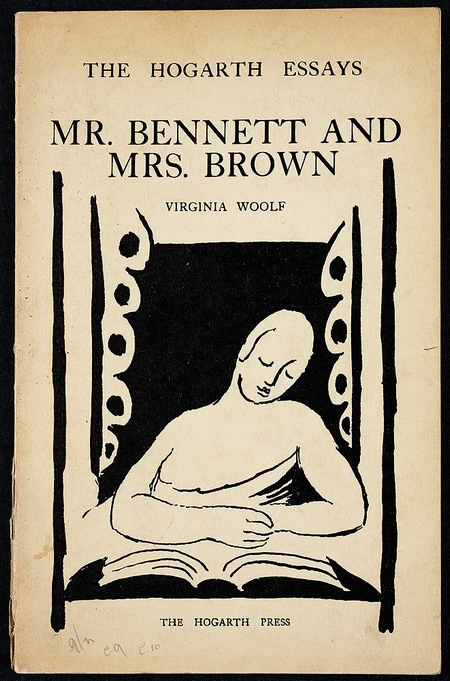
A few months ago I picked up a collection of Virgina Woolf's essays compiled in The Captain's Death Bed at a St. Michael's College book sale. The jewel in the crown was an essay on modern fiction called "Mr. Bennett and Mrs. Brown". As you can see it was also printed separately by the Hogarth Press (as seen to the left). 
Woolf begins with the image of a writer trying to capture a sort of phantom "Some Brown, Smith or Jones" who urges her to "Catch me if you can ..." That phantom is "character". 
Few catch the phantom; most have to be content with a scrap of her dress or a wisp of her hair.

In support of this, she cites the writer Arnold Bennett who agrees that, "The foundation of good fiction is character-creating and nothing else." and then goes on to proclaim that there are "no young novelists of first rate importance at the present moment ..." [This paper was delivered to the Heretics at Cambridge University on May 18, 1924]

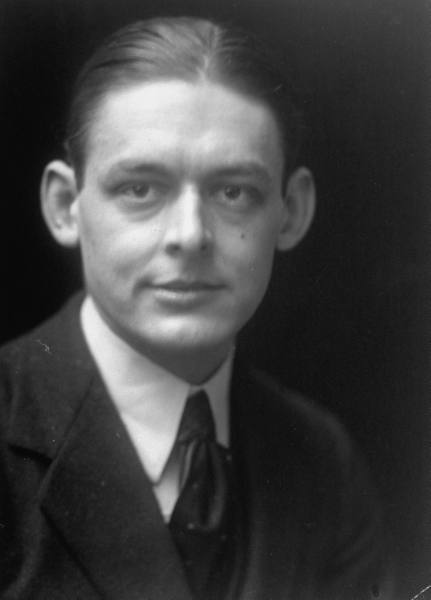
Eliot
Woolf reflects on this and feels that she must divide English novelists into two camps: the "Edwardians" (H.G. Wells, Arnold Bennett and John Galsworthy) and the "Georgians" (E.M. Forster, D.H. Lawrence, Lytton Strachey, James Joyce and T.S. Eliot). She could easily have included herself but does not. The latter group were, and still are, modern and, to various degrees, genre shattering, revolutionary in their fields. 
As an example of the importance of character, Woolf cites how a "character" has captivated her. She explains how she spied an older woman on the train from Waterloo to Richmond, a "Mrs. Brown" as she so names her, who is accompanied by a middle aged man, who, Woolf, surmises, is somehow menacing the woman, not physically but psychologically. "There is something pinched about her - a look of suffering, of apprehension ..." Mrs. Brown is "very clean, very small, rather queer, and suffering intensely". 

A fictional scenario ensues in Woolf's mind (by the end of the essay we are still not sure if a "Mrs. Brown" truly existed): Mrs. Brown is a widow with an only son; she is extremely impoverished but comes from "good" stock; they were once so exalted that her grandmother had a maid. The younger man, "Mr. Smith", is "bigger, burlier, less refined. He is a man of business and he had some "power over her which he was exerting disagreeably ..." At one point, she cries and the man ignores her as if he has seen this many times before. Why does Woolf present this scenario? 

What I want you to see is this. Here is a character imposing itself upon another person. Here is Mrs. Brown making someone begin almost automatically to write a novel about her. I believe all novels begin with an old lady in the corner opposite.

Character is what we take away from the great books she argues (as does Arnold Bennett). War and Peace, Pride and Prejudice, Vanity Fair, Madame Bovary ... The lovers Natasha and Pierre, the inestimable Elizabeth Bennett, the shrewd Becky Sharpe, the doomed Emma Bovary. But Bennett sees no great characters in the writings of the "Georgian" (read "Modern") writers. Woolf demurs. The Edwardians, she asserts, do not see Mrs. Brown.

The Edwardians excelled at describing the "fabric of things". Woolf cites a book written by Bennett called Hilda Lessways and how Bennett opens the books with an intricate description of the home in which she resides, the neighborhood, who resided where, the architecture, the town, the weather. And so, Woolf complains, we cannot hear Hilda's voice "only Mr. Bennett's voice telling us facts about rents and freeholds and copyholds and fines". These restrictions, these limitations, have had a certain effect on modern writers.
... the feeble are tempted to outrage. and the strong are led to destroy the very foundations and rules of literary society.

I love the analogy she cites of a teenage boy staying with his aunt for the weekend who in desperation "rolls in the geranium bed as the solemnities of the sabbath wear on". The modern writer is bored, tired of the same conventions, restless, destructive. They are, she says, sincere, desperate, courageous and it is only that "they do not know which to use, a fork or their fingers".

The interior life of characters is largely absent; hence, her discomfort with the old ways of doing things.

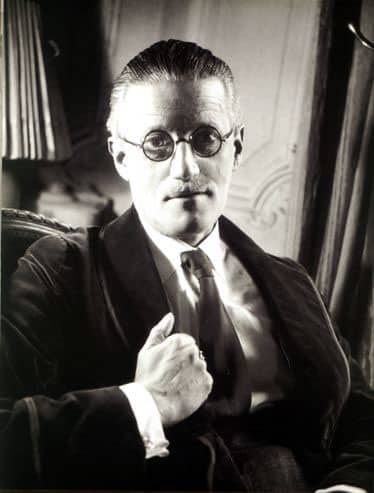
Joyce
But she does not overly praise the moderns. Joyce is "indecent", Eliot "obscure". Joyce's indecency in Ulysses seems "the conscious and calculated indecency of a desperate man who feels that in order to breather he must break the windows". When the window is broken he is magnificent but "what a waste of energy!" she exclaims.

Eliot has written some of "the loveliest single lines in poetry". But: 
... As I sun myself upon the intense and ravishing beauty of one of his lines, and reflect that I must make a dizzy and dangerous leap to the next ... like an acrobat flying precariously from bar to bar, I cry out, I confess, for the old decorums ...
And is she not right? As much as they thrill, these modern writers also disorient, at times even bore with the stridency of their inventions, do they not? They represent an alluring "season of failures and fragments". 

What is the readers' obligation here? To insist that writers describe "beautifully if possible, truthfully at any rate." We must tolerate the "spasmodic, the obscure, the fragmentary, the failure" for we are "trembling on the verge of one of the great ages of English literature".

As always milady, your arrow hits the mark. For who do we read? Whom do we turn to for truth, for beauty today? For the most part it is not Wells, Bennett or Galsworthy but Forster, Lawrence, Joyce, Eliot and of course ... Woolf.

Monday, November 28, 2011

Through a glass romantically …

The Captain's Death Bed by Virginia Woolf (Hogarth Press, 1950) 224 pages 

But no living writer, try though he may, can bring back the past again, because no living writer can bring back the ordinary day. He sees it through a glass, sentimentally, romantically; it is either too pretty or too brutal; it lacks ordinariness. Virgina Woolf

When I was younger and put pen to paper (and back then it really was pen to paper) I always felt intimidated at the notion of trying to write a personal essay. The first essays that I eagerly read (outside of an academic context) were those of Virginia Woolf. I voraciously pursued all of her writing: fiction, biographies, diaries, essays, and all things Bloomsbury.

You can imagine my excitement in finding this final edition of Woolf's collected essays at the St. Michael's College Book Sale this fall when I realized that this was an edition printed by Woolf's own Hogarth Press and edited by her husband Leonard Woolf. I love everything about this book: it's size (5"x7 1/2"), the way it feels in my hands, the smell of the book, the green hard cover, its yellowed pages and even the slightly cryptic inscription left by a friend (or possibly lover?) in fading blue ink on the front page:

See p. 90
All good wishes
from H.G.
Jan. 1, 1959 

Was it a teacher who left the message for H.G.? A lover? A doting parent? Surely it was a man, one who sought to instruct, to advise and set one on the right course ...

Woolf, that most modern of writers, had a passion for late 18th c. and 19th c. eccentrics and geniuses and a deep reverence for the masters of art and literature. But why would she pursue such an obscure collection of thoughts and ruminations you may ask. (Although, confessedly, why would I want to read about the doings of artists and writers from almost a hundred years ago here you might also inquire).

You might understand her interest in the English art critic John Ruskin (with his "petulant eloquence"), the Russian writer Ivan Turgenev ("he chose to write with the most fundamental part of his being as a writer"), Thomas Hardy ("that faculty for putting the telescope to his eye and seeing strange, grim pictures") and her own father the writer/critic Leslie Stephens ("If one moment he rebuked a daughter for smoking a cigarette ... she had only to ask him if she might be a painter, and he assured her that so long as she took her work seriously he would give her all the help he could.") As a writer, her thoughts on "Modern Letters", "Reading" and the "Cinema" intrigue me but what of the other essays?

They are as numerous as they are obscure: the ornithologist (White's Selbourne), the sea captain from the Napoleonic Wars turned novelist (The Captain's Death Bed), a governess to the well born (Selina Trimmer), the pastor kept a largely uneventful diary for 65 years (Life Itself), the painter Walter Siskert (Walter Siskert) ... and then are some that are a tad underwhelming: imagined rides on "aeroplanes" (how odd  it seems to pair Woolf with an "aeroplane" (Flying Over London) or getting a dose of "gas" at the dentist (Gas).

But what could this offer a 21st c. writer/reader like me, even an avid follower of Woolf's? Even one who is such a lit geek that she has photo of Woolf over her writing desk and mug with her face on it. Even I find my fixation strange. But ... in the manner of those who are besotted with all that the person they love is involved in, I am fixated on all that Woolf is interested in. Yes she was a snob, could be a nasty gossip, said vicious things about the Jews despite being married to one whom she clearly loved and doted on, was a bit too beguiled by the aristocracy, cared not whit for attire and feminine accouterments as she aged and acquired that haphazard look that some older women have when they are not careful with their dress. But how she dazzled with her prose, how playful and quick she was ... how she soars when she writes leaving us lesser mortals here below pining to be up there in the clouds with her.

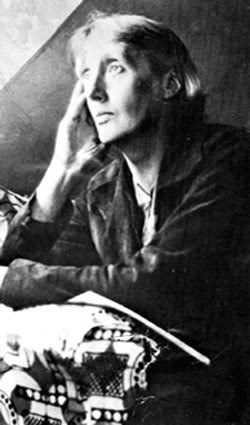
Woolf at work ...
The proverbial jewel in the crown in this collection is the essay "Mr. Bennett and Mrs. Brown" that speaks of the importance of character in fiction and likely that was why it was placed dead center in the collection. I'd like to address that essay in a separate blog.

And because of Woolf, specifically because of Woolf, I have tried (tepidly, fearfully, at first) to write my own essays on small and obscure subjects - hence the blog and other small bits of ephemera. The smallness of the topics incite me to write further because even though the topics are odd and perhaps deemed irrelevant by some, she infuses beauty and clarity in all that she writes.

I have a theory: read well (and hope to) write well. I also have a mystical desire to touch the books that were produced by her own press with a not so secret hope that the magic and power that infuses her books will be transferred in a small way to me as a writer, as an acolyte.

I cannot bring her back in her "ordinariness" in my imagination, only "sentimentally, romantically" but that will suffice for me.