Saturday, August 28, 2010

And the Rage has it ...


Non ti curar di lor ma guarda e passa ...
Take no notice of them but look and pass.
Inferno, Dante Alighieri

The Rage and the Pride by Oriana Fallaci (Rizzoli International Publications Inc., 2001) 187 pages

Oriana Fallaci, the Italian journalist who died in 2006, is a personal hero of mine. She was as valiant in print as she was in action. During World War II, as a teenager, she joined the resistance against the Nazis carrying explosives and delivering messages. In the 1960s and 70s she worked as a war correspondent in Vietnam, the Middle East and South America. She was once shot three times, dumped in a morgue and left for dead.

She interviewed the Ayatollah Khomeini and disrobed from the hated chador she was forced to wear in his presence calling it a "stupid, medieval rag" and forcing him to flee during the interview. She got Kissinger to admit that Vietnam was a "useless war". She has challenged everyone from Silvio Berlusconi to Yassir Arafat to Qaddafi to the Shah of Iran and the Pope on various issues. God, did this woman have parts. She was absolutely ferocious.

I can't do justice to her career here but there is an excellent article published in The New Yorker just prior to her death in 2006 which gives a great overview of her journalistic life.

Fallaci, the brave, the intelligent, the Cassandra of our time, descends into a howl of rage and ugly racism in this post 9-11 screed, the first of three books she published on the Islamic "threat" in 2002. Living in New York during the 9-11 attacks, she had a very passionate and somewhat understandable response to the event. If only, if only ... she had not let her passion and anger totally distort her considerable intellect in writing this "sermon" as she describes it. As Margaret Talbot's New Yorker article points out, where she fails so disastrously is in describing the worst practices of Islamic fundamentalists (which are undemocratic, violent, dangerous) as representing all of Islam.

This book was written in a complete fury in the unsettled days following 9-11 and, seemingly, it is unedited by anyone other than herself. She herself translated the work from the Italian which was, in my estimation, an enormous mistake. Had a competent English speaking editor been able to do so, they would have eliminated not only the many grammatical errors and adjust the syntax but perhaps challenge factual exaggerations and distortions that she so brazenly spouts.

It devolves from a shocked, angry response to 9-11 (she vividly recalls the smell of "death" in the air just after the attacks) into an ugly diatribe against all Muslims ("the sons of Allah" as she refers to them) and Islam. She moves from the obvious criticisms (religious intolerance, the abrogation of the rights of women and non-Muslims, the undemocratic nature of virtually all Islamic countries) to ugly stereotypes.

Oriana Fallaci before the Twin Towers

She complains how Muslims have turned the "exquisite" cities of Italy into "filthy kasbahs" with their mosques, businesses, food and culture. I shudder to think of people leveling that ridiculous accusation against the Italian-Canadian immigrants of St. Clair Avenue in Toronto or James Street in Hamilton, where many of us have built businesses and created homes for ourselves.

She accuses the Muslims of everything from overbreeding to spreading AIDS to prostitution to drug dealing to general criminality on the streets of Italian cities. It is truly disturbing to read. Capitalizing on the anti-Muslim mood it was a tremendous success in Italy. She warns that Europe will soon “end up with minarets in place of the bell-towers, with the burka in place of the mini-skirt.” She complains that Italy "cannot bear a migratory wave of people who have nothing to do with us . . . who, on the contrary, aim to absorb us.” She complains about Somali Muslims leaving “yellow streaks of urine that profaned the millenary marbles of the Baptistery” in Florence and urine streaks in the Piazza San Marco in Venice.

The linguistic errors are too numerous to recount but here are some:  "I don't swim into an ocean of good health"; "Let me stress you why."; "Everyday an attack or a smear reminds me the Salem trial"; the word "teached" rather than "taught"; a reference to the historic ship she names "Mayfair" rather than the "Mayflower".

However, on one point I adamantly agree: we should vociferously decry practices which violate human rights, deprive women of equality, practice barbaric acts of retribution against those who violate Islamic law, force women to don burkas and chadors. She is in correct that a perverse sense of political correctness compels Western liberals and leftists to defend certain practices. We should condemn the repressive aspects of sharia law and all instances where people are deprived of their rights but we shy away from this because we don't want to be perceived as racist.

Fallaci said in this book that she refused to read her detractors, of which there were many, because she did not want to engage in "futile discussions" and because they were "invariably persons without ideas and without qualities". She cites a quote from Dante's Inferno: Non ti curar di lor ma guarda e passa ... A little less rage Ms. Oriana and a little more pride would have been in order because with this missive you damaged the reputation of an amazing journalistic career.

Sunday, August 15, 2010

A Night of Humour with the (Not So) Nice Italian Girls & Friends


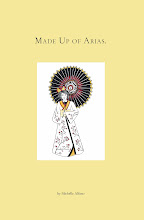
Michelle Alfano is a co-organizer of the (Not So) Nice Italian Girls & Friends Reading Series and a Co-Editor with Descant. Her short story “Opera”, on which her novella Made Up Of Arias (Blaurock Press) is based, was a finalist for a Journey Prize anthology. Her fiction and non-fiction work has been widely published in major literary publications. She will be featured in a forthcoming documentary on the passengers, and the children of the passengers, of the Saturnia ship which will be featured on OMNI-TV. She is currently at work at a new novel entitled Vita’s Prospects.

Sandra Battaglini is a dynamic, high-energy comedic actor, stand-up comedienne, clown and cabaret performer. Her mix of song, opera, contemporary pop, originally choreographed dance and theatrical clown has distinguished her as an innovative artist on the Toronto scene.
Bruna Di Giuseppe-Bertoni immigrated with her family to Canada in 1964. Some of her poetry has received awards and been published in various magazines and anthology in both Italian and English. She has had short stories published in Canadian Woman Studies/les cahiers de la femme and Wordscape, an anthology of mystery and suspense. Her work has been selected to be part of the new revised literary anthology, Italian Canadian Voice. Published by Mosaic Press 2006 As an artist, she has painted on porcelain. Currently Her most recent collection of poetry, Sentieri D'Italia, was published in Italian by Lyricalmyrical (Toronto, 2004). She is currently working on a novel, My Mother, My Legacy. In her profession as a Social worker she is involved within the Italian community with seniors, disabled and mental health patients.

Terri Favro’s writing springs from her identity as a first-generation Italian-Canadian who grew up consuming Catholic dogma, British fairytales, American game shows, Jell-O butterscotch pudding, her father’s grappa, her mother’s polenta, and the neighbours’ homemade vodka. Terri’s humour articles and fiction have been published in Prism, Riddle Fence, Geist, Accenti, Toro, www.facebook.com/l/427e6; Feathertale.com and More magazines, among others, and her work has been short listed three times for the CBC Literary Awards. She was recently selected as an emerging Toronto writer by Diaspora Dialogues and is currently working on a novel and collaborating on a series of online graphic stories.

Michael Mirolla's latest novel, a speculative fiction saga titled The Facility, is due out in late 2010. In a moment of temporary insanity, the Montreal-Toronto corridor writer, author of a half-dozen books of poetry and fiction, decided he needed his own publishing house and thus, along with another insanity plea partner, bought Guernica Editions. Their motto: "It's fun as long as the madness continues."

David Silverberg has been involved in Canada’s spoken word community since 2001. He founded Suburban Spoken Word in North York and then helped start Toronto Poetry Slam, where he currently serves as host and artistic director. He is part of the Toronto poetry troupe Last Call Poets (myspace.com/lastcallpoets), and his most recent book of poetry is Bags of Wires (LyricalMyrical). He has performed across Canada, including Calgary, Halifax, Vancouver, Ottawa, London and Montreal. He is the editor of Canada’s first spoken word anthology, Mic Check (Quattro Press). His favourite band, yet his most hated food, are Red Hot Chili Peppers.

And as emcee ...
Giovanna Riccio was born in Calabria, Italy and grew up in Toronto where she studied philosophy at the University of Toronto. Her poems have appeared in journals, magazines and newspapers, including the Eyetalian, Poetry Canada Review, CV2, Tickleace, and Italian-Canadiana. Giovanna completed her first manuscript, Strong Bread, earlier this year and is in the process of getting it published. Her dramatic monologue, Vittorio, was published by LyricalMyrical Press in the summer of 2010. She has recently retired from teaching and is working on a new book of poetry.

Sunday, August 8, 2010

The ultimate wound

As a soldier, the thing you were most scared of was failing your brothers when they needed you, and compared to that, dying was easy. Dying was over with. Cowardice lingered forever.
War by Sebastian Junger (HarperCollins Publishers Ltd., 2010) 287 pages

The construction of the mask of masculinity is thought provoking. My theory is that we all wear masks regarding our gender which are built from our personal histories, cultural and social environment and genetics. My interest in this book wasn't so much about the Americans' involvement in the war in Afghanistan where this book is set but how men behave in war and how they use the war to define their masculinity (which I believe the author was also trying to determine).

I urge you to pick up the book. I won't get into too many of the specific instances that Junger cites because I can't recount them as well as he can and my interest in the lives of these men lies elsewhere - not in the specifics of war but why men behave how they behave in these circumstances.

Personally, I don't believe that men have more personal courage than women in these situations - I do believe that men have a larger reservoir of personal shame at being perceived as cowardly or unmanly. When I am about to do something risky or dangerous I always ask myself - what would happen to my kid if I mess this up - if I was killed or incapacitated? Or even...would these actions shame her? I think that is the leash that reins in women not fear.

Men's visions appear both larger and more magnificent but also more foolish - as in I will climb that mountain to save my comrade (even though it is likely I will end up dead on the hillside because I have failed as many others have failed). Perhaps that is why they are predominantly, but not exclusively, the inventors, the explorers, the thrill seekers and the ones that end up killed.

"Manly valor" needn't be dirty words. The thing is we need individuals of this type, both male and female - to dare going into a burning building to save someone, to protect someone who is weaker and more vulnerable than you are, to risk it all to achieve something great. And chances are, as society stands today, these individuals will be men.

I have admired the modest Junger trying to explain during interviews for the book that these men were not merely "adrenaline junkies" seeking highs - (although one solider does describe combat as being akin to crack) - these are boys and men who are trying to define who they are through their actions in the military and their relationships with the other men.

War begins with a thirty man platoon, the 2nd battalion of the U.S. Army, stationed in the Korengal Valley in Eastern Afghanistan in the foothills of the Hindu Kush mountains where Junger is serving as an embedded journalist in two cycles during June 2007 and June 2008. Life at Restrepo where he is based (and which he chronicled in a documentary made at the same time):

The men sleep as late as they can and come shuffling out of their fly-infested hooches scratching and farting. By midmorning it's over a hundred degrees and the heat has a kind of buzzing slowness to it that alone almost feels capable of overrunning Restrepo. It's a miraculous kind of antiparadise up here: heat and dust and tarantulas and flies and no women and no running water and no cooked food and nothing to do but kill and wait. It's so hot that the men wander around in flip flops and underwear, unshaved and foul.

For Junger, the soldier Brendan O'Byrne seems to epitomize the troop that he is stationed with. Just an average kid, albeit from a troubled, violent background in Pennsylvania, who casually mentions in conversation that he was once shot by his father and doesn't blame him as he (O'Byrne) was such a badass. His personal story is interwoven throughout the narrative. O'Byrne seems typical of the average soldier there: not wealthy, somewhat rootless, sometimes with a troubled history, eager to break the boredom of everyday life, fearful of returning to normalcy when his tour is over.

While reading the book, I kept picturing the character of Sergeant First Class William James in the film The Hurt Locker aimlessly examining the supermarket goods when he returns from a tour in Iraq and then almost immediately afterward we see that he has re-enlisted for another tour (done so with a big happy grin on his face).

The overwhelming sense of what the experience of war is appears to be mind numbing boredom broken with terrific firefights (as many as four or five a day for these particular men). This area saw one fifth of all the combat in Afghanistan at the time. The men are often so bored they would pray for combat or invoke weird rituals which were said to bring on combat (such as eating a certain kind of candy). At rest, they play guitar, beat on each other just for fun, read Harry Potter and surfing magazines, listen to music on their laptops.

The biggest motivator to behaving bravely in this situation appears to be not letting your fellow soldiers down through your own personal cowardice which is epitomized by the statement that one soldier named Jones makes that, "There ain't no bitch in me." This fear that one will make an error resulting in casualties is overwhelmingly important and, I think, tied to an innate sense of what is masculinity. This means mastering one's fear. There appears to be no shame in fear but it cannot, must not, affect the soldiers' ability to act in a crisis. 

O'Byrne tells Junger, "There are guys in the platoon who straight up hate each other. But they would also die for each other." Clearly, they must possess the "X factor" to surmount their fear - a factor so labeled by the British and American militaries during WWII which was trying to determine what made men conquer their fear.

Junger mentions the unspoken agreement among the men that the men stick together no matter what. It is the "reassurance that you will never be abandoned [which] seems to help men in ways that serve the whole unit rather than just themselves." But sometimes this might just result in a suicide pact.

I think that there is something else at the heart of this commitment to each other. I would venture to say it is also the fear of being perceived a "bitch" if one disappoints his comrades. It appears that to be a man, most distinctly means not behaving like a "woman", being cowardly, not putting the whole of the unit before your own needs.

Junger seems most disturbed as a journalist when he learns of an enemy combatant, an Afghani man who, firstly, loses a leg while struck by firepower on a hillside, then gets blown to smithereens as he scrambles for cover. This elicits cheers from the Americans in the troop and from Junger horror. He struggles to understand. Relief he can comprehend from the soldiers but cheers? A soldier explains: this means there is one less man out there trying to kill you - hence the "happiness" the kill elicits.

Periodically, the men have what Junger describes as a "pisstube moment", this from O'Byrne:
I went out to use the pisstubes one night ... and I was like 'What am I doing in Afghanistan?' I mean literally, 'What am I doing here?' I'm trying to kill people and they're trying to kill me. It's crazy..."

Whether the sacrifices made, the lives lost, psyches destroyed during this war are worthwhile I leave to finer minds than mine. I found it difficult to understand the purpose of the mission, the purpose of this war. I guess that would be my "pisstube moment" in contemplating the war in Afghanistan.

When you learn of O'Byrne's troubled fate once he is released from duty (many of his psychological wounds are self-inflicted) you wonder if Junger is not right when he states: Maybe the ultimate wound is the one that makes you miss the war you got it in.

Sunday, August 1, 2010

There will be much blood ...


The Twilight Saga: Eclipse (U.S., 2010) directed by David Slade, 124 minutes

I haven't quite mastered my embarrassment at being taken in by the Twilight franchise. Thankfully, I am not an out and out Twilight Mom, but more an intrigued reader of the books and observer of this phenomenon. If you have nothing but scorn for the franchise best to move on, this blog entry won't interest you. But I have a theory that anything of such monumental cultural influence on young women and teens has touched a chord that we can't, nor should, ignore.

Having seen all three films in the Twilight Saga and read the three books (there is one more to go - Breaking Dawn) I have to say that the films work in a way that the books do not. Meyer is a notoriously long-winded and bad writer (hence the length and repetitiveness in all of the novels) but, as I have said before, she has an unerring eye for capturing the angst of a teenage girl's life and passionate teenage love. No small thing.

This film is tightly edited and the action scenes well constructed. It's beautiful to look at (not to mention there are alot of pretty pore-less people in it who are, for the most part, expertly cast). The music selected is hip and moody and interesting. The director David Slade hits the right notes for the film and the book's demographic - sensuous detail for the romantics and well coordinated action sequences for the male demographic. Lest you think I am being sexist I will mention that I read after the first Twilight film, the producers knew they had captured the teen female demographic with its success but they wanted to snag the male one too by adding more action.

But my interest in the film isn't about how well crafted it may or may not be.

I first became of aware of the books through my now teenage daughter - not a voracious reader prior to this - and I was wondering what had captured her attention so. I knew nothing of the plots or the series. Soon afterward, I attended a book club group at the invitation of a friend and was astonished to learn that all of the members - educated, intelligent, career women - had read all of the books, sometimes more than once. I was, as they say, gobsmacked by the range of girls and women whom the books appealed to.

The actress Kristen Stewart, who plays Bella Swan, perfectly embodies a certain teenage ideal - a beauty who has no idea how beautiful she is, aware, intelligent, sensitive, socially awkward and passionate about the people she cares about. She finds herself caught yet in another struggle between the "bad" vampires led by Victoria (Bryce Dallas Howard) and the good vampires which are comprised of the Cullen family, of which Edward Cullen (the Byronic British dreamboat Rob Pattison), Bella's love, is a member. (I know, I know you are laughing at me already!)

Victoria seeks retribution for the death of her mate James, killed by Edward during a ferocious battle in book one. She hopes to kill Bella to revenge James' death. She marshals an army of "newborns", humans who have recently been turned into vampires and have an insatiable thirst for blood. She finds a human, Riley Biers (Xavier Samuel), who is from Forks, WA, (where Bella and Edward live) as a mate and starts a murderous rampage against humans in Seattle which eventually attracts the attention of both the Cullens and the Quileute Indians of nearby LaPush who shapeshift into werewolves and who are the natural enemies of the vampires. Inevitably, they band together to defeat the "bad" vampires in various horrifically visual ways.

There is another significant subplot where Bella must decide between her love for Edward the vampire and her best friend Jacob the werewolf and in the book the author likens it to the choice that Catherine must make between Heathcliff and Edgar Linton in Wuthering Heights but this is a feeble and silly comparison that is dropped in the film. This device of co-opting romantic duos from great literature for the Twilight series works in the first book (the Lizzie/Darcy tension between the two lead characters is borrowed from Pride and Prejudice) and the second book (a Romeo and Juliet theme of tragic love and misunderstanding set in Italy) but does not really work here in the third installment with the Wuthering Heights love triangle.

Needless to say much blood is spilled trying to save Bella from the vampires - the scent of her blood alone sends them all into a frenzy. But of greater interest, I still believe, as I have posted previously, is the hidden and unspoken of mystique of Bella's virginity symbolized by the manner with which her blood is exalted and fought over. Bella is anxious to rid herself of her virginity; Edward is determined to protect it. He will not sleep with her until they marry which she finally consents to at the end of book three. Her resistance to marriage does strike me as odd if Edward is, as she keeps proclaiming, the man whom she wants to spend the rest of her life with. It is better explained in the book - marrying early signifies giving up and settling for less than what you are or that you suddenly got pregnant which Bella hates the idea of.

Is this strict adherence to chastity on the couple's part in the novel/book consistent with the moral code of the 100 plus year old vampire born before the first world war or a not so hidden message from a practicing Mormon such as Meyer? Meyer plays it both ways...Edwards dutifully sleeps chastely with Bella every night in her room as her protector but she remains a virgin unto (at least) the end of book three.

Finally, I have to say that Edward's paternalism and control over Bella grates more and more as time goes on...what might seem romantic and passionate to a teenage girl in love for the first time is troubling and annoying to a woman my age. That's what I want my daughter J to take away from the books and the films - as much as she may enjoy the franchise, Edward's behavior should be seen through the prism of this fantasy and should not be a template for male/female behavior in her world no matter how attractive its proponents.

Sunday, July 25, 2010

But I was expecting locusts next ...


Oh June, how you disappointed me! You used to be my favourite month. My birthday month, the month of summer solstice and Father's Day, planting my garden begins in earnest during June...

You began with J's lingering illness (strep throat and other issues) and her extensive absence from school then the news that Nonna was not well - a combination of the seen and the unforeseen for a 75 year old lady - problems with her feet, problems with her eyes. Worrisome. How we fear their getting old.

There was the basement bathroom that had to be renovated due to an emergency and the inevitable delays and expense that that entailed. There was the flooding of the basement just immediately before we left for Italy during that flash rainstorm with R valiantly scrambling to sort it out before we left.

There was the preparation for a twelve day trip abroad, various cat sitters to organize and keys to be dropped off, J's grad trip and graduation ceremony (dresses and shoes to be bought sometimes reluctantly), a NSNIG&F reading at Lola's Commissary and then other readings at the Annex Live and Sweet Tooth.

There was the news that I required minor dental surgery ...  ack! Oh yes ... and a tree fell on our car during a rainstorm (this was a different one than the one that caused the flooding) and even though it was a tree on city property the city wouldn't reimburse us a portion of the damage that wasn't covered by insurance.

I sent an e-mail to a friend at that time with a header that said "What next ... locusts?"

But then you redeemed yourself June. On the last day we left for Italy and you made it up to me. Oh June, I think you really do love me!

Tuesday, July 20, 2010

The Solitude of Prime Numbers

The Solitude of Prime Numbers by Paolo Giordano (Penguin Group, 2008) 271 pp.

Sometimes I cannot surmise why or how a book has touched me. This is such a book. So I think you will find I have little to say here of substance. But that does not reflect on the quality of the book, merely my inability to express my appreciation.

Two individuals, haunted by unhappy histories, connect (in a fashion) then come apart only to be brought together again.
In various ways both Mattia and Alice, the two main characters, are somewhat perfectly matched - two delicate flowers unable to withstand the vicissitudes of life.

Mattia is a brilliant mathematician who has a propensity towards self-mutilation which both frightens and bewilders his family. Alice, crippled by a skiing mishap when young, is anorexic and seemingly unable to connect emotionally with anyone. Her accident is linked to an aggressive and overly competitive father. But Alice is much tougher than Mattia in some ways.

When, as an adult, Alice is working as a wedding photographer and finds herself at the wedding of Viola, an old nemesis from highschool who inflicted a number of humiliations on her, she takes her revenge effectively and savagely.

Mattia is more passive, preferring to withdraw and withold affection from those who care for him and severing contact first from Alice and then from his family. He takes refuge in counting rituals - a sort of mathematical OCD. 

Both have terrible secrets. Mattia rarely acknowleges, if ever, the disappearance of his twin, a troubled, mentally challenged girl named Michela whom he disliked and was repulsed by. Alice hides the secret rituals which she uses to control her body and her presence in the world. This she conceals firstly from her family and then her husband Fabio.

Neither can connect nor forge emotional bonds or explain themselves. Alice never bonds with her husband; Mattia never finds a partner.

There is a meeting at the end but it is unclear that the issues are resolved.

You look at the face of Paolo Giordano with its fine features and gentle intelligence and you wonder ... how was he able to access such sorrows?

Monday, July 12, 2010

Day 12: Amuninni! (Let's go!)

And after such strained circumstances last night we are itching to leave I must confess. When we went down for the 6.00p shuttle to Taormina we were told that there was no point going into town as the Sunday spiaggia (beach) crowd would be clogging the roads. Sure enough, we hear that the shuttle ends up taking 1 1/2 – 2 hours when ordinarily it would take 15 minutes. We dodged a bullet there.

But no matter - we had lost interest in leaving on the shuttle because as it turned out our rented car was completely dead (likely the battery was depleted) when R went to check the GPS system for the following day’s trip to the airport. How we were responsible for this I don’t know as we drove up, parked the car and never used it again until today. My suspicion is that one of the drivers who has had to move the car twice or three times may have left the lights on and depleted the battery. 

Here the father/superhero in R kicks in and he is on the phone for almost two hours trying to sort out this mess: how to get the car back to the car rental agency sixty miles away in Catania on a Sunday night? How to get us to the airport for 6.00a to catch a 7.50a flight on Monday morning? Who will pay for this? Europcar, who rented us the car, will only reimburse us 30 euros but the trip by taxi with cost 95 euros! Davide, the concierge, tries to navigate this for us in Italian after R finds out what we need to do. But it is too complicated – his English is not great, my Italian is comparably bad. I suggest we just order the taxi for the next morning and I will ask the travel agent to fight for the full amount when we get back.

Still we have the problem of food on this last night … we were meant to get both that night’s dinner and the next morning’s breakfast. Desperate for food, we relent and agree to have dinner on the fancy terrace with the lousy service again despite my reservations about the food, service and price. The maitre d’ tries to convince us to do the buffet again which was overcooked and mediocre so we pass. Surprisingly, the risotto ordered ala carte is quite good and the salad very fresh. J has the ubiquitous spaghetti and R has melon and prosciutto to start.

Off to bed and finish packing around 9ish …We try and redistribute the weight of the luggage. We had to pay Air Canada $100 for a too heavy bag and Alitalia 40 euros on the way here. This particularly irks R as he says I advised him to pack too much stuff (true).

We try and fall asleep by 10.30p or so as we must rise at 4.30a but I, for one, am too keyed up. As I start to fall asleep the phone rings, a message from Canada, nothing urgent. Then an hour later a text comes through (again nothing urgent) waking me again and then a loud reminder that the text has not been read. J and R blissfully sleep through this. Feeling not well and tense I am aware of every sound. Arrrggh, the gods of sleep are against me tonight. I am being punished for calling my sister at 4a from Firenze when we first arrived when I forgot the time difference.

But we wake on time and meet the usual surly cab driver at 5a in the lobby. He hits the pedal at 140km practically the whole way. Tutto a posto. We reach the airport at exactly the right time and pass through the various checkpoints easily. For once, Alitalia is on time. Sneak one last cannolo from the take away restaurant and soon we board. I have to say though, the Hamilton cannoli are pretty darn close to these Sicilian ones.

At one point I buy a stamp for a postcard that has been languishing in our bag for ten days. Finally I find a post office but have no idea where to post it. The woman says in Italian to post it in the red box outside and keeps pointing but I can’t see it (because it is across the huge hallway about fifty feet away). Finally, a man intercedes and points directly to the box. Then the clerk exclaims exasperatedly, “But I thought she was Italian!” Sorry lady, I just play one on TV…

Smooth flight to Rome except the travel problems always begin in Rome – unbelievable line ups and check points and two flights to Toronto on Air Canada and Alitalia next to each other and leaving five minutes apart in the same space and it is a combination of Dante’s Inferno and the Tower of Babel at the gate - hot and insufferably loud. Finally lift off at about noon (Rome time)…we should be home by 3.15p Toronto time if all goes well.

R spots a little hipster in the airport just ahead of us – he is maybe nine and wearing a fedora, a loud shirt and a plastic guitar which he strums energetically. He is also climbing all over everything. This kind of kid makes him crazy. You watch I said, he is going to be right behind or in front of you on the plane now. Uh huh. Mama knows everything…

Finally home at 7p after fighting rush hour traffic and landing about an hour late…door to door almost twenty hours of travel!

We ask the kid, “So was it boring being with your old parents for twelve days?” She says brightly, “No! I thought it would be but it wasn’t as boring as I thought!” Ahhh, victory at last.

Sunday, July 11, 2010

Day 11: Diario di un’ Amara Siciliana

There is a type of liqueor called Amaro Siciliano (Bitter Sicilian) that we would sometimes get a dollop of when we were growing up – just an uccia (a little bit). That pretty much describes the Sicilian character I think. We aren’t exactly a sunny bunch of folks.

The vendors tend to be a little taciturn here unless they smell money – not everyone is like that of course – but you get the vibe that they aren’t particularly pleased to see you unless they can get something out of you. In this category I would include the hotel shuttle drivers, certain small business proprietors in Taormina, the sidewalk vendors as well as some of the wait staff in the hotel and in town.

Is this coldness the legacy of colonization and the fear of i stranieri? Is it the palpable disdain of the north towards il Mezzogiorno which makes people distrustful and resentful? Or is it much simpler - merely the weariness of the native born towards the ever present turisti who come in inexhaustible wave after wave?

When we went to dinner the other night with a voucher for our “free” dinner the sad sack waiter with the haunted looking dark eyes and the drooping moustache, who could have been a character in an old Italian film, said to the maitre d’ when he handed him our biglietto or voucher which he described as “un altro biglietto di lotteria” (another lottery ticket) – likely a reference to our lack of stature or appearance of importance on first impression. His meaning, I think, was that we had somehow lucked into this dinner. There are some very evidently wealthy people in the hotel; we, visibly, do not fit the bill.

Today, for lunch, we picked up some pizza and arancini to go from a little place in Taormina where the owner stood in the back of the shop, refused to acknowledge us and gave me a look that I recognized so well. She neither moved nor smiled yet the look said it all: “Hmmph, and who do they think they are?” Even my attempt at Italian did not assuage her nor did my purchase.

Still, as I said, il sangue chiama…the blood calls. I feel the pull. This is our last full day and I have a bittersweet feeling about leaving. I will be happy to get back to our house, our family and friends and our cats. But I will miss the gorgeous locale, the familiar voices and faces, the rugged beauty of the mountains and the bay of Taormina. The many flowers and intense blue of the sky. We all want to come back, hopefully with my brother and his family. 

R cavorting in the pool alone ...

Here at the lower “saltwater” pool in the mid afternoon, I sit on the upper level in the only shaded area at a small table. I see that I have unknowingly usurped the elderly lifeguard’s spot (he must be in his mid 50s and quite paunchy) but he has kindly let me sit at a tiny table with an umbrella and will not make me move. People are not swimming except for R and J and a very sweet young Irish couple canoodling in the pool who are paler than pale. Did you put on your sunscreen? I want to ask in motherly way. 

Soon we will go up to rest for an hour or so before dinner. Dinner tonight in town with my sister and T. We want an early night as we will be leaving the hotel very early for a 7.50a flight. Or at least we did want an early night …

Saturday, July 10, 2010

Day 10: ‘Caa … (Here)

 The patron saint of Taormina is San Pancrazio.

I wake early because I forgot to bring down the metal blinds on the window on my side of the bed and as soon as there is a bit too much sunlight in the room, I am up at 6.45a. I quietly get ready and sneak downstairs for coffee and to write in the breakfast room. I find if I don’t have these quiet times alone I get really ornery. I do feel frustrated when I can’t find time to work.

I pick a table facing the sea and have a coffee and a croissant. I gather myself and concentrate and am able to think clearly with the quiet. I return at 8.30a to find J and R getting ready for breakfast and we go back down together.


We take the noon shuttle to meet my sister at her hotel in the courtyard. I buy four arancini,  a prosciutto panino and a cannolo from Bar Pirandello on Via Luigi Pirandello for about 15 euros and we feast in F’s shaded courtyard which has lush foliage and trees sheltering the outdoor seating and a walled off little room for shade.

T, F’s boyfriend, has rented a scooter and gone to Mount Etna. We, the less adventurous, take the Funivia (a cable car) that is located almost next door to F’s hotel down the mountain to the spiaggia (beach) for 3.50 euros. My family laughs at me (callously I might add) when I shudder with every bump and jerk of the cable car which passes over a small soccer stadium and the mountain side.

My sister, who has made this trip before can’t remember how to get on the beach without going through the property of the hotels but asked the nearest pedestrian who happens to be Irish. He graciously offers to lead us through a passageway through his hotel.

When we reach the beach the view is spectacular even if the beach itself is rocky and there are cigarette butts strewn along the rocky sand. Smoking and cigarette butts are ubiquitous here. There are short rock cliffs from which boys are leaping and smart looking villas facing the water high up on the mountainside. F has smartly brought her bathing suit and plunges in while we wade along the shore. That's my sister in the foreground of this picture.

We travel back up the cable car and meet up with T for more refreshments at the Bar Pirandello. Then we go in search of gifts … T-shirts for some, bracelets for others. We decide to eat in tonight – we purchase more panini, arancini, calzone and cannoli at Bar Pirandello again as well as fresh fruit – plums, cherries and a liter of milk, which I am craving, from the Etna Market around the corner on Via San Pancrazio (the patron saint of the village) and which I don’t recommend you patronize as the proprietor is unbelievably rude.

We go to the pool and just relax a bit … foolishly I still have no bathing suit because I am uncomfortable with the styles and the prices. There are two pools on two different levels – one with salt water. The pool is to the south of the hotel and the mountain that the hotel is carved into. It is surrounded by trees bearing flowers of various types and colours: white, pink, red, yellow and purple flowers. The only flower I recognize is the bougainvillea which we saw in Roma and Firenze in abundance. Above the pools, a small terrace with tables and chairs then a rock face, more bougainvillea trees and then the elegant terrace where we had dinner last night. Behind us a walkway, the road, then the sea. The pool is deserted so we don’t stay long.

Shortly my more adventurous sister arrives by scooter with T – how chic! She can stay only briefly as the sun will soon set. We will meet tomorrow for our final dinner before we leave on Monday.

Friday, July 9, 2010

Day 9: My little Sicilian fantasy

After breakfast we shuttle to downtown Taormina to meet my sister. A late start to the day, we miss the 10.30a shuttle and leave at noon instead. The streets are not as busy because the smart people (the native Sicilians) are in hiding from the sun at noon.

J needs a bathing suit. Everything here is sparkly and girlie and bright so we settle on a simple two piece black bikini (to my surprise) – the plainest thing we can find at Irisblonde on Via Luigi Pirandello for 55 euros – I can tell you that that hurt. I have never spent that much on a bathing suit. As I pay J gives me a guilty look and whispers in my ear, “That’s expensive.” But that’s Taormina, I knew we would not find anything less than that and it’s my fault for forgetting the bathing suits. Is there anything plain and black for me? No chance.

I console myself with a plain, bamboo coloured fan (3 euros) from just down the street to ward off the heat. My sister smirks at me, “You’re just like mom!” What’s that I ask – menopausal?? It’s so hot here and today we saw on TV that Europe is experiencing a heat wave. I know I am experiencing one myself.

We find a little place called Tutti ‘caa Risto Pub (“tutti ‘caa” is a Sicilian phrase for “Everyone here”) on Via F. Ui Ingegnere, 12. Great food but extremely slooow service and lackadaisical serving staff – we order antipasti, paninni with prosciutto, spaghetti alla pomodoro. I ask my sister to cuss them out in Sicilian because of the slow service, as she is better at it than me, but she demurs. Her accent is much more natural than mine.

Out into the heat … the streets are pretty deserted. We make our way to the Teatro Antico, Via Teatro Greco, 40. For 8 euros you can do an unguided tour of the amphitheatre. Deep Purple will appear here in a few days and then Diana Krall next week. It boggles the mind to imagine both of those acts performing on these ancient ruins. At the top of the amphitheatre you can see the sea from under the shade of trees. We rest and take pictures at the top.

We weave our way back to the shopping core. R notices busts of Benito Mussolini for sale (later we will also see beer bottles emblazoned with his mug). If I had not read of something similar in my friend Frank Giorno’s facebook posts a month ago while he was in Rome and Calabria I would have been shocked. Now I am just annoyed and a bit repulsed. “What’s wrong with these people?” someone whispers to me. The other thing that irks us is the tacky Godfather souvenirs. If Sicilians knew how much grief we North Americans get with this mafia thing abroad I wonder if they would be less willing to embrace this schlock – not the movie, which I love, but the crappy souvenirs?

I debate buying a pale blue linen tablecloth with a white design for 75 euros from a shop called Sugar Spice on Via Teatro Antica, 35. What a perfect memento of our trip my sister says. She is right. It turns out that the shop is owned by a fellow Sicilian-Canadian named Diane Lo Coco from Montreal who has been living here for forty years. It is then I notice she is wearing a tiny Canadian pin on her dress. Now she, her Sicilian husband, her sister and her mother all live here.

“I’m going to do that!” I spontaneously exclaim to my companions as we leave the shop and my sister F rushes right in and says, “Come on, you would be bored and would return in six months! You won’t be able to stand the xenophobia and you will never, never be accepted.”

There is a truth to this that I am deliberately ignoring in my little Sicilian fantasy. I would never be accepted despite my rightful heritage. The minute I open my mouth they know that I am not native born despite my best efforts and they switch to English to assist me. Then we get into an amicable argument about which is less welcoming Toronto or parts of Sicily? I can say I have never felt entirely comfortable or accepted in Toronto either. I like being surrounded by faces and voices that are familiar to me; hence, being in Sicily appeals to me – is this racism or just plain human nature?

You rarely see black or brown people here. If you do, there appears to be very little intermingling. It might be the sole vendor of sunglasses on a sidewalk or a porter, and very few tourists that are Asian, black or South Asian. Perhaps F was right, perhaps I would always be acutely aware of the xenophobia, the lack of diversity, the impossibility of really fitting in. Sad really when you think that colonization and invasions over two millennium have resulted in a rich racial diversity in the Sicilian people which they refuse to recognize.

There is also the issue of being a part of a bi-racial family. R and J both receive curious looks here that make them uncomfortable, especially the more sensitive J – not necessarily hostile but more like “Hmm, what are you doing here?” When asked R vetoes the hypothetical move to Taormina; curiously, Firenze does appeal to him greatly probably because there is a greater mix of different peoples there and we blend in more easily. There is greater access to culture and art … And I couldn’t live here if R and J could not.

I am also searching for a symbol of the Trinacria but the ones I see are quite gruesome, many of them made of volcanic ash – black and ominous looking with a Medusa like visage in the middle that does not appeal to me. I have always loved the symbol on my dad’s membership card at the Trinacria Club in Hamilton (of which he was a co-founder) where it appears as a beautiful woman in the centre of the image. I keep looking.

Our shuttle leaves at five … quickly, we return for gelato at the centre of the shopping district. Here they charge you extra if you sit down at a table (for example: where we buy gelato they charge an extra .60 euros per person or about a $1.00). We return home and despite a late lunch we are a bit hungry.

Our hotel is a bit isolated form the downtown core and there is nothing around to serve food but room service before dinner. For a treat, we order it for J. Ordinarily we don’t do that, ever. We are too cheap and the service ridiculously expensive. But we order something simple. She says she has a craving for “salty meat” (i.e. prosciutto) so we order melone e prosciutto. It comes in a heaping mound on three spears of melon served by a handsome young waiter on a tray with a linen napkin under a silver dome. J beams like she has won the lottery when she sees the dish and we take her picture on the balcony covered in blankets with me serving her the tray.

Debating back and forth about dinner and wondering if we shall meet up again with our family but we finally decide to eat at the hotel on the fancy terrace as R has work to do that he is committed to.

We are having on-going disappointments with technology and hotel keys which is odd as J and R are both adept at these things in a way that I am not. We can’t dial out on the land-line for some reason, our cell phones don’t work here, there is no Wifi in the rooms, the DVD player won’t work when we try it and then we get locked out of our room because we forget our keys which necessitates a few back and forth trips from the sixth floor to reception. Once the concierge even gives us the wrong key and must rush back with the right one.

Flash forward an hour or two and we are on the hotel terrace enjoying a view of the pool and the sea and a so-so meal which surprises me with its mediocrity. J gripes when asked to put on a dress but the dining is a bit upscale on the terrace and R is right to ask her to do so – flip flops and jean shorts won’t do.

J is right though about the looks we get, inquisitive looks as we pass by on the terrace. We joke amongst ourselves that they are saying, “I have never seen such good looking Chinese people ever!” Even J complains about the way men look at women (and girls) here. As she gets more mature she is also the recipient of such looks and it is disturbing to her.

But they are not always necessarily unpleasant looks unlike our maitre d’ who is (unpleasant that is). One look at us and he sees that we are not high rollers like some of the other patrons of the hotel. Is it the beer and mineral water we order or our relative youth compared to other patrons? Is it the fact that we tried to seat ourselves initially because we didn’t see him? He gruffly points in the direction of the food once he takes our drink order and we never see him again. R is worried that we have not brought any money to tip. I say for what though? He seated us brusquely, talked to us rudely then disappeared never to be seen again.

The hotel is very elegant and beautiful but the food has been disappointing. In the mood for something other than pasta or pizza, my tacchino is dry and the vegetables are overcooked – hello! is my mother in the kitchen cooking these things? There appears to be only remnants of a spaghetti dish and some gnocchi warming in a tray that J and R get the last bit of. Everything looks a bit picked over. But J enjoys the antipasto. The venue is beautiful. There is a wedding party in the pool area and the DJ is playing cheesy wedding-appropriate music. We see the bride going down in the glassed elevator that leads to the pool.

I refuse to be unhappy – that will be my new mantra here.

Thursday, July 8, 2010

Day 8: Il Sangue Chiama


 View of the hotel from the walkway to the pool
Il sangue chiama literally means “the blood calls” … and it usually refers to familial relations that cannot be broken, to people that you cannot tear yourself away from because of your blood connection but here I mean it as the call that your history and people make to you that you can’t resist.

As I type this I am looking over a balcony at the Baia Hotel Taormina that faces the Baia Taormina; a number of mountains are to my right and an endless horizon of sea to my left. R spots a rabbit and its baby hopping from one scrap of shade to the next in the gold and green brush below the balcony. The heat is so intense that there is no one on the beach and few meandering about. If I showed you the pictures you would not believe how gorgeous this part of the country is. Carved into a mountain beside the sea, the landscape is wild and a little dangerous looking with serpentine roads that curl and twist across the landscape from one small patch of “civilization” or hotel to another.
Despite my pretty little speech to J in Rome, I feel that the Romans are not truly my people, not my true ancestors … my people came from land like this: rugged, wild, dangerous, difficult to navigate, full of secrets like the hidden crags in the mountains.

I love hearing Sicilian spoken between the vendors on the streets and that the face of a waiter here reminds me of a particularly handsome cousin or uncle I have. I like to think of Giuliano and his men hiding in the hills of this island from the carabinieri in western Sicily on the other side of this island.

You know how they say in Hollywood that even the cops and the salesgirls are beautiful because of all of the gorgeous people that came to Hollywood and procreated? It’s a little like that in Sicily... The face of the car rental agent or the hotel maid can absolutely knock you out with its beauty. And the physical types vary so greatly in hair colour and skin hue and physical type.

Taormina is prosperous and proud of it. The little streets of the town centre are immaculate and the shops are (for the most part) not inexpensive. It is pristine and carefully maintained which is bit of shock after the chaotic energy of Firenze and Rome, full of beautiful if decaying ruins at every corner, a glut of sweaty tourists and irritated Romans and Fiorentines. Down the main “street” of the Taormina shopping district, which is almost like an extra wide alleyway between buildings the colours of pink, lemon, pale orange and peach, if you look left or right, there is another narrow pathway ascending up to another store or restaurant with pottery or jewelry or clothing or perhaps Sicilian kitsch.

This kitsch may be Godfather souvenirs, various symbols of the Trinacria, pottery, gladiator marionettes, cheaply made ceramic tiles and plates, gaudy fans, paper umbrellas or parasols to ward off the sun, but sometimes expensive antiquaries like prints and silver, paintings, and religious iconography. But I do like the Superman style T-shirts which say “Super Siculo”. Here is a descritpion of the origins: Siculo-Arabic (or Sicilian Arabic) was a variety of Arabic spoken in Sicily, Malta, and Southern Italy between the ninth and the fourteenth centuries. It is extinct in Sicily and Italy, but it has developed into what is now the Maltese language on the islands of Malta.

Driving in from Catania and the trip in from the airport was a bit harrowing. This was the thing that I dreaded the most in anticipating this trip – the car ride from Catania to Taormina - which is relatively short (about an hour). R and I were trying to navigate Sicilian style driving, an expensively rented car that we had to pay a premium for because we can only drive automatic (which are rare here) and a GPS system that we have never used before. It is a heart attack in the making on four wheels.

R said his heart was pounding and, for my part, my clothes were drenched in sweat – the motorcyclists and the scooters are absolutely fearless (or insane) here as they charge past you on the left and right recklessly trying to get ahead of everyone else between the racing cars. A red traffic light seems to be the sign for “go faster before someone tries to cross the street”.

The address we were given for the hotel was not correct so we spent some time trawling the roads of Taormina searching for the hotel. The address we ended up at was a derelict looking faded pink building that was shuttered and dirty and looked abandoned. No answer when I picked up the heavy, blackened knocker and tapped. My heat sank. Was this to be like our hotel in Rome? Finally a local in a heavy Sicilian accent at a nearby restaurant pointed across the bay and said to go there…some ten km. away. She was right. The hotel is just outside of Taormina in an even smaller town called Sant Alessio.

The kid and the husband were mighty impressed with the hotel as the last one was such a disappointment and I’m glad I let the travel agent talk me into it. J took one look at the room and said, “Now that’s more like it!” We walked the grounds after we unpacked: a spacious courtyard, two beautiful pools, a room that faces the sea with a spectacular view, a spa, a shuttle to Taormina, a large terrace.

We took the hotel shuttle at 6.00p and were dropped off on Via Luigi Pirandello in Taormina. We walked along the main strip looking for somewhere to eat. We found a little place called Pizzeria Ristorante Rosso Gambero (Red Shrimp) where we had antipasti, pasta carbonara and R had meatballs cooked between lemon leaves (it looked quite pretty actually!). Of course this had to be topped with gelato and as we walked back towards the shuttle we saw my sister F and her boyfriend T who had arrived from Trapani on the west coast of the island that day.

What a great surprise…we were to meet her here but I wasn’t anticipating seeing her on the street. She had flown in to Trapani, traveled to Palermo and back to Taormina all in the same day – basically traveled the length of the island. We shared a coffee and more gelato at a little café before parting. She was staying at the Hotel La Pensione Svizzera which is, coincidentally, also at Via Luigi Pirandello, 26. J had a cannolo at a pasticerria before we left for the hotel – better than the Hamilton cannoli we all love she said with confidence.

We caught the shuttle back at about 9.30p. The streets are very dark and winding at night. The trip takes about fifteen minutes. It reminded me a bit of taking a roller coaster in the dark – yikes – not my favorite thing to do. J just kept saying, “Look at me Mama, don’t look at the road!” to assuage my anxiety.

Tomorrow we find bathing suits for J and I, which I foolishly forgot to pack, and take a cable car down the mountain side the beach – coraggio Michela corragio!


 A wedding couple poses for pictures in 
Piazza Garibaldi in downtown Taormina.

P.S. With thanks to my cousin Michela La Rocca, a native Sicilian, for her gentle correction of my Italian.

Wednesday, July 7, 2010

Day 7: Across the Tibor ...

 The Tiber River, that's the Fiume Tevere to Romans 

There was one especially magical moment as we passed the Tiber river to get to Vatican city at about 7.30a ... the air was misty and golden and I thought of all the great Romans who had passed over this river: the emperors and empresses, the slaves and warriors, the great leaders of the Roman empire, the ambassadors from other states. When J did not want to do one of the tours I had to give her a pep talk. I said, this is the history of your people. You should know what great things the Romans accomplished, the art they produced, the inventions, the lands they conquered ... oh yeah, and remember, that they had to enslave half the world to do it. Gulp. What a bunch of glorious jerks they must have been.

Ai yi yi ... why did I agree to a tour of the Vatican which starts at 6.40a when we are picked up by a driver from our hotel? The spouse and the kid are shooting evils my way ... can't back out now, we are going with another family and they have two kids. It wouldn't be fair to back out - the family honor is on the line. 

Each morning we wake to a musical alarm of Claudio Villa, one of my mother's favourite singers, now one of R's. The driver who takes us to the tour bus is cranky; he obviously hates tourists. Well ... join the club buddy, so do I, especially the hundreds of people touring through the Vatican with us.

The outside of the Vatican is literally a brick fortress, likely to protect the hundreds of millions of dollars worth of art encased within. We pass through a metal detector and follow a long serpentine line of gawkers through the Vatican galleries of which there are many ... there is a gallery of the maps of all the regions of Italy (where R snapped the photo of the island of Sicily below), ancient Roman sculpture, a hall of 400 year old tapestries.

Of course everyone is waiting for the big ones: the Sistine Chapel painted by Michelangelo, La Pietà  sculpted by Michelangelo and now in St. Peter's Basilica, St. Peter's Square ....

In the Sistine Chapel (which we learned has been newly cleaned and which took fourteen years), the guards are unsmiling and strict. Women must cover their arms lest we offend God. They want us to keep relatively quiet and keep ssshhing us ... sssh, sssh, sssh they hiss as we peer up at the "The Last Judgment" and are judged by our captors the security guards. I did not know that it is within the chapel that the Cardinals vote on the next Pope and that the famous chimney which emits black or white smoke is here.

What is the word where a female artist feels emasculated by a male artist? That's how I feel when I see Michelangelo's work and the work of the great Italian artists who dedicated themselves to religious painting and sculpture here at the Vatican.

When some weary souls sit on the marble steps near the altar they are sternly told to get up. I get it, show some respect, it's not Disneyland although some of us are dressed as if it is. The Americans are the worst. They are mostly sloppy AND loud. Followed perhaps by the Australians and the Brits. I still recall two jerks smoking on the grounds of the Colosseum during the tour. We Canadians blend in so innocuously it's hard to tell who is one although one fellow Canadian guessed from my accent that I was not American and chatted me up about how miserable she was here in Rome.

I don't understand why the tour guides, many of them women, can navigate the Vatican in stylish heels, summer dresses and lovely chiffon scarves (or the male guides in dress slacks and shirts) in this 40 degree weather without breaking a sweat while the rest of us tourists schlep around in the shabbiest of clothing and footwear, looking like we are the last people trying to get of Saigon on the last helicopter - just absolutely desperate and bedraggled looking.

We enter the Tomb of the Popes between the floor level of the Constantinian Basilica and the nave of the modern Basilica where all the popes have been interred including St. Peter who is in a special section that is glassed off. We see all the chapels of St. Peter's Basilica which is the largest Christian church on the planet and cross St. Peter's Square at 11.00a which is, by now, blazing hot. Still it is a bit of thrill to see it in person - to stand where the throngs have stood and watched history happen.

At the base of St. Peter's Square we see two Romas begging (each separately): one very old, the other perhaps J's age. Their look is so distinctive: very dark skin although they are clearly Caucasian, long heavy skirts, head coverings or scarves and long hair. It's like something out of Prosper Merimee's Carmen.They look uncomfortable and unhappy and the large group of tourists are largely unresponsive to the begging.

Our guide Ray, or possibly Rey, an older, very well educated man insists on a meticulous explanation of all that we see; hence, the tour lasts almost four hours. We reach the Vatican gift shop at 11.05a and the bus returns for us at 12.15p. You never saw so many desperate people trying to catch that bus which couldn't accommodate all of us.

Crash at the hotel mid-afternoon ... R and J sleep, I write. I am desperate some days to record my thoughts and observations so this is a perfect time. R had a difficult day, his back was really bothering him but he soldiered on as did J albeit grudgingly and with some grumbling. Still, I appreciate the effort.

Last night in Rome ... we go for one last gelato at Blue Ice, a cheesy little gelateria on Via Sistina near our hotel - not the best we've had but we have never met a gelato we didn't like. 

Tomorrow we take a plane to Catania, Sicily and drive to Taormina!