Tuesday, October 18, 2011

October Reading


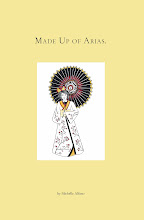
Michelle Alfano is a co-organizer of the (Not So) Nice Italian Girls & Friends Reading Series and a Co-Editor with Descant. Her novella Made Up Of Arias (Blaurock Press) won the 2010 Bressani Prize for Short Fiction. Her short story “Opera”, on which her novella Made Up Of Arias is based, was a finalist for a Journey Prize anthology. Her fiction and non-fiction work has been widely published in major literary publications. She will be featured in a forthcoming documentary on the passengers, and the children of the passengers, of the Saturnia that will be featured on OMNI-TV. She is currently at work at a new novel entitled Vita’s Prospects. 

Diane Bracuk is a Toronto writer whose short stories have been published in Canada, Great Britain, and Ireland. A few years ago, she began visiting Poland to explore her Polish roots, and fell in love with the former communist country. Describing herself as "the self appointed PR person for Poland", she has written travel articles about  the New Poland  for the Toronto Star and the Globe and Mail. This story, "Proper Lighting", is a more personal account of coming to terms with her cultural identity.

Bianca Lakoseljac is the author of Bridge in the Rain, a collection of stories linked by an inscription on a bench in Toronto’s High Park; and Memoirs of a Praying Mantis, a collection of poetry. She has completed a novel, Summer of the Dancing Bear, which explores “the rite of passage” of a fourteen year old girl befriended by a Gypsy clan. Bianca holds a B.A. and M.A. in English from York University. She taught communication courses at Ryerson University and Humber College. She is Past President of the Canadian Authors Association, Toronto, and has served as judge for various literary contests. For more than half of her life, she’s been married to a man with an Italian background, and feels right at home among the not so NICE Italian girls. And it was only through a toss of a coin that her last name is Lakoseljac and not Maggiori.

Karen Mulhallen has just published her poetry book which begins on Toronto Island and moves to Turkey, Italy and then returns in the fourth section to the city of Toronto. The Pillow Books is an extended conversation with Sei Shonagon, a woman in the Japanese Court in the eleventh century. Although a pillow book might be understood as a secret document, by making such a text into a book the author tests the boundaries of secrecy in her search for an audience. It was Karen Mulhallen¹s fascination by this line between the public and the private and by the ways in which a distant culture seemed to be so close to our own that led her to write The Pillow Books.

Cathy Petch writes poetry, plays, articles, books and graffiti. She hosts the Plasticine Poetry Series in Toronto, which is now in it's fifth year. She is a member of the 2011 Toronto Poetry slam team. She has 3 chapbooks and has been published in magazine online and off. Having been raised Catholic, she loves the company of Italian girls and their not so nice ways.

Liz Worth is a Toronto-based writer. She is the author of Treat Me Like Dirt: An Oral History of Punk in Toronto and Beyond and a piece of surreal punk fiction called Eleven: Eleven. Amphetamine Heart is her first poetry collection.

And as emcee ...
Giovanna Riccio was born in Calabria, Italy, immigrated to Canada when she was six years old and grew up in Toronto. She has a degree in philosophy from the University of Toronto. Over the years, her poems have appeared in newspapers, journals, magazines, and anthologies. She is the author of the chapbook Vittorio, published by Lyricalmyrical Press in July 2010. Her book of poems, Strong Bread, was published by Quattro Books in the spring of 2011 and launched in Montreal in April 2011 in Toronto in May 2011.

Tuesday, October 11, 2011

The Premiere of Saturnia


On the occasion of the 11th Annual Italian Language Week in the World, dedicated in 2011 to the celebration of 150th anniversary of Italy’s Unification, the Italian Cultural Institute presents the screening of the documentary Saturnia, written, directed and produced by Ferdinando Dell'Omo and Lilia Topouzova.

October 17, 2011 – 6:30 pm
Istituto Italiano di Cultura
496 Huron St.
Toronto
416-921-3802 x 221
Free admission  

More than 50 years ago, over two hundred thousand Italians boarded the glorious transatlantic Saturnia embarking on a journey to American in search for a better future. The documentary Saturnia explores the lives of four of those immigrants. We follow the story of Michelle, an Italian-Canadian author from Toronto, writing a book about her father who left Sicily on the Saturnia. He died when she was sixteen and Michelle Alfano sets on a journey into the past to understand who he was by discovering where he came from. By following her research and creative process, we will enter the lives of three of Saturnia`s passengers: Rosa in Montreal, Silvano in Vancouver, and Antonio in Edmonton. Everyday people whose extraordinary stories move and inspire us.They will help us to reconstruct the immigration experience and the challenges that Italians faced during their trip across the ocean, and the ones that followed when they finally arrived in America. Step by step the movie recalls and reconstructs the transatlantic journey between Italy and Canada, but also the memories of small villages in post WWII Italy and the first years of adjustment in the new world.

Immigration is a complex and multi-layered and making of a film about it mirrors the experience itself. In order to capture the essence of the Italian-Canadian immigration story, the documentary Saturnia relied on the collaboration of several key institutions and individuals. The commissioning of the film and the commercial support, indispensable for its realization, was completed in association with OMNI Television. The academic research and scholarly perspective, crucial for the historical narrative ,was enabled by the Mariano A.Elia Chair at York University. Access to rare archival footage and still photographs which resurrected forgotten moments from a distant past was enabled by the Pier 21 Museum in Halifax and the Fondazione Ansaldo in Italy. The Genova-Liguria Film Commission and DocLab Productions Roma, allowed the shooting and production of Saturnia on Italian soil.

Saturnia
Written, Directed and Produced by  
Ferdinando Dell'Omo
and Lilia Topouzova

Edited by Juan Baquero

Director of photography Maya Bankovic

Original Music by Ivo Paunov

Produced in Association with  
OMNI Television
with the support of  
The Mariano A. Elia Chair at YORK University

Ferdinando Dell’Omo is an Italian-Canadian documentary filmmaker and journalist. He has worked in the past on a series on ship travel and memory, entitled Navi della Memoria. His work has been broadcast both in Italy and Canada.

Lilia Topouzova is a historian and a documentary film-maker. A Ph.D. candidate at the History Department at the University of Toronto, her work explores the visual and textual representation of violence and its remembrance. She is the recipient of the Social Sciences and Humanities Research Council grant of Canada. She is the co-author of the award-winning documentary feature, The Mosquito Problem & Other Stories (directed by Andrey Paounov) which premiered at Cannes and TIFF in 2007 and won the human-rights award at the Sarajevo Film Festival.

For more info please go to:
http://tinyurl.com/3mvzthv

Friday, October 7, 2011

The Bashing of St. Jack


Now that some time has passed perhaps we could assess Christie Blatchford’s article on the “thoroughly public spectacle” of Jack Layton’s death. I don’t subscribe to the view that I shouldn’t give her any credence by posting a link to her article with the fear that others may read it too. You can’t respond responsibly, and critically, to an issue if you don’t understand it or even deign to read the original source of your displeasure. So here is Blatchford’s article then let’s you and I have a chat ….

Ready? Aside from launching this attack on-line - and I really don’t know how you could construe it any other way - a mere ten hours after Layton’s death was announced and posting it the same day, I was also a bit surprised at the strength of the emotion displayed by the public. The news saddened me and although I have always voted left of centre and Layton represented my federal riding (I have seen him at more community events in my riding than I can count) I wasn’t having the same reaction as many of my fellow constituents or even family members.

Still Blatchford’s response seemed ill timed and particularly malicious. She bemoans the reaction of the media figures, singling out Evan Solomon, and found Harper’s more sedate response judicious. I have no quarrel with Harper’s response – it seemed sincere and kindly meant. If it was subdued, so be it. She is uncomfortable with the canonization of St. Jack and I understand that she feels that it was excessive.

Ms. Blatchford condemns Layton’s last letter to the public and noting that:
“… it’s remarkable because it shows what a canny, relentless, thoroughly ambitious fellow Mr. Layton was. Even on Saturday, two days before he died, he managed to keep a gimlet eye on all the campaigns to come.”

“Gimlet eye” is particularly offensive. It means sharp-eyed, piercing, which implies that he was trying to manipulate us from his death bed. Some might say that; some might say he was trying to offer hope and comfort to his followers and well-wishers. She finds the letter full of “ruthlessly partisan politicking” and “vain glorious”.

The excessive effusiveness and affection of the public was also disconcerting to her:
“In truth, none of that is remotely unusual, or spontaneous, but rather the norm in the modern world, and it has been thus since Princess Diana died, the phenomenon now fed if not led online. People the planet over routinely weep for those they have never met and in some instances likely never much thought about before; what once would have been deemed mawkish is now considered perfectly appropriate.”

I have long ago determined (perhaps it was with the advent of Princess Diana’s death) that you can neither control nor deny the feelings that people have for a public figure whether it is Ronald Reagan or Michael Jackson or Kurt Cobain. It may seem ridiculous to you as it often has to me but there is no point wagging a finger at them and telling them that they are being foolish. Their grief is their grief. She would have done better to examine why this widespread phenomenon of grief happens rather than castigate those who demonstrate it.

It is mean spirited, it is cheap to say, “Yet again and again, waving the cane that became in his clever hands an asset, he campaigned tirelessly.” So a cancer victim, who uses a cane due to his illness, is wielding it simply to garner sympathy or, even more callously, your political vote?

I had my reservations about Layton as a leader. I sometimes found his responses to be mechanical, less nuanced that other politically progressive politicians I admire (Adam Vaughan, Bob Rae, Michael Ignatieff for example) but I wouldn’t question Layton's sincerity or courage in conducting himself the way he did in the last few months before his death. I say this not because his memory is sacrosanct to me but because he doesn't deserve that kind of cynical derision.

And I have to say although I am certainly not a fan and do not agree with her that I‘m appalled by the vicious attack on Blatchford herself – the childish name calling, the overt threats, the ugly comments on news websites and facebook posts. By all means if you feel that she is wrong, attack her position … what does it matter if she isn’t your cup of tea as a female? She’s not vying to be your prom date … she’s expressing a point of view (which is what she was hired to do). It might be wrong-headed, it might be mean-spirited, so attack her on those grounds and leave everything else alone.

Sunday, September 25, 2011

Descant's Launch of the Sicily issue

Grano Restaurant
2035 Yonge St. 
(three blocks north of Davisville)
Toronto

October 5, 2011
7.00pm

Come hear the Sicily issue's contributors of poetry and prose:
Valentino Assenza
Domenic Capilongo
 Gil Fagiani
Darlene Madott
 
 Doors opening at 7 p.m.
Arrive early to partake in the cash bar and the antipasti!
 Issue in stores September 20, 2011


Descant 154: Sicily is a collection of poetry and prose, essay and memoir, exploring and probing the geographically and historically impressive island of Sicily. In this issue, Guest Editors Michelle Alfano and Venera Fazio assemble diverse texts and voices — tourist and ex-patriot, Italophone and Anglophone, layperson and scholar —to create a multidimensional portrait of this oft-coveted Mediterranean isle. New pieces by creative people, such as Salvatore Ala, Louisa Calio, Darlene Madott, Gianna Patriarca, Vincenzo Pietropaolo, Gilda Morina Syverson, Pasquale Verdicchio, have the reader tramp the muddy hillsides of umber dirt, dine in the streets of Taormino, stand in awe of ancient Greek and Roman ruins, cast inquisitive looks into Mafia activity and even enter Sicilian bedrooms.


Join us in launching Sicily at grano, October 5, 2011, 7 p.m. as we celebrate the terrific works included in D 154. As Guest Editor Alfano writes Il sangue chiama — the blood calls — accept the invitation.


Sunday, September 18, 2011

Pink Ribbons, Inc.

  
Pink Ribbons, Inc. (Canada, 2011) directed by Léa Pool, 98 minutes
September 18, 2011, Scotiabank Theatre 1, 12:15pm
 
Pink Ribbons, Inc. effectively raises concerns about the increasing involvement of corporations in fundraising campaigns, specifically for breast cancer. Lea Pool, the filmmaker explores this explosion of pink ribbon enthusiasm which, at times, seems to border on hysteria during the various marathons, walks, jumps organized for fundraising purposes.
 

The book was inspired by the 2006 book by the same name, Pink Ribbons, Inc: Breast Cancer and the Politics of Philanthropy, by Samantha King, Associate Professor of Kinesiology and Health Studies at Queens University. Briefly, the book contends that:

" ... breast cancer has been transformed from a serious disease and individual tragedy to a market-driven industry of survivorship and corporate sales pitch ... in an unprecedented outpouring of cause-related marketing, large businesses have turned their formidable promotion machines on the promotion of breast cancer awareness, while also opposing public health efforts (such as stricter environmental legislation) and stifling investigation into why and how breast cancer affects approximately one woman in 10 in the developed world. ... She also questions the corporate focus on breast cancer, which kills one-tenth as many women as heart disease, the #1 killer of women. More women get skin cancer than breast cancer, and more women die from lung cancer than breast cancer, she notes, but these other diseases do not attract the same level of corporate — or consumer— attention."

Worrisome issues are raised: has the search for a cure skewed the types of research being done over searching for ways to encourage prevention? If brands like Avon or Revlon or Ford Motor Co. have products that are alleged to carry carcinogenic elements do they have the right to position themselves as ambassadors of goodwill in the fight to conquer breast cancer? Dozens and dozens of corporations have embraced the cause but are they whitewashing ("pinkwashing" is the phrase used here) their involvement in creating cancer causing environments? 

It appears that once the marketers switched to focus-researched "pink" ribbons this seemed to trigger a more intense reaction from the largely female participants.

Interesting side note: The writer Barbara Ehrenreich, herself a cancer survivor (a title she abhors by the way) ,picks away at the cheerful, rah rah atmosphere that those fighting cancer deal with and the forced cheerfulness that makes her uneasy. Others with cancer echo the same sentiment: if you "conquer" cancer and become a survivor does that mean you have been successful, are not a failure? Does that  mean that those who die are "failures" and somehow have not tried hard enough?

Thought provoking and disturbing it makes me think twice about donating to the pink brigade but I'm not sure if that's a good thing.

Saturday, September 17, 2011

Always Brando

Always Brando (Tunisia, 2011) directed by Ridha Behi, 84 minutes
September 16, 2011, AMC 10, 2:00pm 

The director Ridha Behi has a lifelong infatuation or love of the actor Marlon Brando. His encounter with the Tunisian actor Anis Raache, who resembles Brando, inspired a script for “the two Brandos.” 

In 2004, Behi got the script to Brando and the actor invited the director to his mansion on Mulholland Drive to discuss the project. Behi reworked the script but by the summer Brando had died.

Always Brando describes the direc­tor’s experience with Brando and alternates with the story of young Anis' (Raache) attempts to reach America in a post- 911 world as an Arab and Muslim.

An American film crew is shooting a film in their small town and Anis is sexually compromised by James (Christian Erickson), a rapacious American actor who promises both a visa and to cast Anis as a young Brando in a biopic once he reaches Hollywood.

Several elements disappoint: the production values are dispiritingly poor: the lighting, the costuming, the sets, the quality of the "film within a film". The acting is uneven and the idea of this man, Anis, passing for Brando when he can't even speak English is depressingly laughable. Maybe that's the point, how hopeless the dream is. How easily he is seduced and how quickly he turns on the people that really care for him. It all ends in tears.

 I would have preferred hearing the audiotapes of Brando speaking to Behi on various issues even if it was illustrated with stills or old footage than view this sad but cliched story of the penniless Arab who is literally screwed by his dreams of coming to America.

Friday, September 16, 2011

Le premier homme (The First Man)


Jacques Gamblin as Jacques Cormery, Camus' alter ego in the film
Le premier homme (The First Man) (France/Algeria/Italy, 2010) written & directed by Gianni Amelio
September 16, 2011, TIFF LightBox 1, 9.00am

My first encounter with the director Gianni Amelio was his phenomenal film Lamerica (1994) where two Italian racketeers come to Albania to enact some dodgy scheme and then get trapped inside the country. Their fate comes to resemble that of the desperate refugees who are attempting to flee Albania for Italy. Le premier homme, a collaboration between France/Algeria/Italy is no less affecting.

Albert Camus' (1913 -1960) autobiographical manuscript for Le premier homme was in the wreckage of the car where he died but was not published until 1994. There are many elements from Camus' life here - many of them not pretty and a testimony to the power of his talent and intelligence and the faith that others placed in him as a young boy with enormous potential.

The film alternates between the present where Jacques Cormery (Jacques Gamblin), now a world famous author and advocate for the rights of Algerians, has returned to Algeria in 1957 to visit his mother Catherine (Catherine Sola) and his past life as a young boy raised by his gentle mother and a tempestuous, autocratic grandmother.

Jacques' return, as an internationally acclaimed author, triggers a series of protests against him for his pro-Arab views as well as a series of memories - some pleasant, some disturbing.

Jacques, a gentle but fatherless boy whose father died in WWI, suffers a series of indignities. In one memorable scene he is trapped by the dog catcher and placed in a cage for hours for aiding a group of boys in releasing all the captured dogs. The only way he is released is by giving his new shoes to the son of the Arab man who caged him.

In another memorable scene, a school colleague named Aziz, picks a fight with him because he resents Jacques' attentiveness as a student, perceiving his intelligent inquiries as brown-nosing. When Aziz is punished and Jacques tries to comfort him the boy strikes Jacques with such intensity that even we, as the viewers, are shocked. Amelio subtly conveys the plight of the Arabs in their own country - they inhabit the scenes like ghosts, neither seen nor heard by their French occupiers unless it is to harass, inspect or imprison them. While a fellow student recites the glories of Napoleon and the French empire or the role of France in WWI, Aziz stares off into the distance in a fugue of insolence and distaste.

There are frequent beatings with a switch from Jacques' grandmother for small and large transgressions that his mother appears powerless to prevent. Mother, uncle, grandson - all are cowed by this ferocious old woman who would willingly stick her fist in a pile of feces in the outdoor toilet to ascertain whether her grandson has indeed lost a coin or spent it as she suspects.

Jacques is expected to leave school to support his family - his mother is a laundress, his uncle is a workman with intellectual disabilities who works at a printer. And Jacques does so until a sympathetic and well loved teacher intervenes and provides him with a scholarship.

The adult Jacques returns to a country no less oppressed than the one he leaves as a young man. As a Frenchman he travels freely through the heavily guarded streets while Arabs are thoroughly checked at various checkpoints by the French military.

His old nemesis Aziz contacts him and asks for aid for his son who has been imprisoned for possessing bombs which were later used in a terrorist attack (or a revolutionary bid for freedom depending on your point of view). Cormery's public plea for leniency falls on deaf ears. But Jacques' appeal for justice is not soft-headed. he supports the rights of the Arabs but not their right to kill his mother.

Jacques understands the pull of Algeria yet still fears for his mother's life yet she does not want to live in France as it "has no Arabs". We understand her ambivalence - despite the horrors of colonial rule, the poverty, the uncertainty of life, Algeria's dusty streets charm and captivate her and us.

Thursday, September 15, 2011

Short Cuts Canada: Programme 6

A scene from The Red Virgin
Short Cuts Canada: Programme 6
September 15, 2011, TIFF Bell Lightbox 2, 1:00pm

My first foray into short films by Canadian filmmakers ... largely unknown and young with mixed results. Over 600 films were submitted for this programme and it appears that about forty were selected.

ORA by Philippe Baylaucq
Filmmaker Philippe Baylaucq used 3D thermal imaging, no natural or electric light, and a dance troupe to create beautiful, evocative patterns of light and movement. Very lovely imagery set to gorgeous music. The audience seemed most captivated by this film.
 
Little Theatres: Homage to the Mineral of Cabbage by Stephanie Dudley
Animator Stephanie Dudley rhapsodizes about a head of cabbage (based on a poem by Erin Moure) ... hmmm. Sweetly animated clay figures but a bit of a mystery as to why this captivated the filmmaker so.


Acqua directed by Raha Shiraz
Raha Shirazi directs and stars in this film about the rituals of water and washing surrounding the death of her mother. The trip to gather the water in a fairly harsh environment dominates the screen time and perhaps serves as metaphor for her sorrow; however, it doesn't make for interesting viewing in my opinion.

Pathways by Dusty Mancinelli
A young boy named Marco is bullied at school and tries to fight back but to no avail ... one day he stumbles upon a mysteriously wounded man armed with a gun and briefcase in the woods. What follows is an unexpected response by a boy brutalized by violence.

We Ate the Children Last by Andrew Cividino
Based on a Yann Martel story and set in the future, surgical transplants of a pig's digestive system into humans sparks some unusual (but perhaps not unexpectedly) violent responses from other humans. Violent, very strange and oddly compelling.

The Red Virgin by Sheila Pye
Aurora Rodriguez Carballeira raised her daughter Hildegart (b. 1914) in Spain to be a Utopian woman of the future - her intellectual skills were unsurpassed and she was widely admired. She became a socialist activist and sexual freedom advocate until she threatened to separate from her mother and was shot dead. For me this was the most compelling piece and the most disturbing.

Trotteur by Arnaud Brisebois
Based on a historical figure from Quebec's past (Alexis Lapointe), the story is about a man who persuaded himself that he was a stallion born in a human form. It's very beautifully animated. Alexis reputedly tried to outrun trains (often succeeding) and there is some suggestion that he was maltreated as a young man. The faces are ghostly and bruised looking but the meaning of this eludes me although it was very captivating.

Wednesday, September 14, 2011

The Moth Diaries

The Moth Diaries (Canada/Ireland, 2011) directed by Mary Harron, 85 minutes
September 1, 2011, Scotiabank Theatre 4, 12:15pm

Girls. Boarding school. Vampires. Could you ask for more in a cinematic experience? Hmm, possibly ... the gothic horror genre has never really been my oeuvre but I'm willing to give it another try.

Brangwyn College is an all-girls boarding school (where a hotel formerly stood) in the countryside. Rebecca (Sarah Bolger) is best friends with the beautiful Lucy (Sarah Gadon) with whom she has an obsessively intense relationship. Rebecca comes back for her final year with a great deal of emotional baggage. Her father, a celebrated poet, had killed himself two years before in a violent, bloody manner. She hopes for a good year which will eradicate the difficulties of the past. All goes well until Ernessa Bloch (Lily Cole), a new student, befriends and beguiles Lucy.

Ernssa's arrival appears to trigger a series of disturbing events which eventually leave Rebecca friendless, scared and alone: one student is expelled; another leaps to her death; a teacher who torments Ernessa suddenly dies; another student is forced to withdraw by her mother because of the troubling events and then ... Lucy falls mysteriously ill which seems to be triggered by Ernessa's presence.

Are the bizarre and frightening things that Rebecca witnesses real or the the product of a jealous and obsessive infatuation with Lucy? Has Rebecca gone mad and is it because she has inherited her father's "bad blood" and a propensity towards suicide which she flirts with? Lucy suspects that Ernessa is a vampire who has seduced and entrapped Lucy. Why does Ernessa resemble a long ago resident of the hotel?

Mary Harron (I Shot Andy Warhol, American Psycho, The Notorious Bette Page) directs competently and the performances of all the girls are quite good as is Scott Speedman as a sympathetic (and very sexy) English teacher who appears to have crush on Rebecca. I liked the camaraderie between the girls and Harron accurately and sensitively captures the atmosphere of an all girls school. At times, though, she resorts to cliches - the butch schoolmistress who enjoys torturing the girls, the stereotypical goth appearance of Ernessa the supposed vampire, the attractive young male teacher who falls for the brightest girl in the class - which cheapen the film although I like the resolution and way Rebecca takes Ernessa in hand.

Perhaps it is me and I have become exhausted with the whole vampire genre having just burned through the last of the Twilight books. The film adds nothing new to the genre except that the principals are female and there is a strongly erotic element between the girls. But is that enough to make this film fresh and interesting. I'm not sure.

Damsels in Distress

Our heroine Violet
Damsels in Distress (U.S., 2011) directed by Whit Stillman, 97 minutes
September 14, 2011, Scotiabank Theatre 4, 9:15am

Oddly, for me, the preppie innocents and debutantes, some might call them twits, of Stillman's Metropolitan (1990) have always charmed me. While my husband R sometimes found the film unwatchable I enjoyed their clumsy forays into romance and adulthood in NYC and could easily watch the film again more than twenty years later.

Stillman has been away from the screen for more than thirteen years. His explanation was vague at the Q&A but it sounded like a combination of writer's block and attempts into more "serious" literary terrain that may, or may not, have been successful.

Here he examines, once again, "privileged American youth" as TIFF's Cameron Bailey describes them - a trio of flowery-named undergrads (Violet, Heather and Rose) at an Ivy league university called Seven Oaks. Think Heathers if the mean girls were a triumvirate of preppie nitwits in pastels.

Violet (Greta Gerwig) is their ostensible leader but why this should be so eludes me - she is odd, prone to silly moral pronouncements and has unusual ideas about how to prevent suicide on campus - a volunteer role that she has cheerfully taken on. Let's not dwell on that too much except to say it involves donuts, free coffee and tap dancing. The trio set their sights on Lily (Analeigh Tipton), a transfer student, as someone who might be suitable to join their group and try an coach her as to the best boys to approach on campus - dumb and unattractive is best.

When Lily gravitates towards Xavier (Hugo Becker), a grad student with a preference for anal sex, the group's hold is not as secure as they imagined and Violet's little world starts to comes apart ... her boyfriend Frank betrays her, Lily wanders out of her grasp and chooses a new boyfriend (Adam Brody) whom Violet covets, and Violet goes on a bit of wander, dazed and alarmed as to how her life has turned out.

Thankfully (!) Violet is saved by tap dancing and the prospect of appearing in the campus musical. The film ends with a series of dance numbers ... for no apparent reason except Stillman likes dancing and his favourite film is The Gay Divorcee (1934). At least this is my theory after hearing him speak at the Q&A.

Here is where Stillman goes off the rails for me: he introduces a number of ugly elements into the safe, pristine little world of the idle rich and young: anal sex, Violet's apparent mental illness, the possibility of suicidal undergrads on campus ... and he tries to treat them humorously. It doesn't work for me - it's jarring and weird and didn't elicit one laugh from me personally although others seemed to enjoy it. Metropolitan was sweet, a little weird and exotic to my world view ... take away the sweet and for me all that is left is the weird.

Tuesday, September 13, 2011

W.E.

Andrea Riseborough and James D’Arcy as Wallis and Edward (W.E.)
W.E. (U.K., 2011) directed by Madonna, 114 minutes
September 13, 2011, Visa Screening Room (Elgin), 2:30pm

I was prepared to dislike this film ... very prepared. But it did charm me despite my dislike of Wallis Simpson and the sometime antics of its director. But I have a contrary nature. The more critics seemed to trash the film the more disposed I grew to see it.

Set in 1998, New Yorker Wally Winthrop, played by the lovely Australian actress Abbie Cornish last seen in Jane Campion's Bright Star, channels her loneliness and desire for real passion in her troubled marriage into an obsessive interest in Wallis Simpson (expertly portrayed by Andrea Riseborough) and King Edward VIII (James D’Arcy), more commonly known as David to his intimates. Wallis Simpson was an American social­ite and twice divorced divorcee who beguiled the future king and whose courtship prompted a constitutional crisis in England. David abdicated the throne in 1936 to marry Wallis.

The story shifts between the life of the modern day Wally and Wallis Simpson's relationship with the King. Wally haunts a pre-auction Sotheby exhibit of Wallis' effects - charmed by her exquisite clothes, jewellery and personal items. There she meets Evgeni, a handsome, gentle, Russian-American security guard (the red hot Oscar Isaac) who has recently lost his wife. It becomes a ritual to visit the exhibit in the wake of her lonely nights as her doctor husband is rarely around and she suspects him of being both unfaithful and unwilling to have a child with her.

Cornish is wonderful - striking the right note of wonderment and and romantic naivete. Wallis inhabits her daydreams, speaks to her, reprimands her, consoles her, even snapping at her at one point: "This is no fairy tale!" and "Get a life!" sounding very much like the Material Girl herself. It's a lovely touch - as the historical figure comes to play a nurturing role in the life of this unhappy, frightened young woman.

The English actress Riseborough, playing an American, is captivating too - I finally see (through this actress) the possible charm of this Simpson woman who, as is pointedly repeated, lacked beauty and social status prior to her second marriage to Ernest Simpson. 

Despite the protestations of the film goer to my left, after the film, that it sometimes reminded him of a perfume advertisement, I enjoyed the spectacle. As you can imagine, Madonna has an exquisite eye for clothes, design, the physical set up of each room and scene and the particulars of the attires of both women. At the press conference she talked about how she liked to physically lay her hands on each woman before she shot the scenes.

It is gorgeous and beguiling to look at but a little more truth about her political beliefs would have leavened this feast for the eyes. My biggest concern is the lightly passed over issue of Wallis and David's fascistic leanings. Madonna has said that these were merely unproved rumours although I would love to know how she reached this conclusion.

Anne Sebba, Wallis Simpson's first female biographer has said: "She's really quite a hard person to like, but I do think she deserves to be understood. No person could be all the vile things she's accused of being: a spy, a witch, a whore. The establishment put such heavy pressure on the image of Wallis that I knew she was ripe for a revisionist version." Mrs. Simpson, your time has come.

Your Sister's Sister


Your Sister's Sister (U.S., 2011) directed by Lynn Shelton, 90 minutes
September 13, 2011, TIFF Bell Lightbox 1, 12:15pm

Breakfast at The Senator with my good friend D to catch up before the film ... this is one of my favourite places to go downtown in between films. Slowly the festival venues have drifted southward. I have been going to TIFF long enough that I remember films at The New Yorker on 651Yonge St. and The University Theatre on Bloor. Now both defunct - the first was converted to the Panasonic Theatre and is owned by the Mirvishes and the other is an enormous Pottery Barn.

There was the Uptown Theatre at Bloor & Yonge - demolished in 2003. The Imperial Six (now the Canon Theater, formerly the Pantages Theatre, which still does theatrical revues) has also been transformed. I worked at both The University Theatre and The Imperial Six as a candy girl in university and let me tell you there is a novel in there somewhere ...

The Varsity is still operational but not showing films this year oddly and The Cumberland is still functioning but sadly it is not a particularly pleasant venue - it's grungy and dated feeling, like sitting in your uncle's basement waiting for the hockey game to come on ... one by one the grand old cinemas have fallen by the wayside.

The cinema action has drifted southward to The Elgin and Winter Garden (Yonge & King), Scotiabank (John St. south of Queen), the newly minted TIFF Lightbox (John St. & King St.). I miss trudging along Yorkville or Yonge St. Well boo hoo hoo A Lit Chick, you say, it's time to move on ... time waits for no one. What great man said that - T.S. Eliot or Mick Jagger or somesuch?

I am blogging in Dundas Square where there is free Wifi waiting for my 12.15pm film at the TIFF Lightbox ... snickering about the Material Girl's latest faux pas (dissing an offering of flowers from a fan in Venice and reportedly dictating that TIFF volunteers not look her in the eye before the press conference). Her power being so all encompassing that a clumsy pigeon almost flew into the back of my head during flight to avenge this outrage ...

Off to see Your Sister's Sister at TIFF Lightbox ...

As the film opens Jack (Mark Duplass) makes a scene at a memorial party for his brother who has recently passed away. His friend, Iris (Emily Blunt), who also dated Jack's brother, has a plan: she suggests a sojourn at her father’s cabin on Puget Sound, WA. When Jack arrives her finds Iris’ half-sister Hannah (Rosemarie DeWitt) in the cabin who is recovering from her own heartbreak over a girlfriend that she has just left. They get drunk on tequila and Jack somewhat sweetly propositions her and she accepts.

The next day Iris appears, unannounced, with a bag of groceries and with the conviction that she is in love with Jack. Problems ensue, a number of them not the least of which is Jack accusing Hannah of "stealing" his sperm.

The script is witty and cleverly constructed. DeWitt and Blunt are utterly convincing as sisters and the hapless Jack (Duplass) - unemployed, depressed, sometimes socially awkward - is still believable as someone who could capture Blunt's heart.

A very minor, minor, shallow observation: Blunt's beauty looks so out of place here even with her in casual clothes and minimal makeup. It's so odd, the rest of the cast look like (and likely are) the director's friends at the opening party scene and Blunt stands out like a flower in a field of weeds.


Lynn Shelton the director was around to introduce the film and do a Q&A but I had to run to make sure I caught my next film at The Elgin. I didn't dislike the film ... but I wasn't overly excited by the film either. I want to use the word proficient - that sounds unkind but I don't mean it to be.

No star sightings today - just an old work nemesis (KE) spotted at the Lightbox, absorbed by her blackberry, plodding along, head down, oblivious as usual.