Saturday, May 31, 2014

May Cultural Roundup


Books:
Empty Mansions: The Mysterious Life of Huguette Clark and the Spending of A Great American Fortune by Bill Dedman & Paul Clark Newell, Jr.
Lionel Asbo: State of England by Martin Amis
Florence Gordon by Brian Mortin
A Recipe for Disaster and Other Unlikely Tales of Love by Eufemia Fantetti

Art Exhibits:
Francis Bacon and Henry Moore: Terror and Beauty at the AGO, May 17, 2014
Nostalgia: Rosedale Heights School of the Arts, Artisans at Work, May 31, 2014

Theatre:
King Lear with Colm Feore at Stratford, May 21, 2014

Readings:
"Mutual Readings" at the Secret Handshake Gallery, May 25, 2014 with Michelle Alfano, Naomi Laufer and Honey Novick

Thursday, May 15, 2014

Celebrate Italian Heritage Month ...


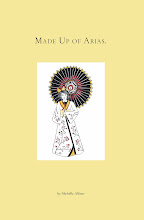
Michelle Alfano is Founder of the (Not So) Nice Italian Girls & Friends Reading Series and an Associate Editor-in-Chief with Descant. Her novella Made Up of Arias (Blaurock Press) won the 2010 Bressani Prize for Short Fiction. Her short story “Opera”, on which her novella Made Up of Arias is based, was a finalist for a Journey Prize anthology. Her fiction and non-fiction work has been widely published in major literary publications. She was recently featured in the documentary Saturnia featured on OMNI-TV and at the Moving Images Film Festival. She is currently at work at a new novel entitled Make Me Do Anything You Want.

Elena Basile is a teacher, researcher, poet and translator committed to exploring how desire is released in the spaces between languages and bodies in movement. She teaches in the Sexual Diversity Studies Programme at UofT and collaborates regularly with artists and academics in Italy, Canada and in France. Her work in English was recently recorded in a CD collection of Poetry Readings published by the Frank Iacobucci Centre for Italian Canadian Studies at UofT in 2012.  English extracts from the artist book Per Tanto Volando were recorded for the occasion. Part of her work as a literary translator and poet has been recorded in the documentary Three Women: Adapting Lives Adopting Lines.


Domenico Capilongo lives in Toronto. He teaches creative writing and karate. He has had work published in many literary magazines including Descant and Filling Station. His first book of poetry, I thought elvis was Italian was short-listed for the 2010 Bressani Literary Prize.  His second book of jazz-inspired poetry, hold the note, published by Quattro Books, was long-listed for the 2010 ReLit Award. His first book of short stories, Subtitles, published by Guernica Editions was short listed for the 2013 ReLit Award. He is working on new book of poems about the way we communicate, a book of short stories about teaching and a children’s book about a boy who doesn’t like kissing his bisnonna.


Rocco de Giacomo is a widely published poet whose work has appeared in literary journals in Canada, Australia, England, Hong Kong and the US. His work has recently been accepted for publication in Prairie Fire and The Fiddlehead, and his forthcoming collection, Every Night of Our Lives, will be published with Guernica Editions.

Chris D'Iorio wishes you all the best. He concentrates on things until words form, but questions that process. Toronto, where he lives, is also where many of you live. It's been a long time since he won anything, so we won't go into that. Quattro Books was very kind to him a few years ago and published a book of poetry called Without Blue. His day job often involves suits.

Sonia Di Placido is a poet, playwright and writer. She is a graduate of Ryerson Theatre School, Acting Ryerson University (1996) and an Hons. B.A. (Humanities) graduate of York University (2006). Sonia is a member of The League of Canadian Poets and the Association of Italian-Canadian Writers. She has been in various anthologies and journals such as Toronto Quarterly, Carousel & The Puritan Magazine. Her first book of poetry Exaltation in Cadmium Red, Guernica Editions launched in Autumn of 2012.

Eufemia Fantetti is a graduate of The Writer’s Studio at SFU and the University of Guelph’s M.F.A. in Creative Writing. Her short story collection A Recipe for Disaster & Other Unlikely Tales, was recently short-listed for the 2013 Danuta Gleed Literary Award. 

Toronto freelance writer Terri Favro is the author of The Proxy Bride and co-creator of Bella comics. She’s this year’s winner of the Accenti Magazine Award and was shortlisted for the 2013 CBC Literary Prize in Creative Non-Fiction and the Broken Pencil Indie Writers Death Match. An excerpt from her novel-in-progress, “Sputnik’s Daughter”, will appear in the upcoming ‘Geek Girls’ issue of ROOM Magazine.

Claudio Gaudio is a Toronto based writer born in Calabria.  “Texas” a novel published by Quattro Books, has been translated, in part, by Francesco Loriggio to be included in an anthology of Italian Canadian writers in Calabria, by Rubbettino Editore.  and is currently being translated into Spanish for publication in Mexico. His work has also appeared in ELQ (Exile Literary Quarterly),  Rampike literary magazine and Geist.   He is currently working on his second novel "I'll Be". 

The author of a clutch of novels, a novella, and short story and poetry collections, Michael Mirolla describes his writing as a mix of magic realism, surrealism, speculative fiction and meta-fiction. His latest, The Giulio Metaphysics III, a novel/linked short story collection, features a character named “Giulio” who battles for freedom from his own creator. A short story collection, Lessons in Relationship Dyads, is scheduled for Fall 2015.

Jenny Sampirisi is the author of poetry collection Croak (Coach House Books, 2011). It's about frogs and girls fusing together. It's about a lot of other things too. She is also the author of the novel is/was (Insomniac Press), a book about the public and private complexities of violence. She is the recipient of the K.M. Hunter Artist Award for Literature. Most of the time she's teaching literature courses at Ryerson University where she is an instructor in the innovative bridging program, Spanning the Gaps: Access to Education. She is currently working on a collection of poems titled What it Resembles is Slightly Too Marvelous.

Wednesday, April 30, 2014

April Cultural Roundup


Books
The End of Men: And The Rise of Women by Hanna Rosin
Dissident Gardens by Jonathan Lethem
Far From the Tree: Parents, Children and the Search for Identity by Andrew Solomon

Films:
Enemy (Canada, 2014)
Cabaret (U.S., 1972)

Readings

-->
Launch of Descant 164: Cartooning Degree Zero, April 29, 2014 at Handlebar

Monday, March 31, 2014

March Cultural Roundup

The Goldfinch (1654) by Carel Fabritius
Books 
The Goldfinch by Donna Tartt
Dear Life by Alice Munro
Poetry and Drama by T.S. Eliot

Films
The Reluctant Fundamentalist (Sweden, 2012)
Nebraska (U.S., 2013)
12 Years a Slave (U.S./U.K., 2013) 
Finding Vivian Maier (U.S., 2013)

Theatre:
American Idiot at the Royal Alex, March 14, 2014

Literary
Italian-Canadians at the Table Reading, Grano, March 21, 2014  
Draft Reading at Black Swan, March 23, 2014

Sunday, March 2, 2014

The Janissary Revolts

Changez Khan (played by Riz Ahmed) on the morning of 9-11
The Reluctant Fundamentalist (USA/UK/Qatar, 2012) directed by Mira Nair

Mohsin Hamid will appear at TIFF tonight at 7p.m. to discuss his book and director Mira Nair's film. 

The premise of this film intrigued me. Mohsin Hamid, on whose novel this film was based, has an intelligent and sensitive comprehension of the view of America by those most keenly affected by its international military and covert government policies, particularly in the wake of 9-11.

I was especially moved by an anecdote that Hamid related after 9-11 of being in a gym and seeing the smiling faces of some when they learned of the 9-11 attacks on television. It was a shocking, if honest, observation. What was this undercurrent of hostility amongst the seemingly content aspirants of the American dream? What did it mean? 

The film begins in 2011 with the kidnapping of an American professor and suspected CIA operative at Lahore University in Pakistan. Bobby Lincoln (Liev Schreiber), an American journalist and undercover CIA informant, arranges an interview with Changez Khan (the exceptional Riz Ahmed, a British actor of Pakistani heritage), a suspected radical academic whom it is assumed is involved in the kidnapping.

But the aptly named Changez's personal history is a complicated one (the inference is clearly that he is one who changes) - a tale that he insists Lincoln listen to and one that undermines the usual ugly stereotype of the America-hating radical with no experience or appreciation of American culture. "I am a lover of America ... " Changez begins in his narrative to Lincoln.

It's a fairy tale beginning for Changez Khan ... Changez is handsome, intelligent, athletic, socially ambitious and comes from an educated, cultured, loving but somewhat impoverished family. His father is a famous, well-respected Punjabi poet. Changez attends Princeton University on a scholarship at the age of eighteen. He excels quickly and soon finds employment at Underwood Samson, a top Wall Street valuation firm under the mentorship of Jim Cross (played effectively by a slithery, Gekko-like Keifer Sutherland).

As an investment analyst, Changez shows businesses how to maximize profit with massive layoffs that devastate their workforces. Changez is a tough, unsentimental, often ruthless, economic soldier in the capitalist trenches and fares very well economically and socially.

He falls in love with Erica (a charming Kate Hudson who is oddly dowdy with her dark hair here), a talented photographer, whom he encounters by chance in Central Park and who is recovering from her own emotional wounds - the recent death of a long-time lover. This romantic sub-plot differs from the book in a significant manner - here Erica is somewhat complicit in the events leading to her lover's death we later learn.

Like many lives, Changez' is violently disrupted by the World Trade Center attacks on 9-11. Changez is in Manila, in the Philippines, on business. He is horrified as he watches the events transpire but we, the viewers, are also horrified to watch as his dismay slowly morphs into a small smile (or smirk) of what appears to be satisfaction at the carnage. He experiences a "split second of arrogance brought low" as he describes it to Lincoln.

In the book, the narrator Changez says:

I stared as one - and then the other - of the twin towers of New York's WTC collapsed. And then I smiled. Yes, despicable as it may sound, my initial reaction was to be remarkably pleased. ... I wasn't thinking of the victims, I was caught up in the symbolism of it all. The fact that someone had so visibly brought America to her knees.
When he returns to the U.S., he endures a humiliating strip search and detention at the airport in New York presumably becasue of his Pakistani background. This is the beginning of a slow but inexorable disenchantment with the West and all it has to offer.

A not-so friendly South Asian stranger notes that as Changez is "suited and booted" he is safe from persecution in America. Not so. Since 9-11, he faces hostility and misunderstanding (and sometimes violence) primarily because his skin is brown and his ethnicity indeterminate to the casual racist observer. Slashed tires, racist verbal abuse, distrust in the workplace, and, more frighteningly, being mistakenly arrested by an officer seeking a "brown", clearly deranged man on the street shouting disturbing things about homegrown bombs. Changez' emotional response is conflicted and disturbing. He grows a beard as if to emphasize his "foreignness". He grows bitter and increasingly dissatisfied with his life.

He reaches a moral turning point while valuating a failing publisher in Istanbul, Turkey at the behest of his employer. The company is deemed "worthless" but when he discovers the publisher had published and translated his father's work into Turkish, he begins to change.

In the course of his discussion with the unhappy publisher, he compares Changez to a Janissary. The Janissaries were the enslaved non-Muslim boys captured by the Ottoman empire from the 14th to the 17th c. These boys, between six and fourteen, were given to Turkish families to learn the Turkish language, customs and the creed of Islam. They became virtual slaves functioning at the discretion of the Sultan and served as his fiercest forces against the Christians in battle. Then, Changez is told: "as fanatical Muslims, they were set loose on the Christian countries from which they were taken."

In a startling moment of recognition, we realize that Changez, and many young South Asian men like him, are experiencing a similar transformation - tempted and seduced by American capitalism they succumb to Western goals and aspirations but, once disappointed and vilified by those elements who fear Islam in the West, they are forced to return to their home countries and then sometimes are enlisted in the attempt to destroy America.

Changez resigns from his position on Wall Street and ends his relationship with Erica (here the character of Erica disappears but in the novel she faces a grislier fate). He returns to Lahore where he is hired as a lecturer at the university. He voices dissatisfaction with U.S. intrusion in Pakistan and comes to the attention of the CIA as a radical; hence, his interrogation by the American journalist cum secret CIA agent at the beginning of the film.

The structure of the book is very different than the film although I hesitate to compare the two as that is often an unfair comparison. In the film, Changez is a well-meaning, conflicted hero rather than a possible instrument of evil who advocates violence and destruction (without giving away too much let us say that in the film Changez is not positioned as the blazing radical who is set on destroying America). It might be seen as a compromise towards a more acceptable narrative outcome for the Western viewer. In the West, we admire moral ambiguity in our heroes but we can't support the perception of an actively evil protagonist/ hero, on screen.

The director Mira Nair and the screenwriters strive to present a balanced humane portrait of Changez's family and origins - educated, cultured, humorous and sympathetic - a much needed remedy to portrayals of raging, anti-Western fanatics that pervade the media.

Changez is portrayed as nuanced and emotionally conflicted - repulsed by American global bullying and destruction but hesitant to embrace an aggressive and violent response to it. The author and the director have taken an unpopular position and attempted to present a balanced perspective of the enslaved former "colonial" who attempts to change his fate and destiny - and the result is unsettling and thought provoking.

Friday, February 28, 2014

February Cultural Roundup


Planes by Colors, František Kupka, The Great Upheaval exhibit
Films:
August: Osage County (U.S., 2013)
Her (U.S., 2013) 
Gravity (U.S., 2013) 
The Wolf of Wall Street (U.S., 2013)
Captain Phillips (U.S., 2013)
The Great Beauty (Italy, 2013)

Books
The Hole in the Middle by Kate Hilton
The Girl who Loved Camellias by Julie Kavanaugh

Art
The Great Upheaval: Masterpieces from the Guggenheim Collection, AGO, February 15, 2014

Friday, January 31, 2014

January Cultural Roundup


Films
Pride and Prejudice (U.K., 1995)
Four Weddings and a Funeral (U.K., 1994)
American Hustle (U.S., 2013)

Books
The Buddha in the Attic by Julie Otsuka
Salvador by Joan Didion

Wednesday, January 1, 2014

So she begins ...


This will be my last post for some time ... as much as I have loved doing the A Lit Chick blog for the last seven years, I'd like to move on to a new writing project and I think the blog is sapping my creative juices somewhat after some 600 odd (yes truly odd) blog posts.

I will try and dedicate myself to the new project, setting modest goals each day until I complete a first draft.

Until I resume the A Lit Chick blog (and I hope to) ... so she begins.


It's all I have to bring today--
This, and my heart beside--
This, and my heart, and all the fields--
And all the meadows wide--
Be sure you count--should I forget
Some one the sum could tell--
This, and my heart, and all the Bees
Which in the Clover dwell.

 It's all I have to bring today ~ Emily Dickinson

Tuesday, December 31, 2013

December Cultural Roundup

Alistair Sim from A Christmas Carol
Books
The Sweet Girl by Annabel Lyon (review)
All Passion Spent by Vita Sackville-West
The Turn of the Screw by Henry James
Playing in the Dark: Whiteness and the Literary Imagination by Toni Morrison

Comedy
Brian Regan at Queen Elizabeth Theatre, CNE, December 5, 2013

Films
A Christmas Carol (U.K., 1951)
Meet Me in St. Louis (U.S., 1944)
When Harry Met Sally (U.S., 1989)
The Conjuring (U.S., 2013)

Tuesday, December 17, 2013

The Sweet Girl

 
The Sweet Girl by Annabel Lyon (Random House Canada), 256 pages
 
This book may be read as a companion piece to Lyon's prior novel The Golden Mean, a well received and loved precursor. You may read a review of it here. It follows the imagined life of Aristotle's daughter Pythias before, and after, the death of her father in the latter part of the 4th c. B.C.

The relationship is gentle, affectionate and charmingly evoked. He is proud of her keen intellect and curiosity; she is protective of, and solicitous towards, her father. Lyon achieves this easily by employing a very natural style of dialogue that flows beautifully and resembles modern speech.

There are no arcane or awkwardly worded passages that prevent enjoyment of the narrative or are overly hampered with historical references. Her descriptions are beautiful, clearly worded, and invite the reader into an easy understanding of the mores of the time.

Historical information is subtly communicated such as the casual reference to Pythias being veiled in public. Of course, you think, as a young girl she would be veiled. Pythias' language towards the slaves is sometimes dismissive, sometimes harsh, while irksome, this too appears realistic for a young girl of her station. Aristotle's colleagues are pleasantly surprised by Pythias' intelligence, and slightly amused.

When Aristotle dies following an ill-advised icy swim from which he never recovers. She is "bequeathed" to Nicanor, a near relation, a soldier, who has been away at war for many years, in his will.

The teenage Pythias is then unhappily thrown into a precarious situation. Herpyllis, the woman who raised Pythias after her mother died, is a former slave elevated by her intimate relationship with Aristotle and has becoem his concubine. However, she has no rights within the household after his death although she is adequately provided for and soon departs. Pythias' prospective husband Nicanor is still at war. Pythias' brother (son of Aristotle and Herpyllis) is too young to assume leadership in the family home which, incidentally, has been loaned to them by an admirer when they are forced to flee from Athens after the death of Alexander the Great. The Macedonians were soon persecuted with the death of the king, who as a Macedonian, served as a protector of other Macedonians against the conquered Greeks in the empire.

She is a teenage girl in a house largely full of unruly servants and slaves.The second half of the book stumbles a bit (at the exact point at which Aristotle dies). Pythias' emotional journey after Aristotle's death is treacherous. She moves from her own home to self imposed homelessness, flirting with a role as a priestess, as a prostitute, as a midwife. She experiments sexually and flaunts convention. This is done in an emotionless manner, her intention is unclear (as is Lyon's). Is she shell-shocked by her father's death? Does she feel abandoned? Is her behavior, in a manner, joyful? Does she feel liberated from patriarchal restraints?

Is it Lyon's view that without the protection of a patriarch (Aristotle and/or her future husband) or a matriarch (Herpyllis), the unprotected female descends into these positions of dependency, exploitation or abuse? As if to underline Pythias' status being akin to slavery as a young, unmarried female, the last act that Pythias performs in the novel is to set her favoured slave Tychos free.

Pythias only regains her equilibrium when Nicanor returns from the wars to marry her, which appears a contradiction to Pythias' independent manner and life. Nicanor, meanwhile, is reluctant to engage with her sexually and this is never explained fully. She is merely puzzled, not dismayed, not concerned. Is it because she views their sexual relations as yet another obligation, as a female, she is not eager to engage in.

For me, the ending is flat, uneventful, with the empowering of Tychos as a freed slave and Pythias seemingly settling in as a wife to Nicanor. Despite Lyon's obvious great talents as a writer, the meaning of this resolution is obscure and unsatisfying. 

Annabel Lyon

Tuesday, December 10, 2013

Life Class

Life Class by Pat Barker (Penguin Group, 2007) 249 pages

I came to this book after reading Barker's newest book about the WWI experience entitled Toby's Room. That book focused on the mysterious disappearance of the main character Elinor Brooke's brother Toby who does not return from WWI after serving as a doctor on the front line. The military does not reveal how he died and his friends are strangely reticent to reveal the truth. It's an excellent read - you may read the review here. 

This book, Life Class, written years ago, serves (for me) as a sort of prequel to Toby's Room and details the lives of three key characters found in the later novel - Elinor Brooke, Paul Tarrant and Kit Neville - before, and during, WWI. 

Paul is a lad from northern England studying at the Slade School of Art. Dispirited, self-critical and intelligent, he considers leaving the school. Elinor piques his interest but so does, apparently, most other attractive females it seems including Elinor's friend Teresa, an alluring and troubled model at the school. 

Barker, a female writer, is adroit at depicting both male lust (Paul and Kit's) and female sexual reticence (Elinor's). Elinor is the object of affection for both Kit and Paul, all art students at Slade. Their professor Henry Tonks, a surgeon turned art professor at Slade, is a real historical personage who went on to document (for medical and historical purposes) the ravages of the war on the faces of the WWI soldiers who survived with extreme facial wounds.

When the war begins, Paul enlists as a Red Cross worker and is sent to the front in Ypres, France. Kit goes on to work with German internees. Elinor remains in the country painting for a time but is soon expected to join her mother at home. Sister Rachel is pregnant and indisposed, brother Toby has also enlisted and her doctor father is working (and possibly philandering) somewhere outside of the family home.

This book is as much about the perception of the value of art, and artists, during troubled times as it is about the war. Elinor's artistic ambition is seen as a lark, a frivolous frill - less important than Rachel's domesticity or Toby's involvement in the war. She is urged to take up nursing but wants to focus on her art, much to the disappointment of the people around her who are cosnumed by the war. 
Much of the book also deals with largely adolescent romantic fumbling - Kit and Paul vying for Elinor, Paul wooing Teresa, a pretty model with an abusive, violent husband, and Elinor trying on the various guises of femininity and womanhood. Kit courting Catherine, Elinor's friend. Paul's experience with a weary, if friendly, French prostitute. 

There is a slight digression when the novel shifts to Elinor's experience with the Bloomsbury group, specifically her encounters with Lady Ottoline Morrell. The author's intent is obscure - to demonstrate that privilege  and the love of art remain despite the war? 

Barker evocatively reminds one of under-examined aspects of the war - the sudden amatory passions that ignited amongst the British populace, the persecution and internment of the citizens of German descent, the many soldiers who returned with unspeakable wounds and injuries (catalogued by artists like Tonks), the uneasy calm and sense of normalcy that surrounds the town of Ypres, and other towns like it, just a short distance from the battleground; Elinor's surreptitious visit to Ypres where Kit is stationed, disguised as a nurse. I am certain many other soldiers engaged in these trysts then ...

What Kit witnesses as an ambulance driver revolts and shocks the reader - the slow death of the mutilated soldiers, the soldier trapped in a burning vehicle, the wounded children, the numbing of feeling and reaction for one exposed to so much horror. Kit's matter of fact observation, communicated by letter to Elinor, seem totally believable - never overstated in description - stark and straightforward without embellishments. 

The cliche of the "insanity of war" is pronounced and disturbing. An attempted suicide at the front line is studiously stitched back together so that he might be properly shot for desertion. 

My fascination with the First World War sometimes disturbs me ... why pine and moon over WWI soldiers and their suffering and not have a single thought for our own vets returning from Afghanistan here in Canada? My literary obsession with this war sometimes strikes me as silly and hypocritical. I shed no tears for these forgotten men but I often think of the soldiers who returned (or did not) from WWI. Why? Because it is romantic, it involves no real emotional or political commitment on my part ...
This romanticizing is easy and facile. Easy for me to attend a Remembrance Day ceremony and shed a tear while listening to a University of Toronto staff member recite In Flanders Fields before the Soldiers Tower (granted it is a very moving experience for those who have attended it). The ceremony lasts about 40 minutes and is quite elaborate with prayers said, wreathes laid, and hymns and poems read.

Much harder to acknowledge and put pressure on Harper's government to treat these returning vets fairly. I will end with this disturbing note:
The Harper government says it intends to appeal a B.C. court ruling that cleared the way for a class-action lawsuit involving veterans of Canada's war in Afghanistan. A group of ex-soldiers is taking Ottawa to court, alleging that the federal government's new system of compensating veterans violates the Charter of Rights and Freedoms. The government's new veterans charter eliminated the lifetime disability pension for disabled soldiers and replaced it with lump-sum payments. The veterans say the new disability payments are paltry compared to awards given to those who fought in previous wars, and don't keep up with worker's compensation claims — or even civil settlements in personal injury cases. Canadian Press, October 2, 2013
Respect for the military indeed. Let's put our money where our mouth is ... if we value their contribution, let's prove it. Or do we reserve that respect and concern only for those who died years ago and are no longer our concern or problem?