Tuesday, July 6, 2010

Day 6: In the Temple of the Gods

We walk to the Pantheon from the hotel, which takes about 30 minutes, and is not far from the Fountain of Trevi. It gives me a chance to examine the natives, both male and female. The upscale Roman female is a surprise for me … deeply tanned, harshly made up, stick thin or thin-ish, very stylish if loudly dressed with a cell phone permanently affixed to her ear and moving very fast across the pavement.

The male of the species is equally stylish: three piece suits in 40 degree weather, designer sunglasses and great leather shoes – also looks amazing on a scooter or motorcycle. The glamorous Roman style is definitely a reality amongst a certain group of affluent people.

At the Pantheon (J is pictured sitting here at one of the massive columns), we encounter two “gladiators” yukking it up with the tourists. They immediately ensnare us – they place a helmet on little eleven year old A’s head, and a plastic, rhinestone encrusted tiara on the resistant13 year old S then insist we take pictures with them where they appear to be spearing A through the stomach. Then one sticks out his palm and says “5 euros”. I say for what? For the picture, he says. Five euros EACH he adds. While we are processing this he shoos away an older Roma woman dressed head to toe in a long black skirt and kerchief begging for money and barks in Italian to her, “O, lavoro qui!” (Ohhh, I am working here!).

The attitude toward the Roma is very unpleasant and obvious especially among the scam artists on the street. You should see the travel tips we received about watching for the swarms of “gypsy” children who might steal your wallet.

V, mother of the two kids, starts to negotiate the price down with the bigger of the two “gladiators”. I’ll give you fifteen she says. He grumbles but accepts. He’s lucky that it wasn’t my kids because I think I would have told him where to put his plastic sword.

We walk into the Pantheon, once a temple for the Roman gods, built in the 2nd c. AD then co-opted by Christians and elegantly plastered with religious iconography (admittedly it is beautiful). The kings Umberto I and Victor Emmanuel are buried here as well as the painter Raphael. The circular aperture at the top lets the sunlight in so that it hits a certain portion of the Pantheon every hour then slowly moves around the circular room resting on various paintings and sculptures. The effect is quite beautiful.

After lunch we go on our three hour tour of the Colosseum and the Roman Forum – three hours in the broiling sun. Rome is an inferno this day! Our guide Stefano, whom I believe is likely a German, is excellent – funny, articulate and knowledgeable – engaging all of us, children and adults alike.

We learn things we had never known about the Colosseum: how the barbarians who attacked Rome removed the metal rods from the stone columns that support the building (which were there to withstand earthquakes) and melted down the metal for weapons; what food the people ate as snacks during gladiator games (nuts, fruit, chicken!) and the graffiti they wrote; that there is no documentation proving that Christians were slain at the Colosseum; a primitive elevator operated by levers lifted elephants and lions into the Colosseum; so many lions were slain that they became rare and extremely valuable in Rome; that the gladiators had to enter the Colosseum by underground tunnels because they would be thronged by fans and the Roman equivalent of puck bunnies at a hockey game. Classy act that a portion of the tour group is, two young punks slowly smoke their cigarettes during at intervals during the tour.

One thing the Christian Romans were very adept at was "re-branding" the pagan edifices - pictured here is a plaque installed at the Colosseum presumably acknowledging Christianity or the Pope's influence much much after it was built. It was a surprise to see it there as construction started between 70 and 72 AD. At right, R standing before the Colosseum (picture taken by J).

Across the street from the Colosseum are the remnants of the Roman Forum – the Roman Senate; the place where Caesar’s corpse was cremated; great arches commemorating emperors. It’s a strange space, some buildings are entirely intact; elsewhere, bits of columns and stone lay about in piles as if the Romans have no idea what to do with them. Will they try and assemble them or are they loathe to remove them because of their historical value? R also notices columns and bits of stone by the sides of the road. I found this explanation on-line:

The Forum was the marketplace of Rome and also the business district and civic center. It was expanded to include temples, a senate house and law courts. When the Roman Empire fell, the Forum became forgotten, buried and was used as a cattle pasture during the Middle Ages. Much of the forum has been destroyed. Columns and stone blocks are all that remain of some temples. The Arch of Titus and the Arch of Septimius Severus still stand and are in good shape. Like many other ancient Roman buildings, stone blocks have been removed from the Forum and used to build nearby churches and palaces.
Excerpted from www.ancient-rome.tripod.com

To the left is the Temple of Antoninus and Faustina, one of the best preserved buildings on site. After the death of his wife Faustina, the Emperor Antonius Pius built a temple in her honor in 141 AD. It was converted in the Middle Ages into the church of San Lorenzo in Miranda. 

On the last stop of the tour, we are taken to Piazza Venezia, which is dazzlingly white and immaculate, peopled with gigantic sculptures by Michelangelo. The steps are vast and impressive and our guide walks us down them to the bottom. I wonder how many Romans make this trip or are they bored beyond belief by their history by now?

From the sublime to the ridiculous ... there is no time for shopping until tonight. There is a shoe store on Via Sistina that has caught my eye. I ask 14 year old S, who is as obsessed with shoes as I am, if she and her mom would like to come. J, who has not entered into the girly girl phase yet (or perhaps ever)  demurs. Every time we pass a shoe store S and I turn to each other and say “Shoes!” I find three pairs for 32 euros in total: one cloth pair of flip flops with cream coloured rosettes; white sandals with a flower design and black sandals with a large flower atop. Shoes!

The Arch of Septimius Severus has reliefs of Septimius Severus's victories in what is now present day Iraq and Iran carved into the arch during the 3rd c. It also honors his two sons, Caracalla and Geta who fought with him in the war.  The Forum had been flooded, buried and forgotten for many centuries. During this time the half of the arch that was above ground was used to house a barber shop. Excerpted from www.ancient-rome.tripod.com

Monday, July 5, 2010

Day 5: Do as the Romans Do ...

We take a train from Firenze to Roma which takes just over an hour. Across from my seat, I meet a lovely couple named Bob and Cynthia from Mobile, Alabama traveling with their twelve year old grandson Andrew. They told us that when each of their grandchildren turns twelve they go on a trip with their grandparents. Lucky Andrew traveled to Munich, Siena, Firenze and will go to Rome as well. They were at the rehearsal for the Palio as one of their friends lives in Siena and offered them his seats as a member of the "Istrice" Contrada. Wonderful couple - we exchanged e-mails as we parted.
Our driver picks us up from the train station. His name is Giancarlo and he is wearing a three piece navy blue suit in this blazing hot weather. He is a combination of a James Bond character and the "Italian" guy who doesn't really speak Italian played by Bill Heder on SNL ... very charming and warm and inadvertently funny.

Our hotel in Rome is the Hotel Internazionale, Via Sistina 79, near the Spanish Steps. It is a very odd place compared to the elegance of the Borghese Palace Art Hotel in Firenze. My first guess was that it was converted from a religious residence. It turns out that it was a series of chapels with attached residences. Dark wood, funereal burgundy red carpeting and an odd configuration for the hotel suites. Last furbished in the 50s or 60s with a funky smell and dirty walls. The reception area looks likes the the counter of car rental agency. One concierge surreptitiously smokes at the front desk. The lone bell hop is probably sixty and none too happy about it. The kids are creeped out by the atmosphere and I really can't blame them.

The only two positives are: a pretty outdoor terrace all to ourselves and the proximity to the Spanish Steps (also known as the Scalinata della Trinità dei Monti pictured here to the right). We walk down the steps and try and make our way down to the Trevi Fountain. You can't imagine the scope of this until you see it. As we stood before it (with about four or five hundred of our closest and personal friends), I was imagining Anita Ekberg dancing in its waters in La Dolce Vita. The building began in 1732 and ended some thirty years later. It was turned off and draped in black in honor of Marcello Mastroianni after this death in 1996.

A friend back home had recommended a certain gelateria called the San Crispino Gelateria, Via Panetteria, 42, near la Fontana di Trevi, claiming it to be the "best" in Rome. Pretty darn good, pretty darn good, I would say.

We wandered towards the Palazzo del Quirinale, the current official residence of the President of the Italian Republic on Quirinal Hill, the tallest of the seven hills of Rome. It was originally built in 1583 by Pope Gregory XIII as a papal summer residence. We saw a military procession in progress. Behind it was a little park where the air was cooler and there was a gentle breeze. Children were playing soccer, people were walking their dogs without a leash and walking on the grass (all strictly forbidden according to the signs). This one time sentry box (featured to the right) was near il Quirinale.

Where to go for dinner? I spoke to the concierge and showed him a list of suggestions made by the travel agency and asked which was closer. He mentioned a couple so we went to one closest to the Trevi Fountain but it appeared to be closed. It was late (much after 8) so we settled on the first thing that we happened upon called ... Grill & Wine Restaurant, Via in Arcione 74/75. Okay, the English name should have warned us but the charming host sort of pulled us in as we walked by. Charm, they have, these Romans (when required).                                                                                

My risotto was delicious but R and J were disappointed with their pasta dishes and the bruschetta. It was too hot, a little claustrophobic, not particularly comfortable and a "live" musician played an endless series of Bee Gees and Pink Floyd accompanying himself with a pre-recorded tape. Still there was a great deal of laughter and fun.

We walked home and wanted to take a look at the Spanish Steps at night. Something to watch out for for new tourists such as us: a scam I have noticed played out several times now. A vendor approached us to ask us to buy some roses. We said no politely. Then he insisted that he give both J and I a free rose. We resisted and he insisted. He asked where we were from. "Canada," we said. Then he offered to take our pictures with our camera. I could see that R did not want to but he relented (R had figured out what this guy was after). Then the man asked for money, politely then in a more irritated manner. R said no. I handed him back the roses. He stalked off muttering angrily about Canada blah blah blah Canada blah blah blah to his colleagues. Then I saw the same scenario played out with another couple - they were nicer than us an paid the man some money. We slunk home, hot, tired and very full. And with a funny story under our belts.

Sunday, July 4, 2010

Day 4: Don't Touch Me ... We're in Firenze


Next to the Borghese Palace is the Firenze Tourist Bureau 
with some lovely classical statuary in its doorway.

The day began with J not feeling great. It was a quiet day. The day was shaping up to be as hot as the day before so R zipped out and bought a few sandwiches for her and himself and decided to stay in while I made the trip to the Accademia Gallery with our friends. R had been there many years ago and graciously offered to stay with J so that I could go.

Down past Il Duomo, we dodge the tourists and try and stay in the shade. It is another blazing hot day. Tempers flared a bit. The phrase of the day appeared to be "Don't touch me" as we were all so hot and not a bit irritated.
A column next to our hotel

The most impressive thing about the Accademia is the thirteen foot statue of David – which is even more awe-inspiring in person. P, a notorious joker, managed to take a photo of David which included a stuffed chicken that they have been carrying around during the trip and posing in various locations.

Of course, the day’s travels ended with another trip the gelateria – this one called Festival di Gelato which has the widest variety we have seen so far.

J still not well, so R goes ff to have dinner with friends and I play nursemaid. Luckily he brings back some fantastic Japanese food from Sushi Nami a few blocks from us on Via Matteo Palmieri 9. Yes, I know, Japanese food in Firenze? But it was great! Tomorrow we take a train to Roma ...

Many buildings here in Firenze have these beautiful paintings, 
sometimes of religious images, inset in the corner of the buildings.

Saturday, July 3, 2010

Day 3: Siena, Fattoria San Donato e San Gimigiano

 Siena is closely linked with Rome; hence, the many images of Romulus and Remus 
suckled by the she-wolf which is a central myth of the origin of Rome.

Today we went on an excursion for which we had a private driver and a mini-van courtesy of our multi-talented travel agent Vittorio. Siena is one hour south of Firenze and the home of Il Palio, a semi-annual horse race in which ten of the contradas of the city compete.

The city is divided into seventeen sections or contradas, each with its own flag and emblems. The Palio is held in the middle of the city in a long circular enclosure surrounded by buildings and the watching crowd gathers in the middle section. The race is run in a circle around a crowd of approximately 7,000 according to our guide/driver Marc.

We missed the Palio by one day; they were cleaning up the day we went. It was the 750th anniversary of the event. The Selva (forest) Contrada had won. Siena is divided into seventeen Contradas which correspond to seventeen areas of the town. The names of the Contradas are: Aquila (Eagle), Bruco (Caterpillar), Chiocciola (Snail), Civetta (Owl), Drago (Dragon), Giraffa (Giraffe), Istrice (Porcupine), Leocorno (Unicorn), Lupa (She-Wolf), Nicchio (Shell), Oca (Goose), Onda (Wave), Pantera (Panther), Selva (Forest), Tartuca (Turtle), Torre (Tower), Valdimontone (Ram).

That day, we saw a small parade of the Selva Contrada’s inhabitants dressed in vaguely medieval costumes and leotards bearing the colours of their Contrada: brilliant green, white and orange with the emblem of a rhinoceros on its flag. The men played drums and pipes and were followed by a troop of women, children and men wearing scarves with the same colours.

Siena is very pretty and obviously wealthy and makes Firenze look like Toronto in terms of multi-cultural diversity. At least in Firenze you see Hispanic, Asian, African and Arabic people who are the vendors and service personnel of the city. Siena's inhabitants and tourists are almost exclusively white. The shops are expensive and upscale and the streets have a pristine cleanliness that reminds me a bit of an exceptionally clean amusement park – no garbage, no drama and very few garbage receptacles. Therefore, it also made me a little uneasy despite its charm.

We left Siena for la Fattoria San Donato. This farm/winery was built in 1100 AD – in an absolutely stunning locale. It also rents apartments to tourists. We did a tour of the cantina where they store the wine and had a “light lunch” Italian style under a canopy in the beautiful countryside reserved for guests such as us. “Light” meant: penne pasta con succo, marinated funghi, sliced pecorino cheese and Italian cold cuts, marinated peppers, barley and tomato salad, crostini, red and white wine, cantuccini (small biscotti) and a dessert wine.

Above is a photograph of a mail box once used by the fattoria many many years ago.

We were reluctant to leave but had planned to go to San Gimignano, a small medieval fortress-like Etruscan village which is forty five minutes south of Firenze. At first you think how beautiful and well preserved it is but then it seems really disturbing – Disneyland clean and organized with no sense of who really lived there – no history evident just touristy shops, some expensive, some with just tacky souvenirs and a “torture” museum.

Were R and I the only geeks who wanted to have sense of what this place was about – who lived there, how this fortified village survived? By then, the 38 degree plus weather had worn us out and we decided to opt out of wine tasting in Chianti as nice as that would have been – I am sure that the kids could not have borne one more trip.

While at San Gimignano the girls made a great video.

Our friends found another great little restaurant I Ghibellini – large, homemade pizzas, calzones and pasta per tutti! How blessed we felt last night to be sitting there with good food and good friends in this beautiful setting.

R said that he could see himself living here in Firenze. A small triumph for me. Two winters ago he refused to consider the idea of living anywhere else but Canada. Today he was looking for apartments to rent!

This a picture of R at San Gimignano ... a friend said that it looks like he is ascending to heaven. How appropriate!

Friday, July 2, 2010

Day 2: A Room and Many Views

Near the Piazza del Duomo
Up at the crack of 8.30a to have breakfast at the hotel with our friends – a great assortment of delicious croissants, cereals, eggs and bacon, breads and toast and friendly service. 

We walk to the Piazza del Duomo – and it is a surprise. It is both massive and a little shabby. It is in the process of being cleaned and looks a little like an old lady with only a portion of her makeup on. The photo on the left was taken by R from a clock tower near Il Duomo.

It is 15 euros for the grand tour which we pass on and go instead to the Michelangelo Galleria on Via Cavour.  The exhibit consists of “interactive machines reproduced from Leonardo’s codices”. The others explore, I sit and write in my journal.

On the streets, the two teenage girls we have literally stop traffic and elicit remarks from the male passersby. Nothing too risqué but the girls are to shy too respond with their usual acidic come backs. And we, the mothers, are too far behind them to respond either. Welcome to Italy.

In the afternoon, we do the first of our tours to Fiesole on a coach bus. It resides in the hills above Firenze. From Via San Domenico we see the town and the Arno valley. It is populated by beautiful villas – converted convents and seminaries as well as a former residence of Queen Victoria’s. The valley is lush, fertile and green - a lovely contrast against the peach and lemon coloured villas. On the way back to the city we pass the English Cemetery of Firenze where Elizabeth Barrett Browning is buried.

Back in the downtown core our guide Alessandro shows us many of the architectural sights our friends have already shown us but the tour ends with a trip through the Uffizi and we get to see some of the classic paintings up close that we have only ever seen on TV or on coffee mugs and calendars: Botticelli’s “Venus on the Half shell” and “Primavera” as well as Tiziano's “Venere di Urbino” and DaVinci’s “The Holy Family”. But I see some beautiful paintings that I have never seen before: “Susanna nel Bagno” by Floris Francesco and “Amore e Psyche” by Spagnola. Our guide has a charming way of saying, "And now I would like to introduce you to ..." as he brings another painter to our attention.

Piazza Delle Signoria
In the long U shaped building of the Uffizi we pass a long corridor of statues in the Greek and Roman style – many of them male nudes. I jokingly ask thirteen year old J and her friend S not to look. S says to me with a mischievous smile, “But we are counting!” You can imagine what they are counting … Later I ask her how many and she replies, “Billions!”

The tour ends on the upper level of the Uffizi on a terrace facing the Piazza Delle Signoria. The guide says to us, “If you are not happy after this, I don’t know what to say to you!” He was lovely man. La Fontana de Nettuno (the Fountain of Neptune which is pictured above) can be found in the Piazza.

The Uffizi staff who man the exhibits are a surprising bunch. Their uniforms are unfortunate - they look like custodial janitors and they are a slovenly, undisciplined bunch guarding some of the most valuable art in the world. One woman sat in her dark sunglasses with a cellphone in hand and a trashy novel by her side and rose to take a call with a room full of people who were peering into a roped off room at some Rembrandts we were not permitted to see. Her role was to guard it.

After the Uffizi, we find another gelateria – the kids have been great and they deserve it.

The lobby of our hotel
Home to clean up – the tour has lasted four hours and the kids have been beyond good with a minimum of moaning. We are hot and sweating and in need of a good shower before dinner. To the left is a shot of the lobby of the hotel with some of the featured art.

We have dinner at Palatino just down the street from the hotel. The waiters act as if they have been raised from a good sleep and aren’t happy about it but the food is good: gnocchi, bruschetta, insalate caprese, tagliatelle – all well done at moderate prices.

Across the street from the hotel we find a little costume jewelry shop and J buys two rings: one for herself and one for S and then we bid all a goodnight.

Thursday, July 1, 2010

Day 1: Firenze Via Roma


We left on a 9.40p overnight flight from Toronto to Rome and then transferred from Rome to Florence. R is smiling at the Fiumicino airport in Rome and I know why – already everything feels different. The airport and its shops are very chic and clean and easy to navigate even though we are (primarily) non-Italian speaking.

The Toronto to Rome flight was a fine, albeit sleepless, night for me. The only glitch is a delay in the flight from Rome to Florence which should take an hour but ends up taking three hours door to door. We sit, with no explanation, in the lounge for forty five minutes and another forty five minutes on the tarmac because there are too many planes waiting for take off.

We are to meet our friends V and P and their family in Firenze; they were coming from Germany and then Venice and meeting us there. We lost a crucial piece of luggage which contains all of our clothes and some toiletries for R and myself. After trying to track down the missing luggage we consequently miss the driver who was assigned to take us to the hotel. He had been waiting for two hours. No cell service on our phones makes everything more complicated (Note: this is through Bell Mobility apparently Rogers would have been fine).

No matter, we take a taxi from the airport for €24 and luckily find our friends waiting for us in the lobby of the Borghese Palace Art Hotel at Via Ghibellina, 174 which has an intriguing mix of modern art for sale in its lobby, a winding three storey glassed staircase through a courtyard and ultra modern furnishings in the hotel room as well as a very friendly and hospitable staff. My only gripe is the absence of easily accessible wifi in the rooms. We need a internet cord to connect in our rooms which I don't figure out for a few days.

One staff member told our friends that the palace was once owned by Napoleon's sister Pauline Bonaparte who had married Prince Camillo Borghese, one of - if not the - richest men in Italy at the time and resided in Firenze (this would have been about 200 years ago). One hundred years ago it was also a brothel. Hmmm....


Our friends have already been here for a day so have poked about and have found one or two nice little restaurants to try. We walk to the Ponte Vecchio and get our first glimpse of the Arno river (this photo above was taken from the Ponte Vecchio). The city is lousy with tourists like us – gum chewing, flip flop wearing, camera laden gawkers, crowding the streets as scooters, bicycles, buses and cars race by, narrowly missing pedestrians. No wonder Europeans dislike us when they see slatternly teenagers taking off their shoes and examining their blistered feet and complaining loudly to all and sundry. I don't find the Fiorentines (except fro our hotel staff) to be terribly friendly. The locals on the street are clearly visible - they are the men wearing tailored slacks in 40 degree weather while the tourists are schlepping around in baggy shorts and dirty sandals.

The city is a visual revelation with female constables, cigarette hanging from mouth; an older woman long skirt and scarf, possibly a Romi, and her little dog on the streets begging; a tower of Babel – Brits, Germans, Northern Europeans, Italians from other parts of Italy, real housewives from New Jersey (judging by the accents), Spaniards, Americans, Canucks, pinkish red South Africans, Asian tour groups armed with umbrellas and fans.

The oldest parts of Firenze have a fortress like feel at times reflecting the medieval nature of the architecture. It is relatively clean with very little litter although the city has a worn down feeling at times. But there is something about the light here ... everything is imbued with lovely golden glow in our pictures.

We have dinner at Mamma Gina Ristorante – moderately priced and friendly if a bit dull – waited on by a server who used to live in Wisconsin, given away by his fairly good English.

We pass through the Piazza della Signoria (Rulers’ Square) and the Palazzo Vecchio and get our first taste of gelato at the Queen Victoria Gelateria. The name seems odd to me but later we learn that the queen had a residence in Fiesole, a little town in the hills just outside of Firenze (more on that later).

We saw the exact spot in the Piazza where Girolamo Savonarola was executed. On the day of his execution he was taken along with Fra Silvestro and Fra Domenico da Pescia to the piazza.
The three were ritually stripped of their clerical vestments, degraded as "heretics and schismatics", and given over to the secular authorities to be burned. The three were hanged in chains from a single cross and an enormous fire was lit beneath them.
Nice. A circular inscribed stone marks the place. The piazza had, that night, a troop of Spanish girls singing and dancing at one corner and many young students who seemed to be passing through the piazza.


Because I had not slept at all on the flight I crashed sideways on the bed at 11 o’clock, not hearing R’s phone call to my mother nor J’s call to a friend. R has to nudge me to sleep properly on the bed. I slept the sleep of the wicked till morning. It’s quiet and dark and verrry comfortable in our room.

Wednesday, June 30, 2010

Nazis and Potato Peel Pie

The Guernsey Literary and Potato Peel Pie Society by Mary Ann Shaffer and Annie Barrows (Random House, 2008) 277 pages

At first one believes our heroine, the writer Juliet Ashton, to be just another British eccentric - a little spoiled and petulant, flighty and nervous - who has survived a turbulent period in British history during WWII by writing books based on a slightly quirky fictional character named Izzy Bickerstaff. In January 1946, when the story opens, we only know her through her correspondence with various friends and colleagues: best friend Sophie, her publisher Sydney, other colleagues.

In a perfect storm of coincidence, Juliet is looking for a new topic for a future book. Coincidentally she is contacted by Dawsey Adams, a farmer and admirer of the writer Charles Lamb, living on the island of Guernsey in the English Channel. He relates a story of a literary society formed during the war to outwit the Germans when Guernsey was under Nazi occupation from 1940-45.

The keeping and eating of pigs was forbidden. One night when the locals were indulging in this forbidden treat and on their way to their respective homes they were stopped by the Nazis who asked what they had been up to. One woman, the resourceful Elizabeth McKenna, claimed that they had been at a literary society and they were released that night unharmed. Under the guise of eating their forbidden food secretly they kept up the pretense of a literary society and amended the name of the society to include "potato peel pie" as one member refused to meet without the inclusion of this war-time dish at the meetings.

Soon other Guernsey inhabitants (the vegetable seller and sometime "witch" Isola, the fisherman Eben and blacksmith Will Thisbee, creator of the famous potato peel pie) add their stories by letter to Juliet and she soon has the beginnings of her new book.

I was unaware of the history of Guernsey during the war and was intrigued by the historic details of the occupation: boats were confiscated so that Guernsey inhabitants couldn't leave for England - some trid and drowned in the attempt. Slave labour was employed on the island and Islanders were sent to Belsen for infractions of the Nazis' new laws. Pets were set free (or abandoned) and then euthanized when their numbers swelled. The chicken population was controlled, curfews imposed, food and soap rationed.

One begins to understand the secrecy regarding the keeping of pigs when the Guernsey residents explain the Nazis' propensity for cataloguing. Each birth and death of a pig was documented with a certificate and deaths had to be verified by an official.

Elizabeth becomes a more central character in the history ... after a liaison with a German captain named Christian Hellman with honorable intentions she gives birth to a girl (Christina or Kit as she is known). The father disappears (I will not reveal how here) but when Elizabeth shelters and feed a slave labourer after Kit's birth she is arrested and sentenced to prison on the continent.

We learn more of Elizabeth's fate after she is deported and what becomes of her daughter Kit once Juliet arrives in Guernsey and forms a close relationship with the Islanders as she writes her book about the Occupation. Guernsey takes a more somber tone. Juliet's twittery communications are more sober and we focus more on the history of the island rather than Juliet's flighty witticisms. I think other readers might find her inane pronouncements charming. May we say that we were not amused?

Juliet is entranced by Kit, Elizabeth's orphaned daughter. You would have to be insensible not to divine where this plot is heading. There is also a meandering and not credible (to my mind) subplot about a romantic triangle formed by the rich, debonair but impossibly bad-tempered Markham V. Reynolds, Juliet and Dawsey Adams, the sweet tempered pig farmer from Guernsey. Somehow neither seem  plausible suitors to me.

On the very last pages a light went off in my head triggered by a heavy handed reference to Jane Austen's Darcy - ooohhhh, Dawsey is meant to be the silent, proud Darcy (but not fabulously rich) while the aristocratic Reynolds is presumably the untrustworthy Wickham (but not fabulously poor).

Another silly subplot involves the potential theft of letters allegedly written by Oscar Wilde and addressed to Isola's grandmother which are kept in a biscuit tin - this is too precious for words. The thief is foiled, the plot dribbles on towards the end.

When I learned that co-author Mary Ann Shaffer was a Californian who had visited Guernsey once but was obsessed with British history and literature it made more sense. The characters are such silly and eccentric caricatures, they read like poor imitations of characters in badly written books with British characters.

Maybe I've had bad month and this has soured my reading mood, or maybe this is just an awfully contrived and silly book. Maybe.

Wednesday, June 23, 2010

Italian-Canadian Artists Showcase

Come celebrate the living arts with 
music, comedy, film, performance, poetry and visual art
 
hosted by Gianna Patriarca, John Calabro
and Luciano Iacobelli  
with the artists:

Michelle Alfano  Valentino Assenza  Sandra Battaglini 
Marco Bernardi  Marisa Buffone  Julie Campagna 
Domenico Capilongo  Raffaela Diana
Bruna Bertoni Di Giuseppe Sal Greco
Thomas Marchese  Roberto Marra  Michael Mirolla 
Damiano Pietropaolo   Vincenzo Pietropaolo 
Gio Riccio   John Romano  Daniela Saioni

Special Guest: Deputy Mayor Joe Pantalone

Thursday, June 24, 2010
7pm - 10pm

Live at the Annex Live
296 Brunswick Ave.
(south of Bloor St.)
 
FREE EVENT - EVERYONE WELCOME!

Sunday, June 20, 2010

Mad about the boy ...

My job yesterday:
Return J's newly bought grad shoes for the correct size
Buy your Father's day gift and card
Buy wine for dinner at the in-laws
Get gift certificates for b-i-laws and hon. grandfather C
Get Father's Day cards for all
Buy dessert for dinner at the in-laws
    Your job yesterday:
    Get a cranky teenager out of bed, dressed and ready to go so that we could buy her grad dress when I come home from completing the above.
      Two hours after I left the house, was this done? Sadly no. Fuming, after letting loose a few ill conceived sarcastic remarks I flee upstairs to my computer in a maternal sulk.

      What you did do this week and all this month:
      Reassure me that J will be well enough to resume the school year.
      Deal with the hassle of a bathroom reno and casual workers who disappear during the World Cup.
      Pick up the tiles for the bathroom (twice) and all the other hundred little things that we needed. 
      Argue with the Rogers Cable people (for this alone I adore you).
      Let me focus on organizing my readings, giving me space to write, giving me space.
      Let me spend time with mom when she was not well without griping about it.
      Cleaning the basement apartment with me, painting the bathroom and much more. 
        If this is (sometimes) a man's role, then you do it superbly well. Happy Father's Day my love! I know you will ask me to remove your picture but can I keep it up for a little while?

        Monday, June 14, 2010

        On the business of a woman's life

        Becoming Jane Eyre by Sheila Kohler (Penguin Group, 2009) 234 pages

        Lovers of literature are justifiably protective of their literary heroes. I remember in one of the first creative writing courses I took back in the day, I presented to my fellow classmates (with some pride) a longish piece written from the perspective of Virginia Woolf. Yes, that Virginia Woolf.

        I do not recall a single coherent criticism aside from the fact that to a man (er, rather, I mean, to a woman, as the class was mostly made up of females) - they seemed sincerely horrified. They were using terms like, "I can't believe you would dare to..." and "I would never..."

        I was mystified by the angry response because, even then, with my low self esteem as a burgeoning writer I felt that I should be able to write in whomever's voice I wanted to write in. I feel that my role as a writer is to try and present a fictional voice in a believable and credible manner; the reader's role is to judge if I am successful. But that's not what I was being judged on, it was on my audacity in trying to emulate Woolf's voice.

        Now, having said that, I do approach fiction which assumes the voice of a literary great with some trepidation. In almost every instance I have found that I am disappointed with the end result because invariably, inevitably, and perhaps unfairly, I compare the author's voice with the subject's. And who can compete with Woolf or some other literary eminence?

        So I approached Sheila Kohler's book with caution but I never thought how dare she try and speak in Charlotte Brontë's voice?

        Sheila Kohler tries hard to infuse the Brontë character with the passion that surely existed in the plain but intense Brontë's heart as the creator of Jane Eyre, among other great works. As the novel opens, Charlotte is sitting by her father's side in Manchester, journal in hand, composing the plot of Jane Eyre in her mind while she nurses her father during the summer of 1846. Her father, the Rev. Patrick Brontë, is having a cataract removed having experienced periods of blindness.

        She often dreams of her first love (unrequited it seems), a French professor she met in Brussels, married, charismatic and supercilious and Kohler captures the snickering attitude Charlotte encounters from other women when they suspect that Charlotte is enamored of the man. How could the genteel but plain and impoverished Charlotte hope to capture a husband - blessed as she is with neither fortune nor beauty nor advantage of any kind?

        Here in Kohler's novel Edward Rochester, the romantic hero of Jane Eyre, becomes an amalgamation of the Belgian professor (supercilious, cold, masterful) and her father (dominant and powerful but who succumbs to blindness during his illness as Rochester succumbs to his own blindness).

        The Brontë girls were the daughters of a clergyman and the sisters of Branwell, a dissolute addict who wreaked emotional havoc on the family for years. Having lost two older sisters and their mother, the girls felt the loss keenly. It was a bare, difficult upbringing on the moors - they were motherless with a self absorbed father with few means who had six small children to feed.

        Brontë understood class and the debilitating loss of esteem that accompanies hard work which is  not recognized for what it is. As a governess of two spoiled young children she realizes how little she is valued - she is meant to stay out of the way, with no real power over the children, living in depressing, shabby accommodations among the servants. She is virtually invisible and meant to remain silent. Charlotte understands thwarted passion and unrequited love, the indignity of being considered not good enough.

        As governess, she visits, with the family she serves, a local mansion (think of Jane Austen's Lizzie Bennett visiting Pemberley in Pride and Prejudice and being shown the house by the housekeeper). She learns a story, perhaps true, perhaps apocryphal, of a "madwoman" confined to the attic of the mansion by her husband in the 18th c.  So is born the character of Bertha in Jane Eyre.

        It's fascinating to contemplate what is real and what is fiction here...were the Bronte girls influenced by the local gossip they heard? A rightful heir left shamefully uneducated and bereft (a sub-plot of Wuthering Heights)? Was there a "misalliance" between the local heiress and the delivery boy (shades of Heathcliff and Catherine)? Does the presence of the trusted housekeeper in the girls' lives provide the basis for characters in Jane Eyre and Wuthering Heights? Was Charlotte's publisher George Smith the inspriation for the main male character in Villette? Certainly Branwell, the girls' spoiled and volatile brother, provided the template for Hindley Earnshaw the dissolute heir in Wuthering Heights.

        Despite a somewhat subdued beginning, as the novel reaches its end Kohler captures the claustrophobia and creative ferment of the Brontë household with all three sisters writing and nearly simultaneously publishing their books: Jane Eyre (Charlotte), Wuthering Heights (Emily) and Agnes Grey (Anne). She pinpoints the creative synergy but also the professional jealousy which must have informed the relationship of the three sisters. Imagine the energy at work here ... it's phenomenal to contemplate having such powerful writers in one household.

        The struggle to contain Branwell contaminates all aspects of the girls' lives as they try to protect him from his addictions, debts and romantic misadventures. They fail to do so but the girls do survive to win some literary acclaim, the greatest being accorded to Charlotte. But their lives are cut short by illness. They perish one by one. Firstly Branwell, then Emily and then Anne (within six months of each other).

        Does our heroine Charlotte marry and find fame and happiness dear reader? She does but it is short-lived. She reveals herself to her publisher to be Currer Bell (the pseudonym she wrote under) and is toasted as the great new writer on the London scene that she is. Success is sweet and fairly brief.

        After an ill-fated infatuation involving her publisher George Smith (a feeling he never reciprocates or is perhaps dissuaded from by his mother the author suggests), Charlotte marries Arthur Bell Nicholls, her father's curate. Charlotte dies nine months after her wedding in the early stages of a pregnancy. Of course, her father carries on, outliving all his six children. Poor Arthur is saddled with his father-in-law who opposed the marriage for years for another six years.

        Charlotte once received a letter from a revered poet who informed her that "Literature cannot and should not be the business of a woman's life ..." Suffice it to say, his name rots in obscurity, but Charlotte's surely does not. 

        Friday, June 11, 2010

        In Her Skin

        Ever since you were born and I could hold you in one hand because you were that tiny, I knew that whatever affected you would affect me profoundly both physically and emotionally for the rest of my life.

        You were a preemie and undersized (less than four pounds) born five weeks early. The exact size of a chicken (hence your nickname and woe to me if I ever tried to to call any other child that name affectionately).

        The doctor had decreed that once we were released from the hospital you had to come back every day to have your blood tested for the bilirubin level because of your jaundice. Not unusual for a preemie. Stressful but not unusual.

        The nurse would grasp you by the heel (some might say professionally, I would say roughly and coldly - how I loathed that woman for the way she handled you), plunge the syringe into your heel and withdraw the blood that had to be tested. You, of course, wailed and then I would start with the tears and your poor father had two females to console as we both held you. It was the first time that I had felt someone else's pain so keenly.

        This went on for weeks until the jaundice receded. Poor little mite, born just before winter in a very cold year. If you had had more exposure to sun you might have healed more quickly. As it was, I was afraid to take you out, you were so small and it was so cold. I had no friends with children that age. It was a lonely winter - just you and I in the little house on Harcourt surrounded by a small mountain of snow and ice.

        As I watched you sleep the first few weeks you did the oddest thing: if you slept on your side, you would raise one little chicken wing arm gently in the air and then it would slowly float down to your side. Then you would raise one tiny leg and do the same thing. It was an odd sweet little dance that you did only when you slept.

        If you cried I carried you in one hand, cupping your head in the other hand and whispered in your ear, that seemed to calm you.

        I would carry you around on a pillow, like a wee princess, in the house and rest you on the sofa in a shaft of sunlight beside me as I read. Your little diapers drooped, you were too tiny and they didn't manufacture anything that small at the time. Your clothes were ill fitting. You looked like a doll who had been placed in clothes too large for her.

        One day recently I showed you your first bed: a large straw basket swathed in green cloth (it resembled the basket of reeds that Moses was found in, in The Ten Commandments) that sat at the headboard of our bed every night. You couldn't believe that you had slept in it. Now you are as tall as me and are absolutely delighted when people say that maybe you will be as tall as your father one day.

        Not much has changed in a way.

        I can't bear to look at a cut on your skin or think of you in pain of any kind. Your suffering is unbearable to me. I think that all parents feel this way. That anyone should hurt you infuriates me and summons up a dark and implacable desire for revenge.

        While you were ill with strep throat recently I found it hard to contain my anxiety. Familial illness provokes this in me. Nonna was not well either recently. She was finding it difficult to stand without the use of a walker. Both of my girls were likely to be okay but still there is that nagging worry. What if it is something else, what if it is more serious and we just don't see it?

        The illness seemed interminable. You looked so weary, so fatigued with resisting it. I missed your singing in your "old man" voice, your impromptu dancing, your goofy jokes, your sneaking of chocolate chips when you had craving for chocolate. But lately I am heartened by the sounds of the "old man" which have returned and resonate in the house. Your appetite has increased. I hear peals of laughter when you are on the phone upstairs talking to your friends. You don't crawl into our bed in the middle of the night because you are sleeping more peacefully.

        And when you asked, in earnest, if we would take you to Vancouver to hear your favorite band I knew you were feeling better. Not entirely rational, but better.

        In an interview once, the filmmaker David Cronenberg was queried about his "obsession" with illness and disease that seemed to pervade his films. The interviewer asked him if he often thought of disease and the possible death of his family members and he said "Every day". I understand that sentiment now. I get that undercurrent of anxiety. And the desire to take away your pain and carry it for you.

        Girl, you smile, I smile. 

        Monday, June 7, 2010

        June Reading


        Diane Bracuk is a freelance writer specializing in health and women's issues. Her fiction and poems have appeared in Canadian journals such as The Antigonish Review, TickleAce and Other Voices. In Great Britain, Diane’s work has been published in Image, Ireland's largest circulation woman's magazine, and You Magazine, part of the Saturday Supplement of England's Daily Mail.

        Beatriz Hausner’s
        poetry is rooted in the legacy of international surrealism, especially its Spanish American expression. Hausner has worked tirelessly to promote international literature in Canada, through her own translations, as well as her advocacy work (she was President of the Literary Translators' Association of Canada and is one the founders of the Banff International Literary Translation Centre). She is one of the publishers of Quattro Books. Her work has been published in Spanish, French and Portuguese translation. The Wardrobe Mistress was published in 2003. Sew Him Up is her latest poetry collection (2010). By day, Beatriz works as a librarian at the Toronto Public Library.

        Lina Medaglia
        is a teacher, a peace activist, and a crisis counselor for abused women and children. Her writings have included a libretto for a three-hour feminist musical called Casanova, the lyrics for a progressive country album, and two albums of political rock. At the age of eleven, Lina immigrated with her family to Toronto, from a tiny mountain village in Calabria. Her first book, Demons of Aquilonia, is a fictional autobiography based on her family's struggles with 'passing,’ or reinventing identities for the purpose of survival and overcoming. Lina lives and works in Toronto with her family.

        Giovanna Riccio
        was born in Calabria, Italy and grew up in Toronto where she studied philosophy at the University of Toronto. Her poems have appeared in journals, magazines and newspapers, including the Eyetalian, Poetry Canada Review, CV2, Tickleace, and Italian-Canadiana. Giovanna completed her first manuscript, Strong Bread, earlier this year and is in the process of getting it published. Her dramatic monologue, Vittorio, will be published by LyricalMyrical Press in the spring. She has recently retired from teaching and is working on a new book of poetry.

        As emcee …
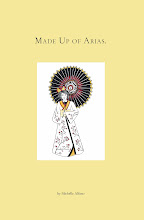
        Michelle Alfano is a Toronto writer and a Co-Editor with Descant. Her short story “Opera”, on which her novella Made Up Of Arias (Blaurock Press, 2008) is based, was a finalist for a Journey Prize anthology. Her fiction and non-fiction work has been widely published in Canada in major literary publications, and has also appeared in the U.S. She will be featured in a forthcoming documentary on the Saturnia, an immigrant ship which transported thousands of Italian-born immigrants to Canada in the 1950s and 60s and which will be featured on OMNI-TV. She is currently at work on a new novel entitled Vita's Prospects.

        And music by ...
        Tom Garrett has been performing at open stages in and around Toronto since moving to the city in 2003. His acoustic styling is reminiscent of James Taylor mixed with a touch of Springteen.