Wednesday, June 30, 2010

Nazis and Potato Peel Pie

The Guernsey Literary and Potato Peel Pie Society by Mary Ann Shaffer and Annie Barrows (Random House, 2008) 277 pages

At first one believes our heroine, the writer Juliet Ashton, to be just another British eccentric - a little spoiled and petulant, flighty and nervous - who has survived a turbulent period in British history during WWII by writing books based on a slightly quirky fictional character named Izzy Bickerstaff. In January 1946, when the story opens, we only know her through her correspondence with various friends and colleagues: best friend Sophie, her publisher Sydney, other colleagues.

In a perfect storm of coincidence, Juliet is looking for a new topic for a future book. Coincidentally she is contacted by Dawsey Adams, a farmer and admirer of the writer Charles Lamb, living on the island of Guernsey in the English Channel. He relates a story of a literary society formed during the war to outwit the Germans when Guernsey was under Nazi occupation from 1940-45.

The keeping and eating of pigs was forbidden. One night when the locals were indulging in this forbidden treat and on their way to their respective homes they were stopped by the Nazis who asked what they had been up to. One woman, the resourceful Elizabeth McKenna, claimed that they had been at a literary society and they were released that night unharmed. Under the guise of eating their forbidden food secretly they kept up the pretense of a literary society and amended the name of the society to include "potato peel pie" as one member refused to meet without the inclusion of this war-time dish at the meetings.

Soon other Guernsey inhabitants (the vegetable seller and sometime "witch" Isola, the fisherman Eben and blacksmith Will Thisbee, creator of the famous potato peel pie) add their stories by letter to Juliet and she soon has the beginnings of her new book.

I was unaware of the history of Guernsey during the war and was intrigued by the historic details of the occupation: boats were confiscated so that Guernsey inhabitants couldn't leave for England - some trid and drowned in the attempt. Slave labour was employed on the island and Islanders were sent to Belsen for infractions of the Nazis' new laws. Pets were set free (or abandoned) and then euthanized when their numbers swelled. The chicken population was controlled, curfews imposed, food and soap rationed.

One begins to understand the secrecy regarding the keeping of pigs when the Guernsey residents explain the Nazis' propensity for cataloguing. Each birth and death of a pig was documented with a certificate and deaths had to be verified by an official.

Elizabeth becomes a more central character in the history ... after a liaison with a German captain named Christian Hellman with honorable intentions she gives birth to a girl (Christina or Kit as she is known). The father disappears (I will not reveal how here) but when Elizabeth shelters and feed a slave labourer after Kit's birth she is arrested and sentenced to prison on the continent.

We learn more of Elizabeth's fate after she is deported and what becomes of her daughter Kit once Juliet arrives in Guernsey and forms a close relationship with the Islanders as she writes her book about the Occupation. Guernsey takes a more somber tone. Juliet's twittery communications are more sober and we focus more on the history of the island rather than Juliet's flighty witticisms. I think other readers might find her inane pronouncements charming. May we say that we were not amused?

Juliet is entranced by Kit, Elizabeth's orphaned daughter. You would have to be insensible not to divine where this plot is heading. There is also a meandering and not credible (to my mind) subplot about a romantic triangle formed by the rich, debonair but impossibly bad-tempered Markham V. Reynolds, Juliet and Dawsey Adams, the sweet tempered pig farmer from Guernsey. Somehow neither seem  plausible suitors to me.

On the very last pages a light went off in my head triggered by a heavy handed reference to Jane Austen's Darcy - ooohhhh, Dawsey is meant to be the silent, proud Darcy (but not fabulously rich) while the aristocratic Reynolds is presumably the untrustworthy Wickham (but not fabulously poor).

Another silly subplot involves the potential theft of letters allegedly written by Oscar Wilde and addressed to Isola's grandmother which are kept in a biscuit tin - this is too precious for words. The thief is foiled, the plot dribbles on towards the end.

When I learned that co-author Mary Ann Shaffer was a Californian who had visited Guernsey once but was obsessed with British history and literature it made more sense. The characters are such silly and eccentric caricatures, they read like poor imitations of characters in badly written books with British characters.

Maybe I've had bad month and this has soured my reading mood, or maybe this is just an awfully contrived and silly book. Maybe.

Wednesday, June 23, 2010

Italian-Canadian Artists Showcase

Come celebrate the living arts with 
music, comedy, film, performance, poetry and visual art
 
hosted by Gianna Patriarca, John Calabro
and Luciano Iacobelli  
with the artists:

Michelle Alfano  Valentino Assenza  Sandra Battaglini 
Marco Bernardi  Marisa Buffone  Julie Campagna 
Domenico Capilongo  Raffaela Diana
Bruna Bertoni Di Giuseppe Sal Greco
Thomas Marchese  Roberto Marra  Michael Mirolla 
Damiano Pietropaolo   Vincenzo Pietropaolo 
Gio Riccio   John Romano  Daniela Saioni

Special Guest: Deputy Mayor Joe Pantalone

Thursday, June 24, 2010
7pm - 10pm

Live at the Annex Live
296 Brunswick Ave.
(south of Bloor St.)
 
FREE EVENT - EVERYONE WELCOME!

Sunday, June 20, 2010

Mad about the boy ...

My job yesterday:
Return J's newly bought grad shoes for the correct size
Buy your Father's day gift and card
Buy wine for dinner at the in-laws
Get gift certificates for b-i-laws and hon. grandfather C
Get Father's Day cards for all
Buy dessert for dinner at the in-laws
    Your job yesterday:
    Get a cranky teenager out of bed, dressed and ready to go so that we could buy her grad dress when I come home from completing the above.
      Two hours after I left the house, was this done? Sadly no. Fuming, after letting loose a few ill conceived sarcastic remarks I flee upstairs to my computer in a maternal sulk.

      What you did do this week and all this month:
      Reassure me that J will be well enough to resume the school year.
      Deal with the hassle of a bathroom reno and casual workers who disappear during the World Cup.
      Pick up the tiles for the bathroom (twice) and all the other hundred little things that we needed. 
      Argue with the Rogers Cable people (for this alone I adore you).
      Let me focus on organizing my readings, giving me space to write, giving me space.
      Let me spend time with mom when she was not well without griping about it.
      Cleaning the basement apartment with me, painting the bathroom and much more. 
        If this is (sometimes) a man's role, then you do it superbly well. Happy Father's Day my love! I know you will ask me to remove your picture but can I keep it up for a little while?

        Monday, June 14, 2010

        On the business of a woman's life

        Becoming Jane Eyre by Sheila Kohler (Penguin Group, 2009) 234 pages

        Lovers of literature are justifiably protective of their literary heroes. I remember in one of the first creative writing courses I took back in the day, I presented to my fellow classmates (with some pride) a longish piece written from the perspective of Virginia Woolf. Yes, that Virginia Woolf.

        I do not recall a single coherent criticism aside from the fact that to a man (er, rather, I mean, to a woman, as the class was mostly made up of females) - they seemed sincerely horrified. They were using terms like, "I can't believe you would dare to..." and "I would never..."

        I was mystified by the angry response because, even then, with my low self esteem as a burgeoning writer I felt that I should be able to write in whomever's voice I wanted to write in. I feel that my role as a writer is to try and present a fictional voice in a believable and credible manner; the reader's role is to judge if I am successful. But that's not what I was being judged on, it was on my audacity in trying to emulate Woolf's voice.

        Now, having said that, I do approach fiction which assumes the voice of a literary great with some trepidation. In almost every instance I have found that I am disappointed with the end result because invariably, inevitably, and perhaps unfairly, I compare the author's voice with the subject's. And who can compete with Woolf or some other literary eminence?

        So I approached Sheila Kohler's book with caution but I never thought how dare she try and speak in Charlotte Brontë's voice?

        Sheila Kohler tries hard to infuse the Brontë character with the passion that surely existed in the plain but intense Brontë's heart as the creator of Jane Eyre, among other great works. As the novel opens, Charlotte is sitting by her father's side in Manchester, journal in hand, composing the plot of Jane Eyre in her mind while she nurses her father during the summer of 1846. Her father, the Rev. Patrick Brontë, is having a cataract removed having experienced periods of blindness.

        She often dreams of her first love (unrequited it seems), a French professor she met in Brussels, married, charismatic and supercilious and Kohler captures the snickering attitude Charlotte encounters from other women when they suspect that Charlotte is enamored of the man. How could the genteel but plain and impoverished Charlotte hope to capture a husband - blessed as she is with neither fortune nor beauty nor advantage of any kind?

        Here in Kohler's novel Edward Rochester, the romantic hero of Jane Eyre, becomes an amalgamation of the Belgian professor (supercilious, cold, masterful) and her father (dominant and powerful but who succumbs to blindness during his illness as Rochester succumbs to his own blindness).

        The Brontë girls were the daughters of a clergyman and the sisters of Branwell, a dissolute addict who wreaked emotional havoc on the family for years. Having lost two older sisters and their mother, the girls felt the loss keenly. It was a bare, difficult upbringing on the moors - they were motherless with a self absorbed father with few means who had six small children to feed.

        Brontë understood class and the debilitating loss of esteem that accompanies hard work which is  not recognized for what it is. As a governess of two spoiled young children she realizes how little she is valued - she is meant to stay out of the way, with no real power over the children, living in depressing, shabby accommodations among the servants. She is virtually invisible and meant to remain silent. Charlotte understands thwarted passion and unrequited love, the indignity of being considered not good enough.

        As governess, she visits, with the family she serves, a local mansion (think of Jane Austen's Lizzie Bennett visiting Pemberley in Pride and Prejudice and being shown the house by the housekeeper). She learns a story, perhaps true, perhaps apocryphal, of a "madwoman" confined to the attic of the mansion by her husband in the 18th c.  So is born the character of Bertha in Jane Eyre.

        It's fascinating to contemplate what is real and what is fiction here...were the Bronte girls influenced by the local gossip they heard? A rightful heir left shamefully uneducated and bereft (a sub-plot of Wuthering Heights)? Was there a "misalliance" between the local heiress and the delivery boy (shades of Heathcliff and Catherine)? Does the presence of the trusted housekeeper in the girls' lives provide the basis for characters in Jane Eyre and Wuthering Heights? Was Charlotte's publisher George Smith the inspriation for the main male character in Villette? Certainly Branwell, the girls' spoiled and volatile brother, provided the template for Hindley Earnshaw the dissolute heir in Wuthering Heights.

        Despite a somewhat subdued beginning, as the novel reaches its end Kohler captures the claustrophobia and creative ferment of the Brontë household with all three sisters writing and nearly simultaneously publishing their books: Jane Eyre (Charlotte), Wuthering Heights (Emily) and Agnes Grey (Anne). She pinpoints the creative synergy but also the professional jealousy which must have informed the relationship of the three sisters. Imagine the energy at work here ... it's phenomenal to contemplate having such powerful writers in one household.

        The struggle to contain Branwell contaminates all aspects of the girls' lives as they try to protect him from his addictions, debts and romantic misadventures. They fail to do so but the girls do survive to win some literary acclaim, the greatest being accorded to Charlotte. But their lives are cut short by illness. They perish one by one. Firstly Branwell, then Emily and then Anne (within six months of each other).

        Does our heroine Charlotte marry and find fame and happiness dear reader? She does but it is short-lived. She reveals herself to her publisher to be Currer Bell (the pseudonym she wrote under) and is toasted as the great new writer on the London scene that she is. Success is sweet and fairly brief.

        After an ill-fated infatuation involving her publisher George Smith (a feeling he never reciprocates or is perhaps dissuaded from by his mother the author suggests), Charlotte marries Arthur Bell Nicholls, her father's curate. Charlotte dies nine months after her wedding in the early stages of a pregnancy. Of course, her father carries on, outliving all his six children. Poor Arthur is saddled with his father-in-law who opposed the marriage for years for another six years.

        Charlotte once received a letter from a revered poet who informed her that "Literature cannot and should not be the business of a woman's life ..." Suffice it to say, his name rots in obscurity, but Charlotte's surely does not. 

        Friday, June 11, 2010

        In Her Skin

        Ever since you were born and I could hold you in one hand because you were that tiny, I knew that whatever affected you would affect me profoundly both physically and emotionally for the rest of my life.

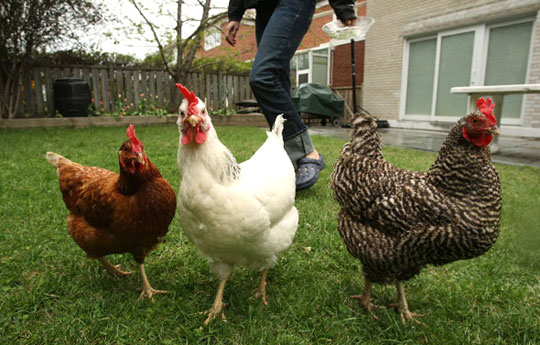
        You were a preemie and undersized (less than four pounds) born five weeks early. The exact size of a chicken (hence your nickname and woe to me if I ever tried to to call any other child that name affectionately).

        The doctor had decreed that once we were released from the hospital you had to come back every day to have your blood tested for the bilirubin level because of your jaundice. Not unusual for a preemie. Stressful but not unusual.

        The nurse would grasp you by the heel (some might say professionally, I would say roughly and coldly - how I loathed that woman for the way she handled you), plunge the syringe into your heel and withdraw the blood that had to be tested. You, of course, wailed and then I would start with the tears and your poor father had two females to console as we both held you. It was the first time that I had felt someone else's pain so keenly.

        This went on for weeks until the jaundice receded. Poor little mite, born just before winter in a very cold year. If you had had more exposure to sun you might have healed more quickly. As it was, I was afraid to take you out, you were so small and it was so cold. I had no friends with children that age. It was a lonely winter - just you and I in the little house on Harcourt surrounded by a small mountain of snow and ice.

        As I watched you sleep the first few weeks you did the oddest thing: if you slept on your side, you would raise one little chicken wing arm gently in the air and then it would slowly float down to your side. Then you would raise one tiny leg and do the same thing. It was an odd sweet little dance that you did only when you slept.

        If you cried I carried you in one hand, cupping your head in the other hand and whispered in your ear, that seemed to calm you.

        I would carry you around on a pillow, like a wee princess, in the house and rest you on the sofa in a shaft of sunlight beside me as I read. Your little diapers drooped, you were too tiny and they didn't manufacture anything that small at the time. Your clothes were ill fitting. You looked like a doll who had been placed in clothes too large for her.

        One day recently I showed you your first bed: a large straw basket swathed in green cloth (it resembled the basket of reeds that Moses was found in, in The Ten Commandments) that sat at the headboard of our bed every night. You couldn't believe that you had slept in it. Now you are as tall as me and are absolutely delighted when people say that maybe you will be as tall as your father one day.

        Not much has changed in a way.

        I can't bear to look at a cut on your skin or think of you in pain of any kind. Your suffering is unbearable to me. I think that all parents feel this way. That anyone should hurt you infuriates me and summons up a dark and implacable desire for revenge.

        While you were ill with strep throat recently I found it hard to contain my anxiety. Familial illness provokes this in me. Nonna was not well either recently. She was finding it difficult to stand without the use of a walker. Both of my girls were likely to be okay but still there is that nagging worry. What if it is something else, what if it is more serious and we just don't see it?

        The illness seemed interminable. You looked so weary, so fatigued with resisting it. I missed your singing in your "old man" voice, your impromptu dancing, your goofy jokes, your sneaking of chocolate chips when you had craving for chocolate. But lately I am heartened by the sounds of the "old man" which have returned and resonate in the house. Your appetite has increased. I hear peals of laughter when you are on the phone upstairs talking to your friends. You don't crawl into our bed in the middle of the night because you are sleeping more peacefully.

        And when you asked, in earnest, if we would take you to Vancouver to hear your favorite band I knew you were feeling better. Not entirely rational, but better.

        In an interview once, the filmmaker David Cronenberg was queried about his "obsession" with illness and disease that seemed to pervade his films. The interviewer asked him if he often thought of disease and the possible death of his family members and he said "Every day". I understand that sentiment now. I get that undercurrent of anxiety. And the desire to take away your pain and carry it for you.

        Girl, you smile, I smile. 

        Monday, June 7, 2010

        June Reading


        Diane Bracuk is a freelance writer specializing in health and women's issues. Her fiction and poems have appeared in Canadian journals such as The Antigonish Review, TickleAce and Other Voices. In Great Britain, Diane’s work has been published in Image, Ireland's largest circulation woman's magazine, and You Magazine, part of the Saturday Supplement of England's Daily Mail.

        Beatriz Hausner’s
        poetry is rooted in the legacy of international surrealism, especially its Spanish American expression. Hausner has worked tirelessly to promote international literature in Canada, through her own translations, as well as her advocacy work (she was President of the Literary Translators' Association of Canada and is one the founders of the Banff International Literary Translation Centre). She is one of the publishers of Quattro Books. Her work has been published in Spanish, French and Portuguese translation. The Wardrobe Mistress was published in 2003. Sew Him Up is her latest poetry collection (2010). By day, Beatriz works as a librarian at the Toronto Public Library.

        Lina Medaglia
        is a teacher, a peace activist, and a crisis counselor for abused women and children. Her writings have included a libretto for a three-hour feminist musical called Casanova, the lyrics for a progressive country album, and two albums of political rock. At the age of eleven, Lina immigrated with her family to Toronto, from a tiny mountain village in Calabria. Her first book, Demons of Aquilonia, is a fictional autobiography based on her family's struggles with 'passing,’ or reinventing identities for the purpose of survival and overcoming. Lina lives and works in Toronto with her family.

        Giovanna Riccio
        was born in Calabria, Italy and grew up in Toronto where she studied philosophy at the University of Toronto. Her poems have appeared in journals, magazines and newspapers, including the Eyetalian, Poetry Canada Review, CV2, Tickleace, and Italian-Canadiana. Giovanna completed her first manuscript, Strong Bread, earlier this year and is in the process of getting it published. Her dramatic monologue, Vittorio, will be published by LyricalMyrical Press in the spring. She has recently retired from teaching and is working on a new book of poetry.

        As emcee …
        Michelle Alfano is a Toronto writer and a Co-Editor with Descant. Her short story “Opera”, on which her novella Made Up Of Arias (Blaurock Press, 2008) is based, was a finalist for a Journey Prize anthology. Her fiction and non-fiction work has been widely published in Canada in major literary publications, and has also appeared in the U.S. She will be featured in a forthcoming documentary on the Saturnia, an immigrant ship which transported thousands of Italian-born immigrants to Canada in the 1950s and 60s and which will be featured on OMNI-TV. She is currently at work on a new novel entitled Vita's Prospects.

        And music by ...
        Tom Garrett has been performing at open stages in and around Toronto since moving to the city in 2003. His acoustic styling is reminiscent of James Taylor mixed with a touch of Springteen.

        Tuesday, June 1, 2010

        Against the Dying of the Light

        Rage, rage against the dying of the light. Dylan Thomas

        The Household Guide to Dying by Debra Adelaide (Penguin Group, 2007) 371 pages
        Delia Bennet is a seemingly typical housewife with two kids, a husband and a successful career as a dispenser of advice about domestic issues in a regular column (food preparation, recipes, cleaning tips, etc...) Delia is so successful that she has written a series of guides to a happier domestic life.

        But like all lives, hers is not so easily described or categorized. Delia has terminal cancer and is dying - after three operations and two years of on and off chemotherapy. This could be depressing but author Debra Adelaide does not make it so. There is a serenity here in the writing that is unexpected.

        So Delia studiously composes lists to organize her small family (including the future wedding of her eight year old daughter Daisy). She cooks meals to be frozen and eaten after she dies. She plots to have a partner ready for her husband after her death. And she attempts to write a Household Guide to Dying for her readers to cope with their own future demises.


        Adelaide writes with sensuality and colour describing Delia's current life amongst the chickens, many books and lush vegetation of her Australian home. The domestic detail is charming especially her relationship with her chickens whom she has named after the five Bennett sisters in Pride and Prejudice (the silliest chicken being, of course, Lydia).

        She captures the household dramas between the children and parents, small tiffs with neighbors, frustration with the spouse who doesn't clean up, the comforting daily routines of prepared meals, domestic responsibilities, collecting freshly laid eggs and making pots of tea, etc... Her style is breezy and self-assured with pithy, sometimes caustic, exchanges by mail with her readers interspersed between the chapters.

        Adelaide also captures, for me, the link between the process of writing and domestic work which, I think, is rarely talked about:
        ... domestic work provided valuable thinking time. A lot of words had been written in my head while I ironed or mopped. I had wondered if there was a neurological link between gentle repetition of your arms wielding a broom or your hand stirring a pot and the ideas that filtered through to the front of your mind; some fusion between physical action and creative ignition.
        Her sometimes uneasy relationship with her mother Jean, her frustrations with husband Archie and the petty squabbles with the little girls Estelle and Daisy all ring true.

        Delia has unfinished business. We learn of Sonny, whom she gave birth to at the age of eighteen with Van, the father, a musician and son of the circus (literally - his people are circus performers). He abandoned her in a small town, without warning, and never reappeared in her life.

        Delia makes a final road trip to Amethyst where Van's family lived (and possibly still resides) in search of an elusive someone - is it Sonny or Van, Sonny's father, or possibly Pearl, Archie's old girlfriend, an Elvis-worshiping eccentric who is still in love with Archie and resents Delia for stealing Archie from her? Or someone else? It is clearly someone whom she seems to urgently need to speak to before she dies.

        Her child Sonny is not in the picture (or so it appears) and the question lurks in the readers' mind: what happened to Sonny? We soon find out...

        Delia plans the details of her funeral including the delivery of a handmade casket to her home which she encourages her daughters and husband to "decorate". Here the story goes off the rails for me... Anyone with children will tell you that one of the biggest fears a child has is the death of their parents. Buying your own casket, parking it on the lawn and encouraging your daughters to paint it does not assuage their fears nor, I imagine, help them cope with death. But I might be mistaken. 

        I hesitate to use the words "not normal" or "unnatural" in a fictional situation (or any situation really). Who am I to judge how a dying woman would or would not act in this context? But as my sister-in-law once remarked after I used this phrase (who am I to judge?): "Come on - you are all about the judging!"

        So here goes...the casket angle smacks of literary gimmickry as does Delia's insistence on watching, and recounting in graphic detail, an autopsy of a recently deceased nun for her forthcoming household guide. Equally confounding is Delia's desire, which she acts on, of having her photo taken in the coffin, martini in hand or, more absurdly, the making of blood sausages using her own blood as a final gift to her family and which she stores in her freezer. Thankfully she tosses the sausages before her family finds out what she has done but not before telling her bewildered mother Jean.

        I am not sure if I believe that these are the creditable responses that a terminally ill person would have or whether this is merely a literary device which is being used to spice up the narrative.

        Literate, cultured Delia debates what she will be reading at the end...invariably, all the cliched titles with "death" and "dying" come to mind such as As I Lay Dying. She decides on poetry, forgoing the literary classics, the 19th c. tomes, the artsy references to death.

        And she decides an important part of going is...letting go. Stopping the lists, the future instructions, controlling outcomes...letting the family deal with it as they see fit.

        Adelaide excels when she recounts honest moments of fear and anxiety between family members coping with the forthcoming death of Delia but not when she ventures into surrealistic scenarios to be milked for pathos or comic effect (it's hard to tell which). The story has enough drama: Delia is the relatively young mother of two with a terminal disease and is trying to write an account of how to die with honesty and awareness. How much more drama does the reader need? Not much more.

        With thanks to Barbara Bower for the review copy from Penguin Books.

        Friday, May 28, 2010

        You had me at Arafalo ...


        A while ago, Ben Spurr who writes for blogTO.com posted this very pleasant entry for a (Not So) Nice Italian Girls & Friends reading that I co-organized ... 

        Michelle Arafalo is a busy gal. Between time working as a co-editor at prestigious Canadian literary quarterly Descant, she's also a blogger and author in her own right. Her well-received 2008 book Made Up of Arias delved into the life of an Italian immigrant family, and her cultural background as an Italo-Canadian is her favourite source material. She helms a bill of like-minded Italian girls tonight for a reading of poetry and short stories.

        Ai yi...much as I appreciate the kind words, I kind of wish my last name had been spelled correctly. He linked to this blog but the spelling of my last name is a mystery.

        And it's interesting what's out there that's not exactly correct.

        I volunteer with Descant (prestigious true) but, alas, I am not a paid employee. I am merely a minion, one of many.

        My book Made Up of Arias (of which I am enormously proud) received very little critical attention because it was published by a small literary press which doesn't have much of a distribution channel (they are working on that though). I did get a very nice blurb from Nino Ricci, a colleague and a literary superstar here in Canada and around the world. So that was an enormous boost for me.

        "Her cultural background as an Italo-Canadian is her favourite source material" - yeah, I will cop to that. But I'm trying to break free of that...after all, I am more than a female, more than Italo-Canadian, no? I hope I am. It's funny to be identified that way as I had striven so hard as a teenager and young adult to be free of that label. That's why I like the "(Not So) Nice Italian Girl" moniker so much - it's a cheeky subversion of the stereotype - an acknowledgment of what we aspire to be at times for our families and what we are truly.

        The poster above says it all ... we so much want to be loved even for our transgressions as writers and artists. We fear the disapproval of familyand friends yet feel compelled to write in this fashion, to express what we really are: not so nice Italian girls.

        Back in the day (this was the nineties), myself and a friend, LD, organized two readings: one was called "Nice Italian Girls" with female writers and the other was "Nice Italian Boys" with male writers at the Green Room in the Annex. It created a bit of a stir in the Italo-Canadian community and we got a lot of great press at the time.

        LD and I became estranged. A baby and a career change later and the series was never continued.

        Now carrying more than lipstick and a mortgage I moved on to trying to find financial stability for the famiglia and trying to write in a more consistent fashion.

        When I had a landmark birthday recently I started thinking...when was I going to do those things that I had been thinking about but not acting on - like resurrecting the reading series? What are you waiting on girl, get a move on I thought.

        So I sought out the assistance of friend and poet GR to organize the series. I asked the husband to help with posters and started to plumb the depths of my literary friendships. So far so good ... the series has been a satisfying experience - organizing readers, creating the posters, placing adverts, being the emcee on occasion. I've enjoyed it all.

        Stay tuned for more "Not So Nice" literary action...

        Saturday, May 22, 2010

        Ke$ha's Currency

        Trying to navigate the barrage of images of women in pop culture is more than a little unnerving for the parents of a teenage girl. You are trying to instill a sense of self-respect, independent thought and style in her and perhaps steer her away from the more negative portrayals of young women in the media.

        And then there is the pop singer Ke$ha. Yes, Kesha with a dollar sign - that's how she spells it. Ke$ha.

        You may recognize her from the video/song "Tik Tok" where she talks about brushing her teeth with a bottle of Jack before going out for a night of drinking, carousing and trying to keep guys from touching her "junk". Her other big hit is "Your Love is My Drug" where she compares herself to a crackhead because of the way she feels about a guy. I have exposure to her music because I have a teenage daughter and because I love dance music.

        Ke$ha takes a lot of heat from pretty much everyone - some but not all critics, derisive listeners/spectators, the media. Is she the talentless "skank" that she is made out to be by some? Does she represent the death of pop music?

        Among the gentler observations are these: "Just about the only thing Ke$ha makes convincing on Animal [her debut album] is that the current crop of party girls are every bit as soulless as they let on." and "It’s hard to remember the last time an album so flat and vacuous generated such a buzz." Her recent eccentric SNL performance either delighted with its weirdness or invited derision. Much much worse has been said (usually on music or celebrity blogs) and we don't need to repeat those criticisms here.

        But is she better or worse  than other male singers - regaling us with stories of getting high or drunk, chasing "hos", and the general antics of boys gone bad. No, likely not, yet we reserve a special scorn and revulsion for the Ke$has of the world. Is she worse that Lil Wayne? Pete Doherty? Chris Brown?

        As I've tried to explain to my daughter - your intelligence and talents pale before your sexual antics when you are in the public eye - they define your public persona. Whatever you are, will be viewed through the lens of your perceived sexual "digressions" as a female. I'm not sure it's that different for the average girl either. It's both absolutely unfair and absolutely true.

        And every aspect of the female image is up for examination: hair, make-up, weight, breasts, clothing, jewelery, size of one's lips - no area is left unexamined and/or assessed for its desirability. You can hardly say that boys and men are evaluated in that manner in the music industry.

        Welcome to the dominant representation of female sexuality in the 21st c. brought to you by youtube, the ubiquitous webcam now equipped on every computer, gossip blogs and celebrity culture. Ke$ha is likely just one 21st c. manifestation of the "Brothel without Walls" that Marshall McLuhan envisioned in the 1960s. Then, he referred to photography and the germs of celebrity obsession as “the brothel-without-walls". This was comprised of images of celebrity that “can be bought and hugged and thumbed more easily than public prostitutes".

        A few weeks ago, R and I saw a CONTACT photography exhibit at the University of Toronto Art Centre by the same name - "Brothel without Walls" - that encompassed many photographic images that interested me. For me, among the most disturbing were the JonBenet style portraits of young girls by Susan Anderson (some as young as five years old) from various parts of the U.S. - made up for beauty contests complete with false eye lashes, elaborate hair weaves, lipstick, spangles and high heels. These images of little girls are as alien to me and my daughter as extra-terrestrials. The curators' notes state that Anderson is "documenting the parents' desire to measure up to the image of the world that surrounds them". I wonder.

        But what hit a little closer to home were the staged photos of teenage girls by the young photographer Evan Baden (too graphic to post here or describe in great detail) in various poses of enticement: taking photos of themselves half naked in the safety of their bedrooms with their own cameras, self-pleasuring for a webcam and, thirdly, a shot of what appears to be pre-coital engagement by a young couple who are videotaping themselves for the camera, obviously to be broadcast or posted on the internet.

        Baden has created and staged fictional scenarios with volunteers but what of the girls who do this in real life? Why expose themselves like this? Isn't it demeaning to these girls? Why willingly participate in this game?

        Unfortunately, I would venture to say their sexuality is sometimes the only currency some girls have to trade...it is both potent and highly sought after. They know instinctively that the period during which they will be perceived as desirable is short.

        What power do these girls exert in their lives? Even if they are talented, intelligent, skilled athletically? What is that compared to how they are praised, perhaps compensated and rewarded emotionally, and possibly monetarily, for their physical attributes and sexual favours?

        I think there is a point when many young girls realize that certain dreams will not be realized - some too absurdly hopeful to recount aloud. They are not impossible dreams but they are mostly shall we say...unlikely, improbable. I certainly had these aspirations and they soon evaporated. If I were the scion of a rich family with endless means living in Rosedale or the Upper West side of Manhattan they might have been more easily realized. They had a greater chance of realization had I not been the eldest daughter of a working class widow with three mouths to feel in the east end of Hamilton. That's not self-pity (though it may sound it), that's just reality.

        I did know at a certain point, as a young girl, that I had something desirable that others (men) wanted. Did I use those gifts wisely? Likely not. Did I fathom that this period would end soon? I think I had an strong inkling although it was never verbalized or fully articulated. That's why school and getting to university were so important for me. I'm not sure that this is an option for all girls today, even here in modern, progressive Canada.


        Please don't perceive this as an endorsement of the sort of "no holds barred" sexual behavior/misbehavior that I am describing in these photos and images - merely an observation and hopefully, some insight as to what these girls are thinking when they behave in ways that might be perceived as transgressive.

        And that is something that the Paris Hiltons, Lindsay Lohans, Britney Spiers, Heidi Montags, Kim Kardashians and all the webcam hotties recognize - that their power is ephemeral and it is time for them to make hay while the sun shines. Before the glare of the camera's eye - or elsewhere.

        Monday, May 17, 2010

        May Reading


        Wednesday May 19, 2010
        Annex Live
        296 Brunswick Ave, North of Bloor St.
        8.00pm 
        with 
        Michelle Alfano, Erika DeVasconcelos, Monica Rosas, 
        Noreen Shanahan, Andrew Smith, Kathleen Whelan
        with Giovanna Riccio as emcee

        Wednesday, May 12, 2010

        Rudderless Brooklyn

        Motherless Brooklyn by Jonathan Lethem (Random House Inc., 1999) 311 pages

        This is a very tough path to follow as a fiction writer...trying to replicate and document a narrator with a serious medical condition like Tourette Syndrome. In this instance, Lethem's protagonist Lionel Essrog is a "detective" (I will explain my quotation marks in a moment) with the condition. He says on page one: "If I was a Dick Tracy villain, I'd have to be Mumbles..."

        Lethem treads a fine line between making Essrog believable and sympathetic and being annoying on the page. I have to say that R, my husband, felt more of the latter than the former when he read this book sometime ago. The verbal tics do begin to grate ... as a reader we need enough detail for it to be believable as a condition but not distracting to the reader.

        All the classic noir elements are here: an unexplained murder (Frank Minna); a mysterious, beautiful woman - preferably a widow (Julia Minna); the stooge who is trying to kill our hero for some unknown reason (the "Polish giant"); a flawed but ultimately virtuous detective (Lionel Essrog) trying to solve the case...yet it never comes together for me as a plot.

        Whether Lethem is able to capture the interior monologue of someone with Tourette's, I can't say. He certainly captures the outer mannerisms - the compulsive touching, the expletives and outbursts of seemingly nonsensical chatter. I once had a friend with Tourette Syndrome and this describes S's behavior very accurately. S did a bit of acting too and could be seen in the opening scene of the 1990 film Awakenings with Robin Williams. I remember that Williams even mentioned S in promotional interviews about the film.

        Lionel is an orphan. He ends up in the St. Vincent's Home for Boys in Brooklyn (a real institution at one time it appears) with Tony, Danny and Gilbert. The four boys are "mentored" by Frank Minna (and thereby dubbed "Minna Men"), a small time criminal and head of a rag tag limo service cum detective agency which is obviously mob connected. Oh yes, and as the story opens, Frank is also a murder victim.

        Minna is foul mouthed and abusive but loving with the boys in his own fashion - paying them somewhat generously and feeding them on occasion at his mother Carlotta's home, alternately offering advice and verbal abuse to the boys. Frank's favorite term of endearment for Lionel is "freak show".

        The Minna boys start with seemingly low level tasks ... moving stolen equipment, guarding a car that they presume contains a dead body in the trunk, and eventually the group slowly evolves into a band of "detectives" primarily servicing two clients - the wealthy and mysterious Rockaforte and Matricardi. Are they relations? Lovers? Criminal conspirators? It's hard to tell.

        Essrog and his fellow orphans, jokingly referred to as "motherless Brooklyn" by Frank's brother Gerrard were closely tailing Minna on a job the day of his murder, at his orders, only to find Minna after a frantic chase, deposited in a dumpster, fatally stabbed by an unknown assailant - possibly by "Ullman", possibly the "Polish giant". Although conscious when found, Minna refuses to reveal who the killer is and soon dies.

        The four Minna Men are horrified and bereft as the profane Minna represented the lone father figure in their lives, whom they both seek to emulate and revere. With Minna's wife Julia purposefully disappearing, the men take on the task of solving the murder.

        Tony, now the defacto leader of the four, is acting oddly. Gilbert is arrested for the murder of yet to be seen Ullman (even though it is clear he is not Ullman's murderer) and Danny withdraws into a sullen silence. Someone, it appears, is picking off the Minna Men ...

        Lionel returns to the scene that Minna was venturing into when ambushed and killed - the unlikely location of the Zendo, a meditation hall for Buddhists in Brooklyn. Is this a sly commentary on modern Brooklyn? Never mind the flop houses, speakeasies and brothels of film noir and old detective yarns, Minna meets his demise by someone affiliated with this place of cushioned Zen silences?
        Lionel meets Kimmery, a lowly Buddhist practitioner tasked with sweeping up the joint and is instantly smitten. He thinks she has a calming effect on this tics and she is seemingly unfazed by his "eccentricities". Later he is menaced by four hapless doormen in suits who throw him into a car and seem more afraid of him than he is of them ... why?

        Soon summoned by Rockaforte and Matricardi and asked to abandon his quest to find Minna's killer on his own and align himself with Tony, Lionel becomes suspicious - is Tony behind Minna's murder? Did he sleep with Julia? Why do the two men want him to pursue this course?

        Two thirds into the novel the story devolves into some intricate plot involving members of the Zendo who appear to assume multiple identities and are complicit in the murder of Minna. Pseudo Japanese monks, Brooklyn mobsters, estranged brothers ... the plot is convoluted and not particularly believable.

        I like my noir straight...and adding these seemingly modern twists to the plot only bore or annoy me. For some old school, mid century noir try David Goodis - short, sweet and nasty.

        I would like to be more sympathetic to Lionel and his fate but found myself very disengaged from the plot and, frankly, bored. What is wrong with this character - not wrong but unappealing? He lacks the heroic dimension, the sexiness of the classic "dick". It's not really the Tourettes - it's the goofiness, a fondness for sandwiches and food in general? An attraction to Buddhism? Where is the cynicism, danger, flawed humanity, which makes these characters appealing? Lionel has zero charisma.

        I should have paid heed to the husband. Once in a while, I would say, he is absolutely right!

        Saturday, May 1, 2010

        Or ... Down and Out in Hamilton and Toronto

        Down and Out in Paris and London by George Orwell (First published 1933; republished by Penguin Books, 1940) 190 pages

        This book, George Orwell's first full-length work, re-ignited an internal debate I have about how to write about the poor and downtrodden. This has become a persistent theme for me as I try and puzzle out the character of Billy in my new yet to be published novel. In Vita's Prospects, Billy is an aboriginal man who is mentally ill, homeless, violent and misogynistic ... oh yes, and gay. Talk about asking for trouble as a writer in these politically sensitive times. And yet he haunts me, the way a dead relation or lover might.

        How to make Billy real? How to make him - not sympathetic exactly - but written in such a manner that he is seen compassionately and have the reader understand why he is what he is? I have no interest in being politically correct but I do want an honest representation of his life. His life, as depicted in my novel, is as important to me as the fate of some of the dearest people in my life. What he suffers and endures in the book I feel acutely.

        So I turn to Orwell, a hero of mine, who had more than a little experience with living in the rough and amongst the poor.

        As Orwell makes his way through Paris and London he assumes various guises. His observations are uncensored and keen and even bigoted at times - castigating the perceived parsimony of Jewish vendors in anti-Semitic slurs or the unsavory aspects of a particularly unpleasant unfortunate he meets in his travels. Of Paris' slum inhabitants he concludes that poverty "frees them from the ordinary standards of behavior" and he cites fairly odd and unconscionable behavior. Orwell is unsentimental and sharp-eyed about the poor. He does not elevate the poor to sainthood but keenly seems to feels the destitution of their day to day existence because he actually lived it for years at a time.

        In Paris, he passes the majority of his time with Boris, a former Russian military man disenfranchised by the Russian Revolution of 1917 and now reduced to waiting (as in being a waiter) in some of the most forlorn cafes and restaurants in Paris. They sell their clothes, and every material possession they own, to buy bread and drink to tide them over from day to day. They go days without eating or eating only a scrap of bread. They wander from one eating establishment to another searching for employment. Boris is lame and unlikely to find work. Orwell is a foreigner, although being English in Paris does have a bit of a cachet for some it seems. Both suffer rejection upon rejection for weeks on end living hand to mouth in utter destitution as Boris chases down one hair-brained scheme after another which lead to nothing. One plan involves petitioning former mistresses for financial aid.

        When Orwell finds work it is in a vast hotel with hundreds of employees, simply labeled Hotel X in the book, as a plongeur, a position considered to be the lowest of the low among hotel workers and as Orwell puts it "a slave of the modern world...he is no freer than if he were bought and sold."  Washing dishes, clearing the waste, cutting up vegetables, making coffee and tea, working horrendously long hours without breaks or food or a place to sit down for a rest, cursed and vilified by chefs, waiters, managers - anyone with status above him. The cellars of this vast institution are dark, dirty, chaotic and even sometimes violent as tempers flare between overworked and exploited workers scrambling to complete their given tasks. All those stereotypes about working in a restaurant under a tyrannous and abusive chef are magnified tenfold.

        Of these abuses after a hundred pages or so Orwell concludes that the job is useless and should be eliminated. If the richer populace did not decide to visit "smart" restaurants and hotels, a "useless luxury", there would be no need for the plongeurs to suffer so. A fanciful thought - may as well wish for the moon, I thought as I read this, as expect the rich and affluent to live without luxuries. Where there is money, there will be a host of services, some essential, some frivolous, to cater to them.

        But at least he and Boris are able to make a living wage, that is, until Orwell decides he wants to leave for England where he is promised a job caring for an "imbecile". This job appears like a heavenly reprieve from the suffering he endured in Paris. Once he arrives in London, the job does not come about as quickly as he had hoped so he is cast adrift scrambling to find food and accommodations - quickly devolving from working poor (plongeur) to tramp in the space of days.

        He finds himself looking for shelter in "spikes" also known as casual wards, our equivalent of homeless shelters. However, the law stipulates that he may only stay in one spike one day per month so he is forced to tramp all over the city from spike to spike seeking shelter and food every day, traveling miles and miles with Paddy, a displaced Irishman with a penchant for collecting discarded cigarette butts for the miniscule amount of tobacco they yield. If he tries to violate this law he will be thrown in jail.

        Experiences vary but generally in order to receive food and shelter the men are subjected to enforced exposure to religious instruction, prayer or hymn singing - literally performing for one's bread in order to survive. The worst examples cited appear to be those spikes run by the Salvation Army which try and instill a military like precision to the running of the spikes. Dirty beds are infested with bugs. Food (usually bread and margarine, thin soup) is inedible, tea undrinkable, treatment is harsh. Overcrowding, violence, sometimes homosexual overtures upon the unwilling, he details all. Even those who travel the tramp circuit despise each other for their misfortunes.

        In one vivid scene, he recounts the group of homeless men becoming raucous and disrespectful during a church service that they are forced to attend. Largely, the men are docile and cowed by their circumstances when facing authority - here, in this scene, they are rebellious and rude and on the edge of revolution it seems.

        As a natural born reformer, Orwell cites remedies to aid these men which seem possibly workable and sensible. The men seek employment, he argues. Their lack of employment degrades them and they feel it keenly. If these shelters were set up with proper kitchens and gardens the men could work in exchange for accommodations and stay for extended periods instead of being turfed out after one night.

        Orwell was an idealist, not a foolish one, but one who tried to offer practical, concrete suggestions about how to improve the plight of the poor. He assumes that most would agree with the logic of his sensible arguments. The truth is, now and likely almost eighty years ago when this was written in the early 30s, people have little interest in situations in which they cannot imagine themselves. They may have sympathy but little inclination to change what they perceive as something that is not their problem.


        The origins of the character Billy in Vita's Prospects:
        Many years ago, when I lived in the downtown core in the first home that I shared with my husband, my sister and I were strolling near our condo close to the St. Lawrence Market. We passed this young Indian man who was crouched beside a building, obviously in pain, who was begging for money. He was youngish with long sandy coloured hair, a mustache, likely bi-racial, and he did not look like he had been on the streets for very long. He had on a decent looking carmel coloured jacket and some sort of dark stoned necklace around his neck. I couldn't tell if he was ill or suffering from withdrawal - he had trouble speaking or didn't want to talk to us (that could have been it too).

        For me it was bit of shock as he resembled, quite a bit, a boy named R who I had known when I was seventeen and who had lead a pretty dicey life in Hamilton where I grew up - short term in prison for various ill fated criminal ventures, getting involved in violent altercations on the street, stealing merchandise, womanizing - and then R eventually died of a drug overdose, likely accidental, under mysterious circumstances at a friend's house. But it struck me, what if R had lived, would he have ended up like this man on the street?

        My sister and I felt at a loss as to how to help. We went to the nearest supermarket a few doors away and bought him a drink and some food. Then we kept walking - we thought what can we do? We walked right past the Fred Victor Mission on Jarvis St. which was near my home and stopped inside and spoke to a man there. He was a little condescending when we explained the situation; no doubt he had other more pressing concerns. He said something to the effect that: "It's very nice that you girls are concerned about this guy but there is really nothing you can do and neither can I."

        Frustrated, we left and walked back to where we had last seen this young man and he was gone. And I never saw him again. Vita's Prospects is an imagined continuation of what this man's life would be like on the streets set in the course of one June day as encountered by Vita.  

        More on Billy and Vita anon ...